



Key Takeaways
- The High-Ticket Paradox: High-margin ($80–$200+ AOV) products carry strict customer expectations. Uninspected defect rates of ~15–20% quickly erode gross margins through return freight, support costs, and chargeback fees.
- Landed Cost of Quality (LCQ): Implementing dedicated pre-shipment QC often doubles real net profits per unit (from ~$18–$24 up to ~$38–$42) by preventing Dead-on-Arrival (DOA) dispatches.
- Top High-Risk Niches in 2026: Beauty tech, smart pet gadgets, recovery tools, smart security, outdoor power tech, heavy ergonomic hardware, and coffee electronics.
- The Solution: A structured 4-tier inspection process (AQL Audit → 3PL Hub Functional QC → Pre-Dispatch Scan → Transit-Proof Packing) safeguards payment gateways (Stripe/PayPal) and brand equity.
High Margins, Higher Customer Expectations
Ever noticed how a customer buying a $15 plastic trinket usually doesn't mind a tiny scratch, but someone dropping $180 on a smart home device expects absolute perfection?
That is the high-ticket paradox.
In 2026, scaling DTC brands are gravitating toward high-margin niches ($80–$200+ AOV). The profit margins look fantastic on paper. However, higher price points naturally raise customer expectations. A single Dead-on-Arrival (DOA) unit or missing cable can trigger chargeback fees, lower Trustpilot scores, and eat into your ad ROI through return freight.
Here is a look at 7 high-margin niches where pre-shipment Quality Control (QC) often makes the difference between sustainable scaling and hidden profit leaks.
The High-Margin Trap: Looking Beyond Upfront Markup
Before jumping into the niches, let’s talk about Landed Cost of Quality (LCQ)—the real cost of returns, support overhead, and payment gateway reserves.
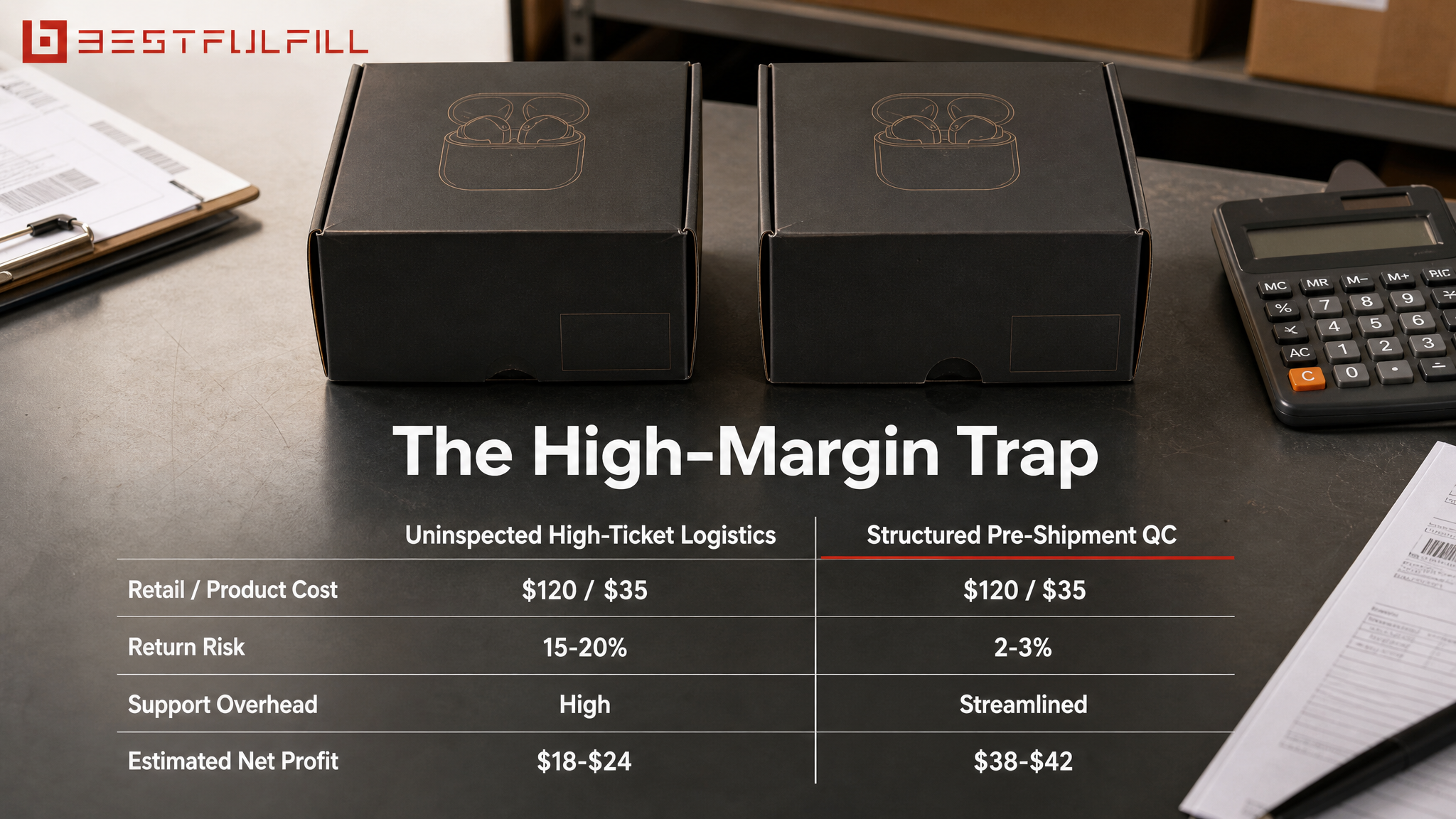
Quick Reality Check: Uninspected inventory is a gamble against carrier fees and support tickets. Catching issues before goods leave the warehouse is simply cleaner math.
7 High-Margin Niches Worth Inspecting
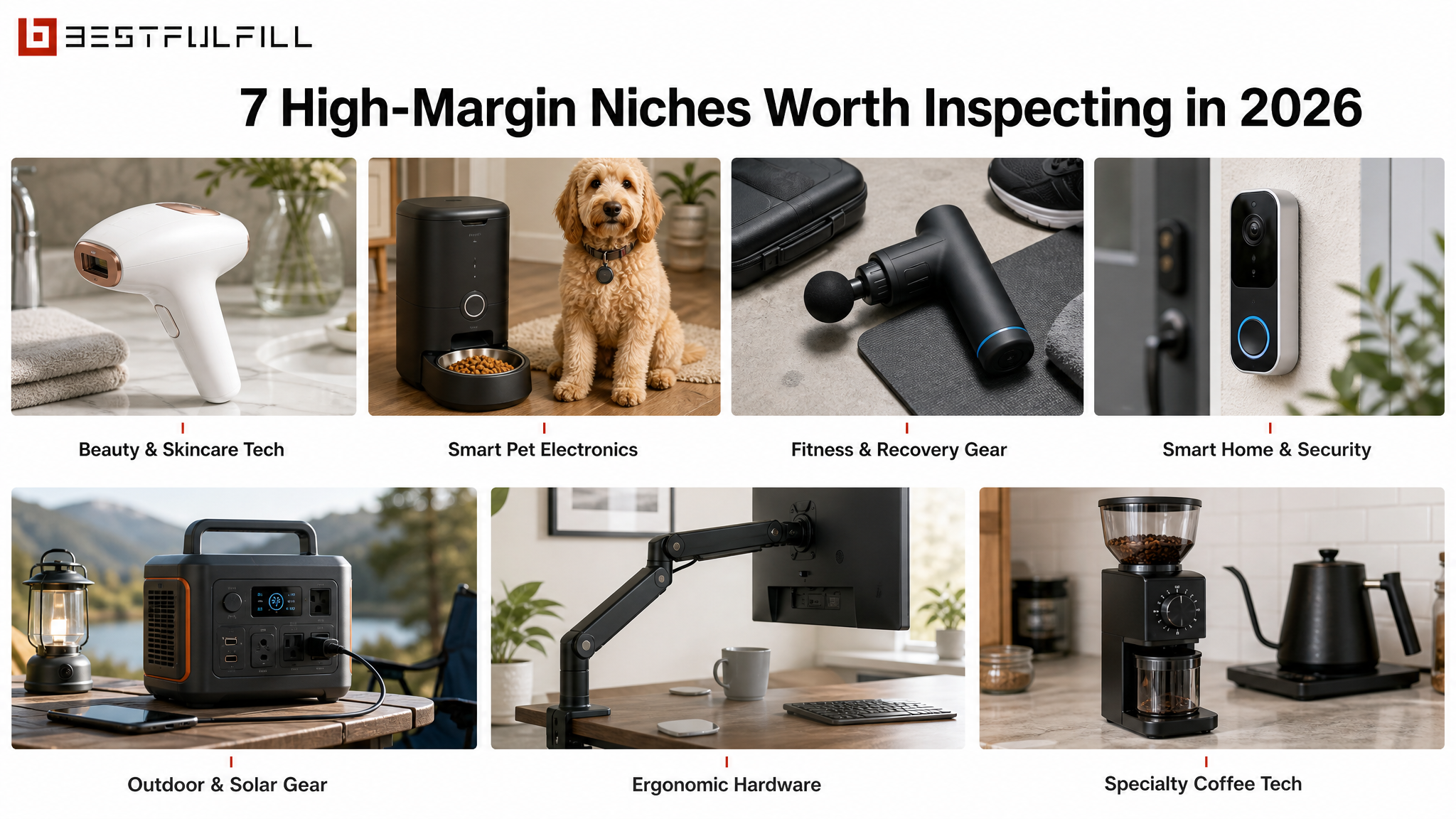
Beauty & Skincare Tech (IPL Removal, LED Masks)
- AOV: $90 – $220 | Gross Margin: ~65% – 78%
- Common Inspection Focus: Power-on stability, charging cycle checks, and safety labeling (CE, RoHS, FDA).
- Why It Matters: Skincare devices touch the face and body. A flickering mask or weak battery often ends up featured in a disappointed TikTok video rather than a 5-star review.
Smart Pet Electronics (Feeders, GPS Trackers)
- AOV: $110 – $280 | Gross Margin: ~55% – 70%
- Common Inspection Focus: App connectivity, sensor responsiveness, and motor stress tests.
- Why It Matters: Pet parents rely on this tech when away from home. An unreliable feeder or offline tracker quickly leads to urgent support tickets.
Fitness & Recovery Gear (Massage Guns, Boots)
- AOV: $80 – $190 | Gross Margin: ~60% – 72%
- Common Inspection Focus: Noise decibel checks, short battery burn-in tests, and attachment fittings.
- Why It Matters: Buyers compare $120 massage guns to premium $400 brands. Excessive motor rattle can trigger immediate return requests.
Smart Home & Security (Video Doorbells, Cameras)
- AOV: $95 – $240 | Gross Margin: ~58% – 68%
- Common Inspection Focus: Lens clarity, night-vision sensor checks, and hardware accessory counts.
- Why It Matters: Missing a single wall-mount screw turns an otherwise great purchase into an annoying setup delay.
Portable Outdoor & Solar Gear (Heated Apparel, Power Hubs)
- AOV: $130 – $350 | Gross Margin: ~50% – 65%
- Common Inspection Focus: Heat element distribution, battery voltage stability, and seam sealing.
- Why It Matters: Gear used in harsh weather needs to work reliably out of the box to build long-term brand trust.
Ergonomic & Workspace Hardware (Desks, Arms)
- AOV: $140 – $400 | Gross Margin: ~52% – 66%
- Common Inspection Focus: Desktop surface checks, dual-motor synchronization, and drop-tested packaging.
- Why It Matters: Heavy items are pricey to dispatch—and twice as expensive to take back. Corner damage during transit can quickly erase your unit margin.
Specialty Coffee Tech (Precision Grinders, Frothers)
- AOV: $85 – $210 | Gross Margin: ~60% – 75%
- Common Inspection Focus: Burr alignment checks, motor stability under load, and correct plug adapter matching.
- Why It Matters: Coffee hobbyists notice the fine details. Minor defects or mismatched plugs tend to spark vocal online discussions.
A Simple 4-Tier QC Inspection Framework
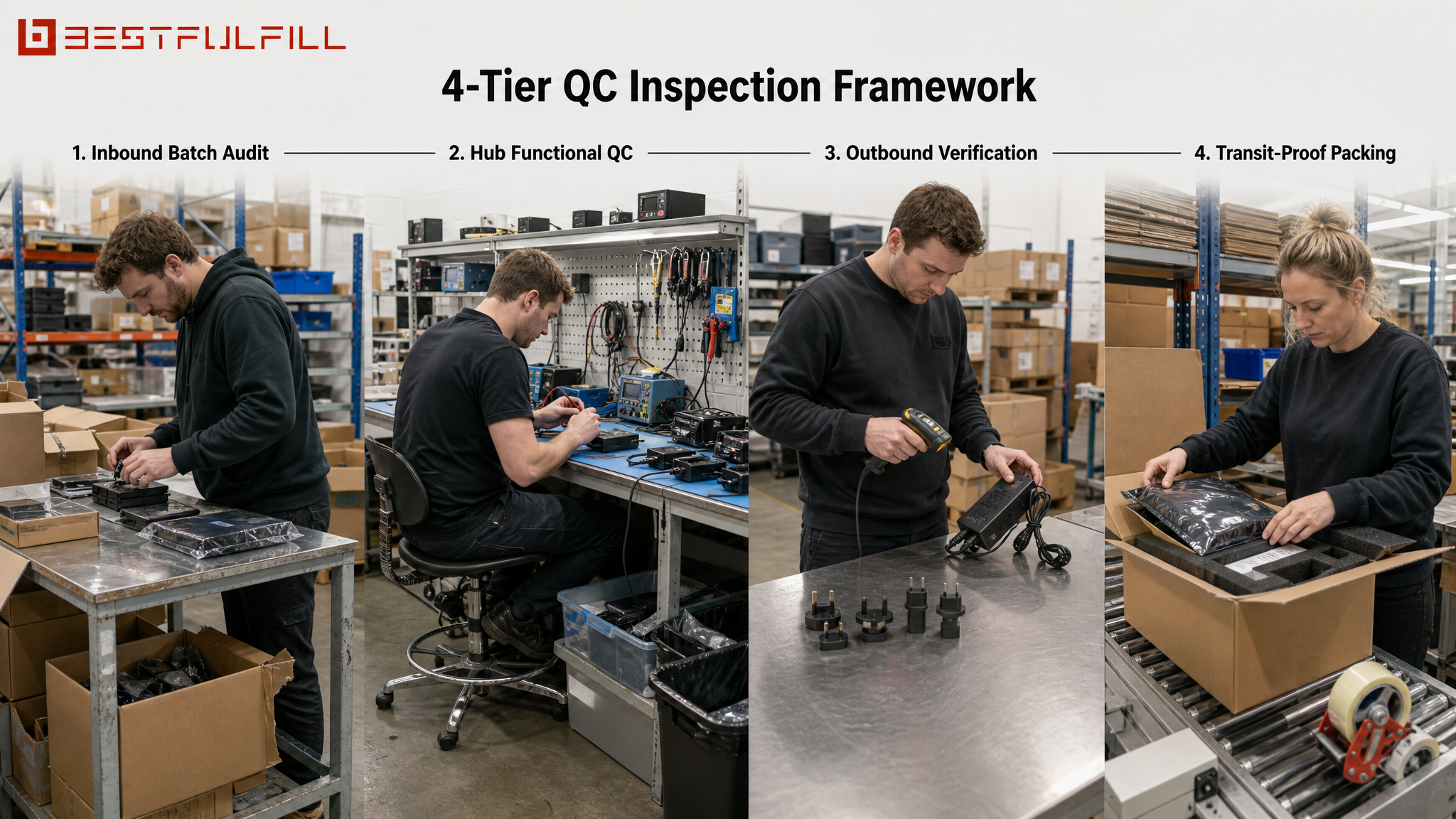
You don't need to overcomplicate your operations. A practical quality framework usually looks like this:
| Tier | Focus Area | Standard Practice |
|---|---|---|
| Tier 1: Inbound Batch Audit | Factory Level | Sample testing against agreed AQL standards before dispatch. |
| Tier 2: Hub Functional QC | 3PL Intake | Cosmetic, power-on, and compliance check at the fulfillment center. |
| Tier 3: Outbound Verification | Pre-Dispatch | Secondary scan to ensure correct plug type, manual, and SKU variant. |
| Tier 4: Transit-Proof Packing | Packaging Line | Anti-static bagging, custom foam, or reinforced outer cartons. |
How Bestfulfill Supports High-Ticket DTC Brands
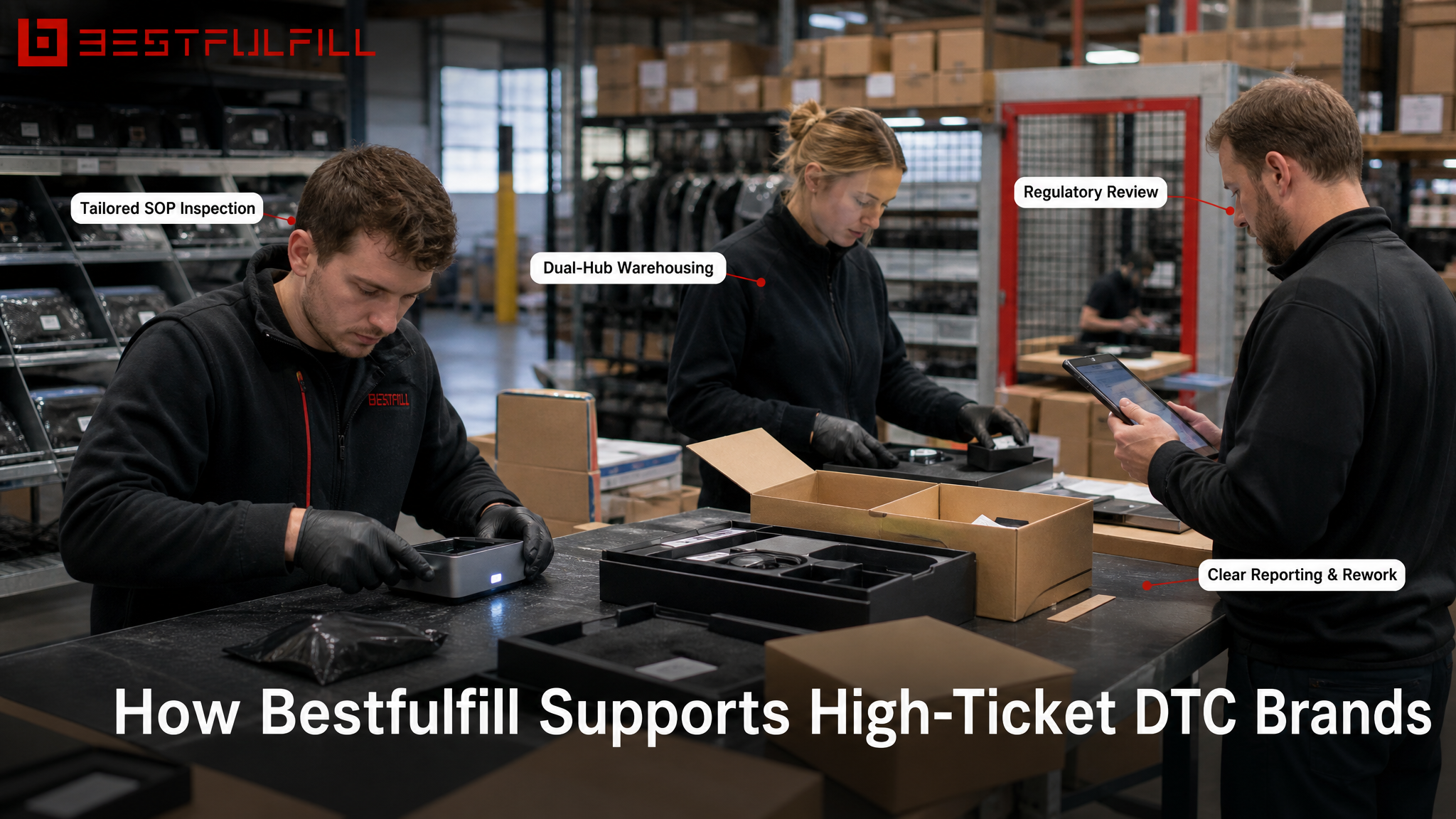
When scaling past 500+ orders a month, having boots on the ground in your supply chain hub brings peace of mind.
Here is how Bestfulfill helps safeguard your margins:
- Tailored SOP Inspection Workflows: From booting up smart devices to checking cosmetic finishes, workflows match your specific SKU guidelines.
- Strategic Dual-Hub Warehousing: Facilities in China and Europe support fast regional delivery with proper anti-static storage for tech items.
- Intake Regulatory Reviews: Basic Documentation and Label Screening: Our team can check whether required labels and supplier-provided documents are present before dispatch. Final regulatory compliance remains the responsibility of the seller, importer, manufacturer and relevant qualified parties.
- Clear Reporting & Rework: If flawed units are spotted during intake, you receive photo/video documentation to help settle claims directly with your supplier.
Ready to Secure Your Unit Economics?
Don't let preventable product flaws quietly chip away at your ad performance and customer goodwill.
Frequently Asked Questions (FAQ)
Q1: Does pre-shipment QC noticeably delay dispatch times?
Not typically. Primary inspections occur during inventory intake at the warehouse. Pre-dispatch checks add a minimal window (usually under 12–24 hours) and run smoothly alongside daily carrier pickups.
Q2: Is dedicated QC practical for store volumes under 1,000 orders/month?
Yes. In most cases, inspecting inventory costs significantly less than processing even a small handful of two-way shipping returns and chargebacks.
Q3: What happens when defective items are found at the warehouse?
The warehouse team flags and isolates the affected items, provides visual proof, and assists you in requesting replacements or credits from your manufacturer.
Q4: Can Bestfulfill adapt testing steps for complex electronics?
Yes. You can provide a custom SOP or video walkthrough, and warehouse staff can integrate those steps into your product's intake checklist.