



Key Takeaways
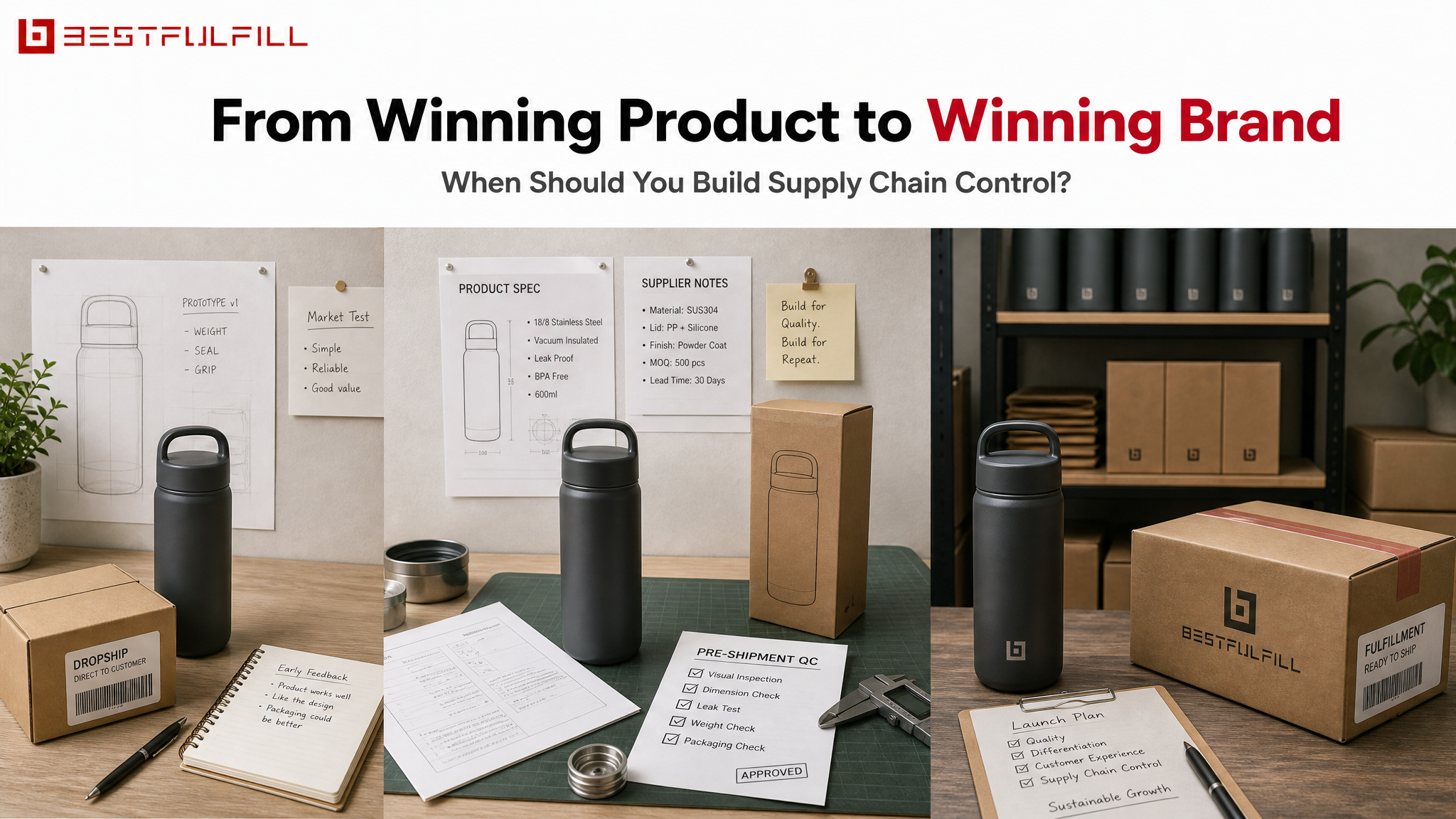
- Dropshipping is useful for product validation, but a proven product eventually needs more control over sourcing, quality, and fulfillment.
- Consistent sales are only one signal. Rising quality costs, product commoditization, and higher customer expectations can also indicate that a SKU is ready to evolve.
- Supply-chain control should be built gradually. Brands do not need to invest heavily before demand is proven.
- Different SKU stages require different operational priorities, from flexibility during testing to inventory and fulfillment control during growth.
- The transition is not about abandoning dropshipping overnight. It is about moving from selling a winning product to building a supply chain that can support a scalable brand.
Quick Answer: When Should You Build More Supply Chain Control?
You should consider increasing supply-chain control when a product is no longer experimental and begins generating consistent demand, meaningful revenue, or growing customer expectations.
Five common signals are:
- Sales are becoming consistent rather than driven by short-term testing.
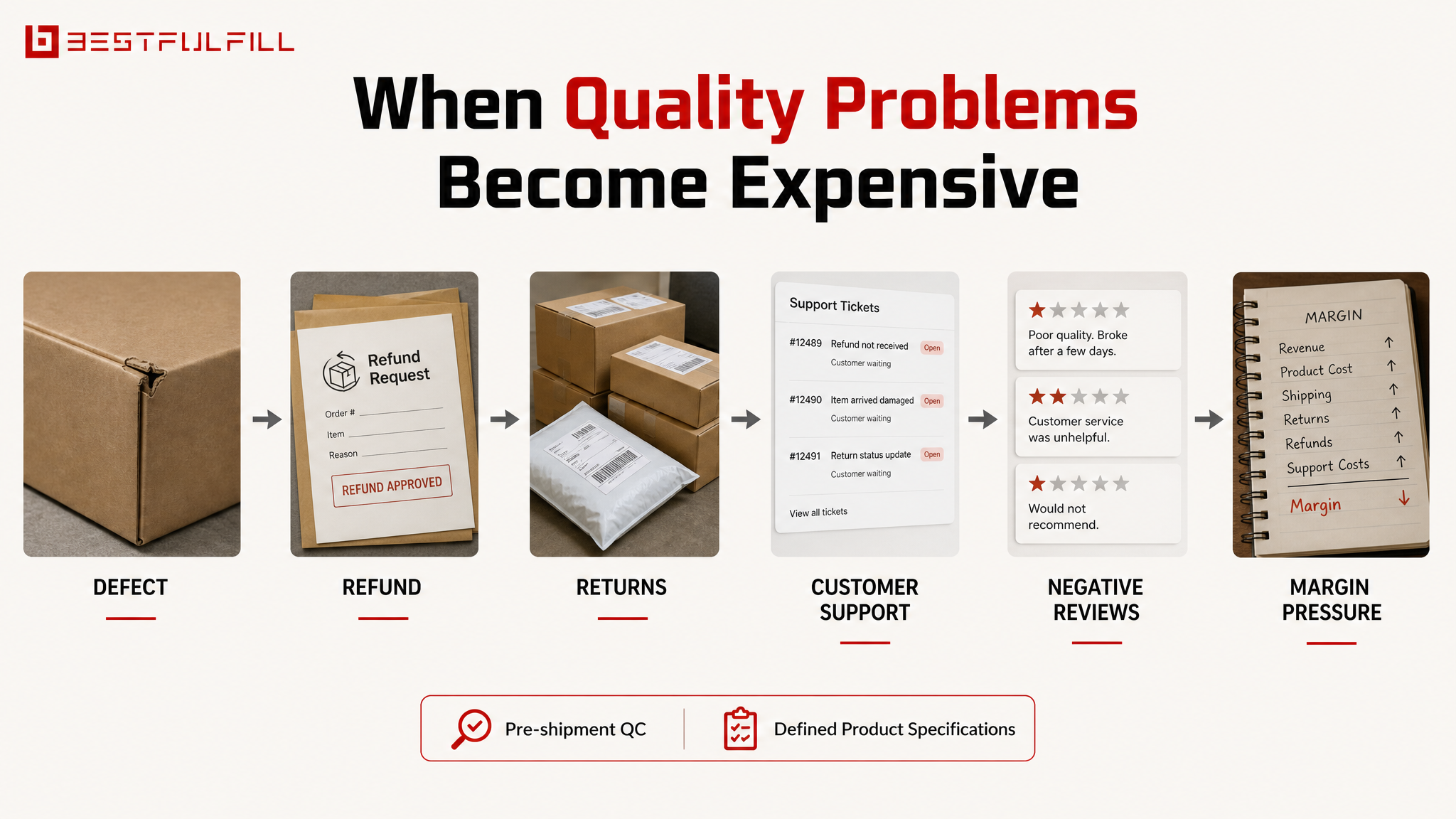
- Quality problems are becoming expensive, creating returns, refunds, and customer-service costs.
- Competitors can easily copy the product, making differentiation more important.
- Customer experience is becoming part of the brand, including delivery, packaging, tracking, and returns.
- The SKU has long-term potential and justifies greater investment in sourcing, QC, inventory, or fulfillment.
You do not necessarily need to stop dropshipping at this point. A better approach is to increase control as the SKU becomes more predictable and strategically important.
Dropshipping Works for Testing — Until the Product Proves Itself
Dropshipping remains one of the most practical ways for ecommerce brands to test new products.
When demand is uncertain, brands benefit from:
- Lower upfront inventory risk
- Flexible product testing
- Faster market validation
- Easier experimentation across markets
At this stage, the key question is simple:
Can we sell this product profitably?
That makes flexibility more valuable than operational complexity.
But once a product begins generating consistent orders, the question changes:
Can we deliver this product consistently, profitably, and at the quality customers expect?
A supplier delay that was manageable during testing can become a stockout. A small defect rate can turn into hundreds of returns. A generic product that was easy to test can become difficult to differentiate once competitors begin selling the same item.
The economics of the SKU have changed.
When demand is uncertain, flexibility matters most. When demand becomes predictable, control starts creating more value.
This does not mean every successful product needs to immediately move away from dropshipping. It means brands should recognize when a SKU has outgrown a purely transactional model.
5 Signs Your Winning Product Needs More Supply-Chain Control
Your Product Is No Longer Experimental
The first signal is predictable demand.
A product generating occasional orders is still being tested. A SKU that consistently contributes revenue and supports ongoing advertising investment is a different business asset.
At this point, supplier reliability, replenishment, and product consistency become increasingly important.
The question shifts from:
“Can this product sell?”
to:
“How can we keep delivering it as sales grow?”
Quality Problems Are Becoming Expensive
Quality issues become more costly as order volume increases.
At low volume:
Defect → Refund
At scale:
Defect → Returns → Customer Support → Negative Reviews → Margin Pressure
A defect rate that seems manageable during testing can create hundreds of customer issues once the SKU reaches significant volume.
This is where pre-shipment QC, defined product specifications, packaging standards, and supplier consistency become increasingly valuable.
The goal is no longer simply finding a supplier that can make the product.
It is finding a supply base that can maintain the same product quality as volume increases.
The Product Is Becoming Too Easy to Copy
Winning products can quickly become crowded products.
If competitors can source the same item from the same factories, the product itself provides limited differentiation.
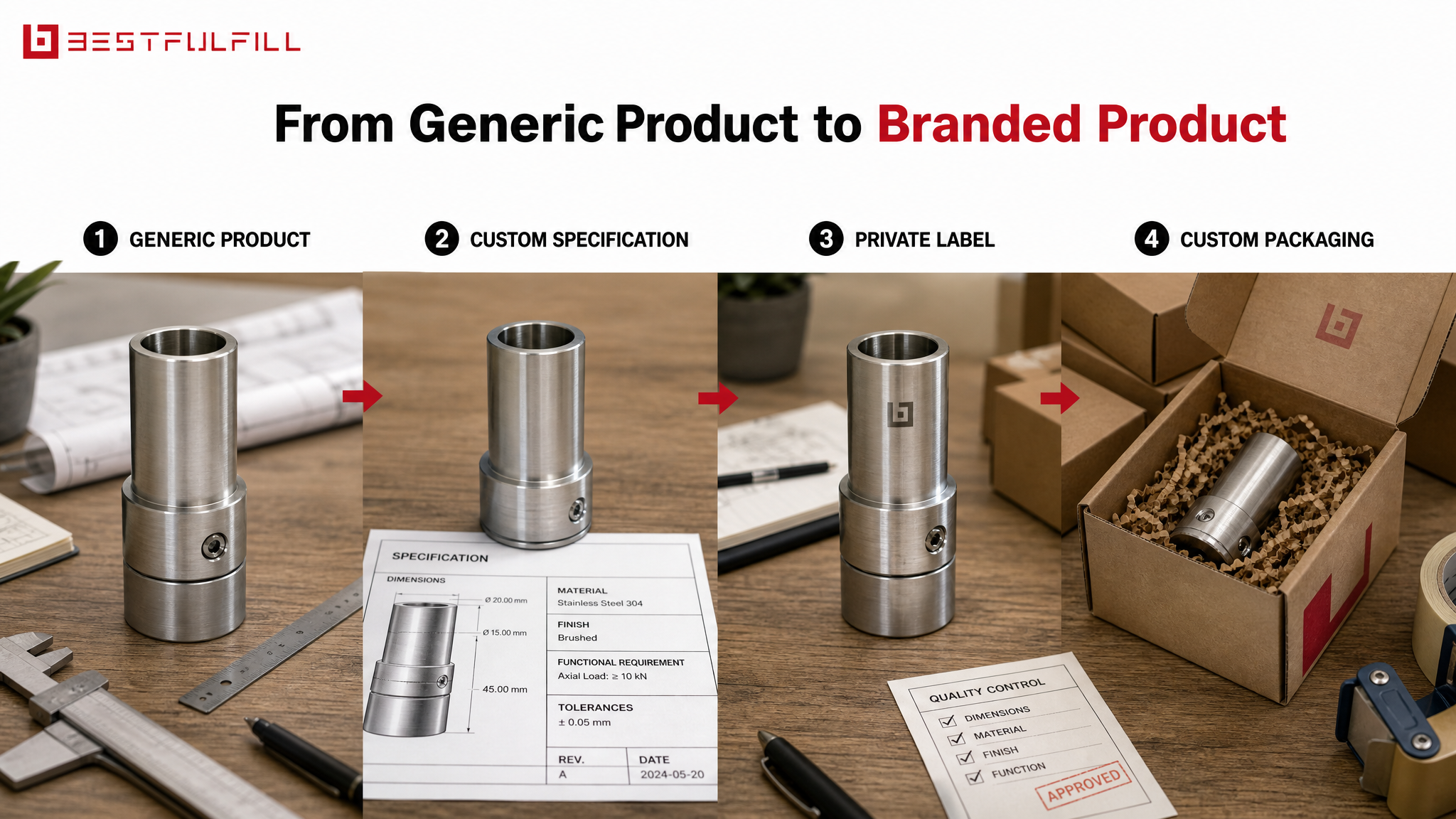
At this stage, brands may explore:
- Product modifications
- Custom specifications
- Private labeling
- Custom packaging
- Exclusive sourcing
The goal is not necessarily to create an entirely new product.
It is to make the product less interchangeable and give customers a reason to choose your brand rather than the next seller offering the same item.
Customer Experience Is Becoming Part of the Product
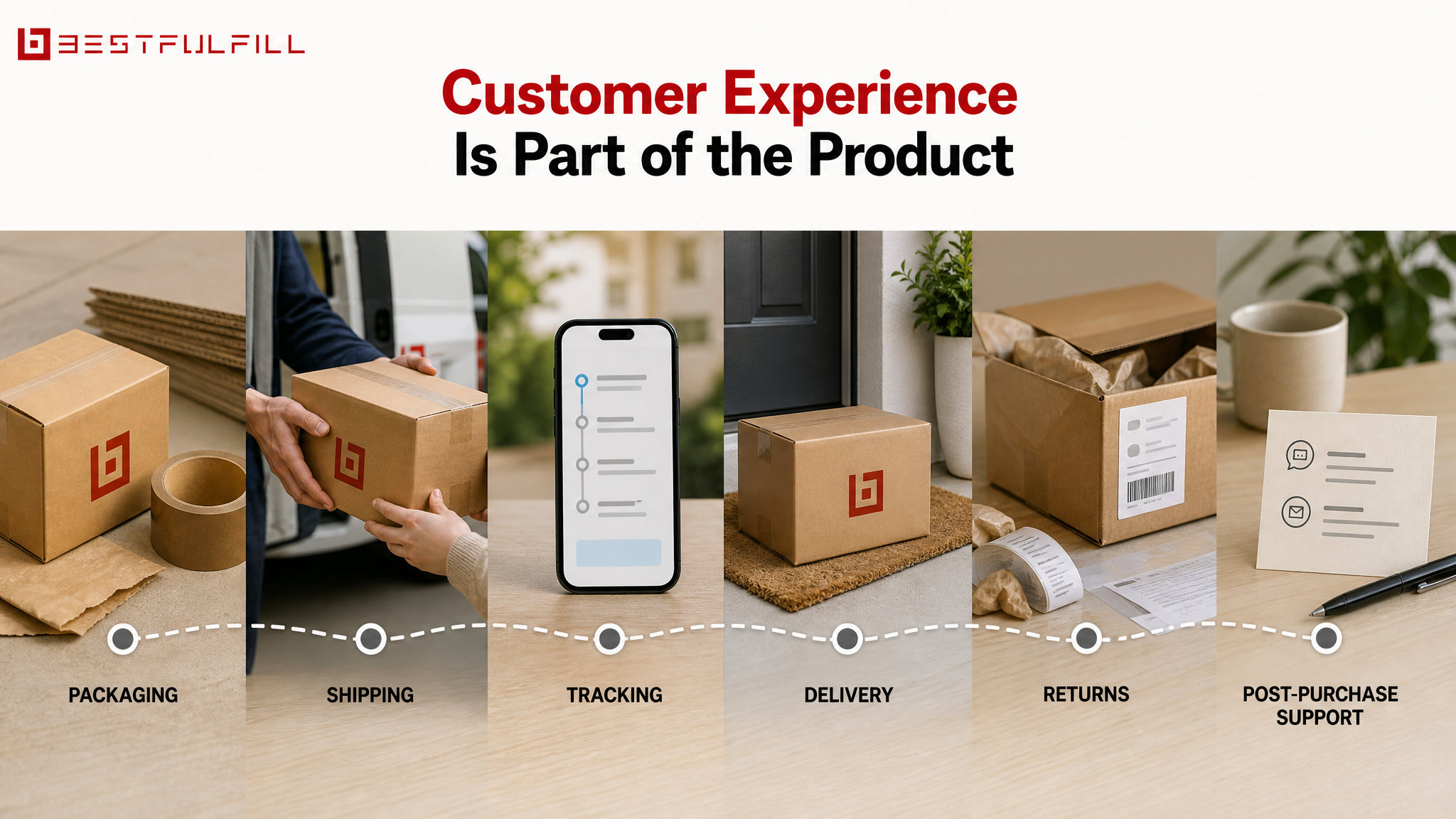
The customer experience does not end when the product leaves the warehouse.
It includes:
- Delivery speed
- Tracking visibility
- Packaging
- Returns
- Post-purchase support
As order volume grows, fulfillment becomes part of the brand experience.
A strong product can still create a weak brand if customers repeatedly experience delayed deliveries, damaged packages, unclear tracking, or difficult returns.
This is why fulfillment increasingly becomes part of the brand's operating infrastructure rather than simply a shipping function.
The SKU Has Long-Term Brand Potential
The final signal is strategic.
A product may be ready for greater supply-chain investment when it has:
- Consistent demand
- Healthy margins
- Reliable sourcing
- Manageable returns
- Positive customer response
- Potential for differentiation
At this point, the relationship with a supplier or fulfillment partner may evolve from:
“Find me a product and ship it.”
to:
“Help me control this product as it grows.”
That is the transition from a winning product to a strategic SKU.
What Should You Take More Control Of?
Building supply-chain control does not mean owning a factory, warehouse, or every logistics operation yourself.
It means controlling the parts of the supply chain that have the greatest impact on quality, margins, differentiation, and customer experience.
Product & Sourcing Control
As a SKU matures, brands can move beyond generic sourcing toward:
- Defined product specifications
- More stable supplier relationships
- Product modifications
- Exclusive sourcing where appropriate
The objective is greater consistency and less dependence on interchangeable suppliers.
Quality Control
Instead of discovering problems after customers receive the product, brands can establish:
- Pre-shipment inspection
- Product quality standards
- Packaging requirements
- Supplier QC procedures
This helps turn quality from a reactive problem into a repeatable process.
Branding & Packaging Control
Once demand is proven, packaging and product presentation can become part of differentiation.
This can include:
- Private label
- Custom packaging
- Consistent product presentation
- Improved protective packaging
The goal is to create a more consistent customer experience while making the product harder to commoditize.
Fulfillment & Customer Experience
Brands can also gradually increase control over:
- Inventory positioning
- Fulfillment workflows
- Delivery performance
- Returns
- Post-purchase experience
The key principle is:
You do not need to control everything. You need to control what matters most to the SKU.
Don't Overbuild Too Early: Match Supply-Chain Control to SKU Growth
One of the biggest mistakes brands can make is investing in too much infrastructure too early.
A product still being tested does not necessarily need regional inventory, complex SOPs, or extensive customization.
The right level of control should match the product's maturity.
| Stage | Typical Situation | Priority | Avoid Overinvesting In |
|---|---|---|---|
| Testing | Demand is uncertain | Flexibility and low inventory risk | Large inventory commitments |
| Proven Winner | Sales are becoming predictable | Supplier reliability and QC | Complex multi-market infrastructure |
| Growth | Volume and expectations increase | Inventory positioning and fulfillment capacity | Fragmented suppliers and processes |
| Brand Expansion | SKU becomes a core revenue driver | Customization, regional fulfillment and SOPs | One-size-fits-all operations |
The right time to increase supply-chain control is therefore not determined by a single order threshold.
It depends on:
- How predictable demand has become
- How expensive operational problems are
- How important the SKU is to the business
- How much differentiation the brand needs
- How customer delivery expectations are changing
This allows brands to build control progressively rather than making a large operational commitment before the economics justify it.
How Bestfulfill Helps Winning SKUs Scale
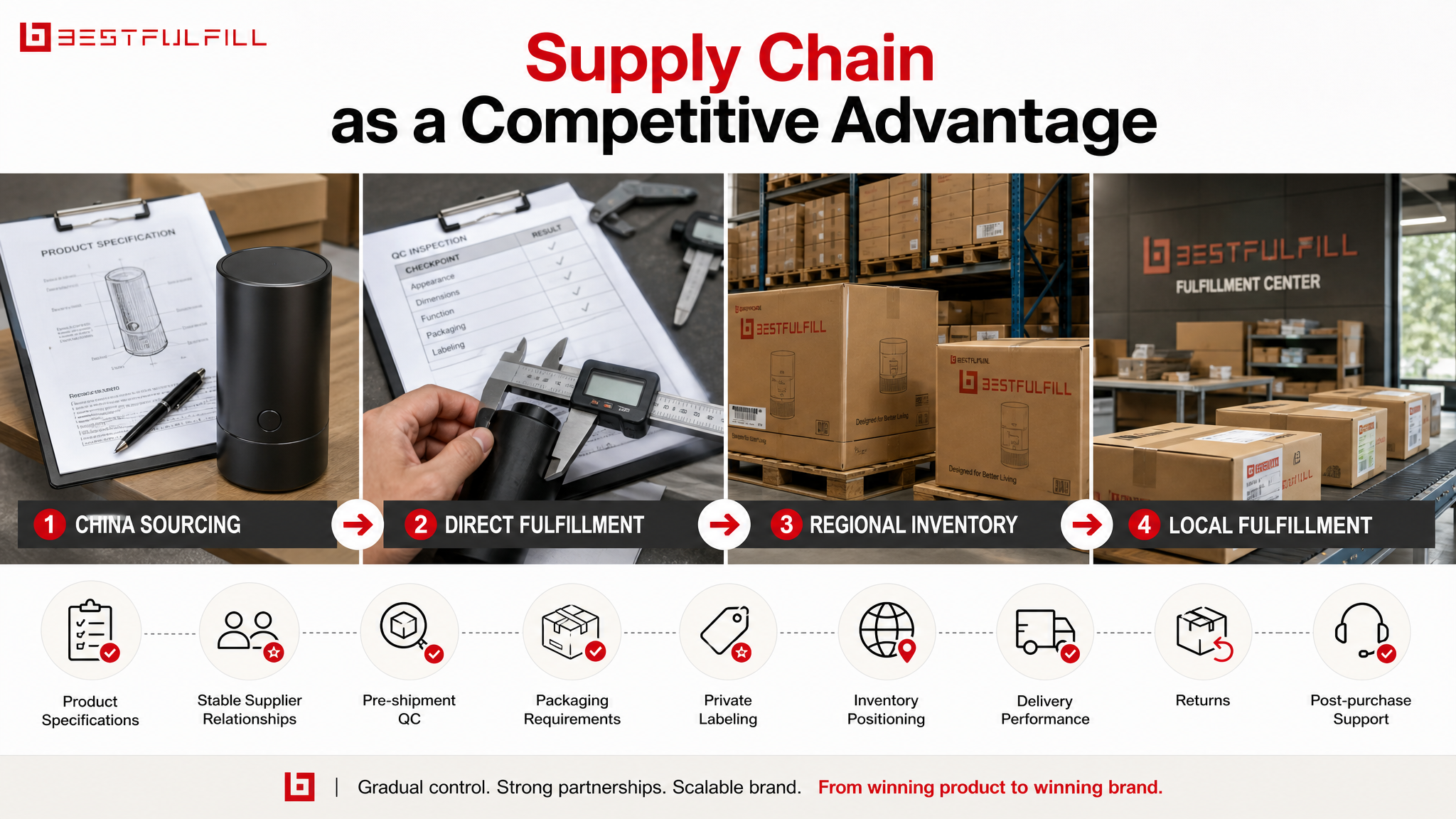
At Bestfulfill, we often see the same shift as a DTC product moves from testing to sustained growth.
The initial requirement is simple:
“Source the product and ship the order.”
As the SKU becomes a consistent seller, the priorities change. Brands need more reliable sourcing, clearer QC standards, better inventory planning, and fulfillment that can keep pace with demand.
This is where SKU Lifecycle Fulfillment Strategy becomes important.
From Flexible Fulfillment to Greater SKU Control
For early-stage products, flexible China fulfillment helps brands test demand without committing heavily to inventory.
Once a SKU proves itself, the focus can shift toward:
- More consistent supplier performance
- Pre-shipment QC
- Defined product and packaging standards
- Better replenishment planning
The goal is not to add unnecessary complexity, but to introduce more control where the SKU's growth justifies it.
From Direct Shipping to Regional Fulfillment
As demand becomes more predictable in a specific market, regional inventory may become more efficient than relying entirely on cross-border fulfillment.
The transition can look like:
China sourcing → Direct fulfillment → Regional inventory → Local fulfillment
The right timing depends on order volume, delivery expectations, inventory risk, and shipping economics.
The fulfillment model should evolve with the SKU—not stay fixed from testing to scale.
This is the core of Bestfulfill's SKU Lifecycle Fulfillment Strategy: matching sourcing, QC, inventory, and fulfillment decisions to where each product is in its growth journey.
Final Takeaway
A winning product proves that there is demand.
A scalable brand requires more: consistent quality, meaningful differentiation, reliable fulfillment, and a supply chain that can support growth.
You do not need to abandon dropshipping overnight.
Instead, watch for the signals that your product has moved beyond experimentation:
Consistent demand → Quality pressure → Differentiation → Customer experience → Greater supply-chain control
The transition is gradual:
Dropshipping → Winning Product → More Supply-Chain Control → Scalable Brand
The goal is not to eliminate dropshipping.
It is to know when your winning product has outgrown a purely transactional fulfillment model.
Ready to Build More Supply-Chain Control?
As your winning SKUs grow, Bestfulfill can help you evaluate sourcing, QC, inventory, warehousing, and fulfillment based on each product's stage of growth.
Talk to Bestfulfill about your SKU lifecycle →
Frequently Asked Questions (FAQ)
When should I move from dropshipping to private label?
Consider private labeling when a product has demonstrated consistent demand and there is a clear opportunity to differentiate through product specifications, packaging, or branding. There is no universal order-volume threshold.
How do I know if a winning product is ready to scale?
Look beyond sales volume. Consistent demand, healthy margins, reliable suppliers, manageable returns, and predictable fulfillment are stronger indicators that a SKU is ready for greater operational investment.
What are the signs that a dropshipping product needs better quality control?
Increasing defects, inconsistent specifications, repeated customer complaints, refunds, or negative reviews are common signals. As volume grows, even a small quality problem can become expensive.
How can I differentiate a product that competitors are already selling?
Consider product modifications, exclusive specifications, private labeling, custom packaging, improved quality, or a stronger overall customer experience.
Do I need to stop dropshipping to build a brand?
No. Different SKUs can use different fulfillment models. New products can remain on flexible dropshipping models, while proven products gradually move toward greater sourcing, inventory, and fulfillment control.
Should I stock inventory before building a branded product?
Not necessarily. Inventory commitments should follow demand confidence, supplier lead times, margins, and expected sales. A gradual transition can reduce the risk of over-investing before a product is validated.
How can a fulfillment partner help build a scalable supply chain?
A fulfillment partner can connect sourcing, QC, warehousing, inventory, and fulfillment as a SKU grows. The goal is not simply faster shipping, but a fulfillment strategy that evolves with the product's lifecycle.