


Key Takeaways
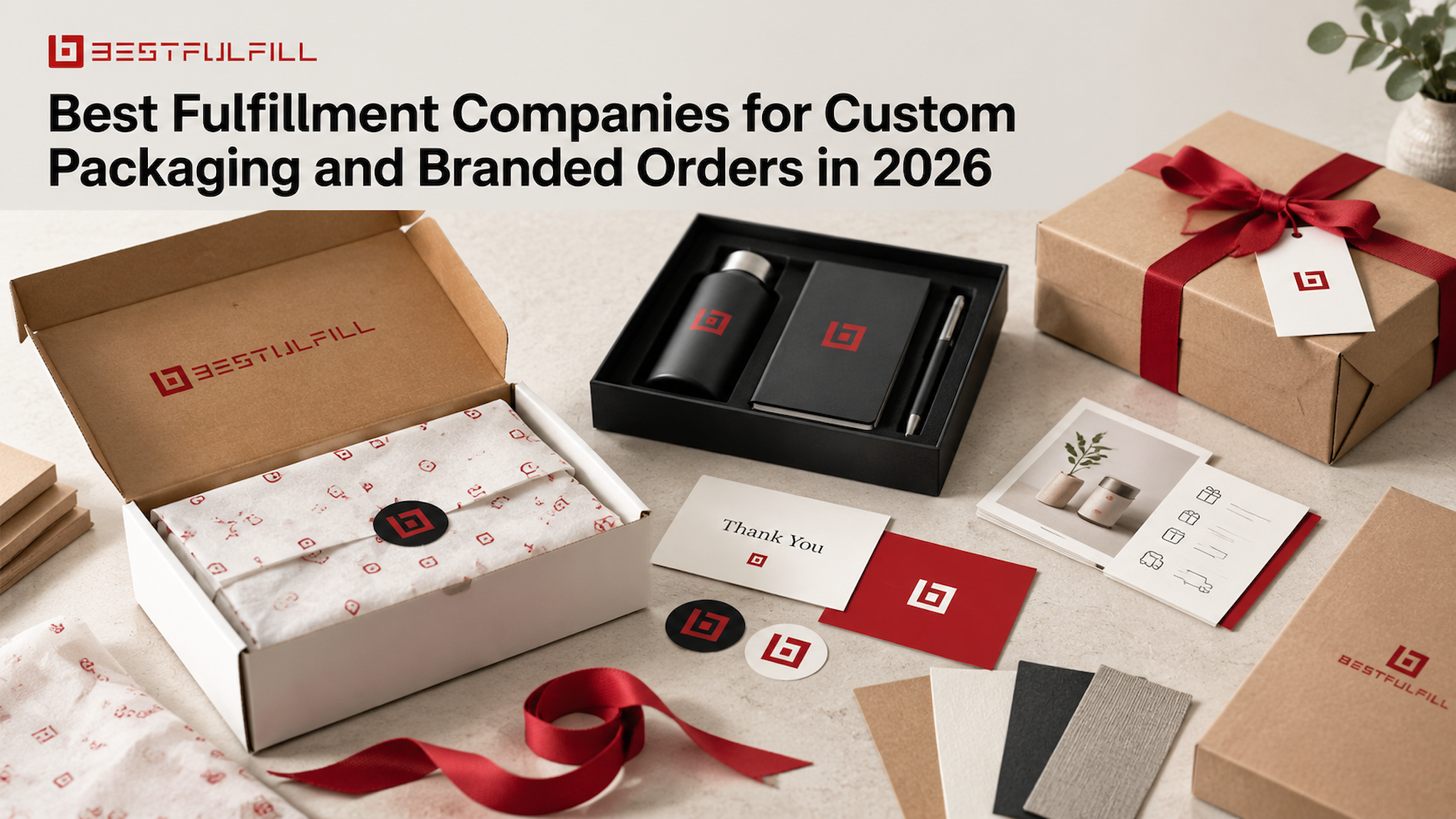
- Custom packaging and branded order fulfillment are not the same thing. Branded orders can also involve inserts, kitting, personalization, packaging inventory, and SKU- or order-specific rules.
- Responsibility varies significantly by provider. Some 3PLs execute merchant-supplied packaging, while others can source, stock, or manage packaging materials.
- Order complexity changes the fulfillment requirement. Subscription boxes, gift sets, promotional kits, and variable inserts require more operational control than standard branded packaging.
- The starting point matters. Warehouse-first 3PLs typically customize orders after inventory arrives, while sourcing-led models can coordinate products, QC, branding, and packaging further upstream.
- There is no single best provider for every brand. The right fit depends on sourcing model, order complexity, packaging ownership, volume, and required fulfillment coverage.
Quick Answer
The best fulfillment companies for custom packaging and branded orders in 2026 include ShipBob, ShipMonk, Ryder, Bestfulfill, Cart .com, and ShipNetwork.
ShipBob is well suited to scalable SKU-level customization; ShipMonk stands out for managed packaging procurement and inventory; Ryder provides extensive enterprise value-added services; Bestfulfill connects China sourcing and QC with product and packaging branding; Cart .com supports custom packaging and high-volume branded kits; and ShipNetwork is suited to complex branded workflows and subscription builds.
Custom packaging fulfillment involves more than branded boxes. Brands may need packaging materials sourced, stored, and applied during order fulfillment—or coordinated with product customization before inventory reaches the warehouse.
Warehouse-focused 3PLs are worth considering for finished inventory and established packaging programs. Integrated providers such as Bestfulfill are relevant when China sourcing, QC, branded order preparation, and international fulfillment need to work together.
Custom Packaging and Branded Fulfillment Comparison
Provider | Best For | Responsibility Starts At | Main Capability |
ShipBob | Scalable DTC customization | Fulfillment center | SKU-level packaging rules and repeatable customization |
ShipMonk | Managed custom packaging | Packaging procurement / fulfillment | Packaging sourcing, stocking, and management |
Ryder | Enterprise branded fulfillment | Fulfillment / VAS operations | Enterprise-scale customization and value-added services |
Bestfulfill | China-Sourced Brands Needing Branded Fulfillment | Sourcing / Supplier Coordination | Product & Packaging Customization, QC, Branded Order Processing, Global Fulfillment |
Cart .com | High-volume branded kits | Packaging / fulfillment | Custom packaging, kitting, and high-volume branded assembly |
ShipNetwork | Complex branded workflows | Fulfillment center | Complex kitting and customized order workflows |
Best Fulfillment Companies for Custom Packaging and Branded Orders
ShipBob — Best for Scalable DTC Customization
Best for: Growing DTC brands that need repeatable customization across fulfillment operations.
ShipBob's Customization Suite brings branded packaging, kitting, gift notes, and marketing inserts into its fulfillment workflow. Brands can store custom boxes or mailers as SKUs and set SKU-level packaging preferences, so packaging rules can be applied by product rather than handled only through manual packing instructions.
This makes ShipBob particularly relevant when a brand has moved beyond using the same branded box for every order and needs customization to remain consistent as order volume and SKU count increase. Custom kitting and certain other customization services have separate workflows or fees, so brands should confirm setup and pricing for their specific program.
ShipMonk — Best for Managed Custom Packaging
Best for: Higher-volume brands that want their fulfillment partner to take more responsibility for packaging operations.
ShipMonk's customization offering includes branded packaging, inserts, kitting, bundling, and other custom packing workflows. Its PackSmart service extends that responsibility into packaging management, including sourcing, stocking, and managing packaging materials rather than requiring the merchant to coordinate every part of the packaging supply chain separately.
That distinction matters for brands whose challenge is no longer simply using custom packaging, but keeping the right packaging available as fulfillment volume grows. PackSmart is positioned for qualifying higher-volume merchants, so brands considering it should confirm eligibility and service scope before building their packaging strategy around the program.
Ryder — Best for Enterprise Branded Fulfillment
Best for: Established brands that require broader value-added services alongside ecommerce fulfillment.
Ryder's branded fulfillment capabilities sit within a broader value-added services operation. Its documented services include specialized packaging, gift wrapping, personalized notes, boxed sets, kitting, subassembly, repacking, labeling, quality inspection, RFID tagging, and light manufacturing.
That breadth makes Ryder more relevant when branded fulfillment involves assembly or personalization in addition to packaging. Ryder reports more than 10 million square feet of multi-client and dedicated warehouse space, while individual facilities can provide different value-added capabilities; Its Riverside facility, for example, lists gift wrapping, laser engraving, and personalized messaging. Brands should therefore verify that the required services are available at the specific facilities supporting their program.
Bestfulfill — Best for China-Sourced Branded Orders
Best for: Ecommerce brands sourcing from China that need product customization, quality control, branded packaging, and international fulfillment coordinated within one workflow.
Bestfulfill connects product sourcing, supplier coordination, QC, branded packaging, and global order fulfillment. Available customization services include packaging changes, labeling, branded inserts, and other approved packaging requirements.
Beyond upstream sourcing, Bestfulfill's warehouse operations include location-coded inventory storage, PDA-guided picking, barcode-based order verification, and packing. These processes support accurate order preparation and consistent execution of agreed branding requirements.
For growing ecommerce brands, this integrated approach helps coordinate product preparation, packaging requirements, inventory management, and international delivery through one partner.
When to consider alternatives: Brands with finished inventory that only require domestic warehouse customization may prefer to compare warehouse-focused 3PLs. Packaging options, minimum quantities, and handling fees should be confirmed for each project.
Cart .com— Best for High-Volume Branded Kits
Best for: Brands running subscription, gifting, promotional, or other assembly-heavy programs.
Cart .com combines custom packaging with kitting and bundling inside its fulfillment network. Its documented programs include subscription boxes, gift sets, promotional bundles, and retail-ready kits, with individual components tracked within its warehouse management system.
The distinction here is assembly complexity. Cart .comstates that its subscription-box operations can handle programs ranging from 500 to 500,000 boxes, while gift-set programs can incorporate custom tissue, ribbon, inserts, and branded packaging. Because these figures are company-reported operating ranges rather than an industry benchmark, brands should still confirm the capacity, minimums, facility availability, and pricing applicable to their own program.
For brands whose branded experience depends on assembling multiple components correctly—not simply selecting a branded mailer—this combination of packaging and kitting is the more relevant capability.
ShipNetwork — Best for Complex Branded Order Workflows
Best for: Brands with complex kits, subscription boxes, variable inserts, or detailed fulfillment requirements.
ShipNetwork's customization services extend beyond branded packaging into workflow-specific execution. Its documented capabilities include multi-SKU kits, seasonal sets, pre-builds, subscription boxes, variable inserts, gift notes, literature versioning, and QA checkpoints.
More importantly for complex programs, ShipNetwork says its solution-design process can define SOPs, packaging specifications, routing logic, and integrations, then test custom workflows against defined success criteria before rollout.
That makes it particularly relevant when different orders require different assembly or presentation rules. For a brand that only needs the same branded box and insert on every shipment, however, this degree of workflow customization may be more than the operation requires.
How to Choose a Fulfillment Company for Custom Packaging
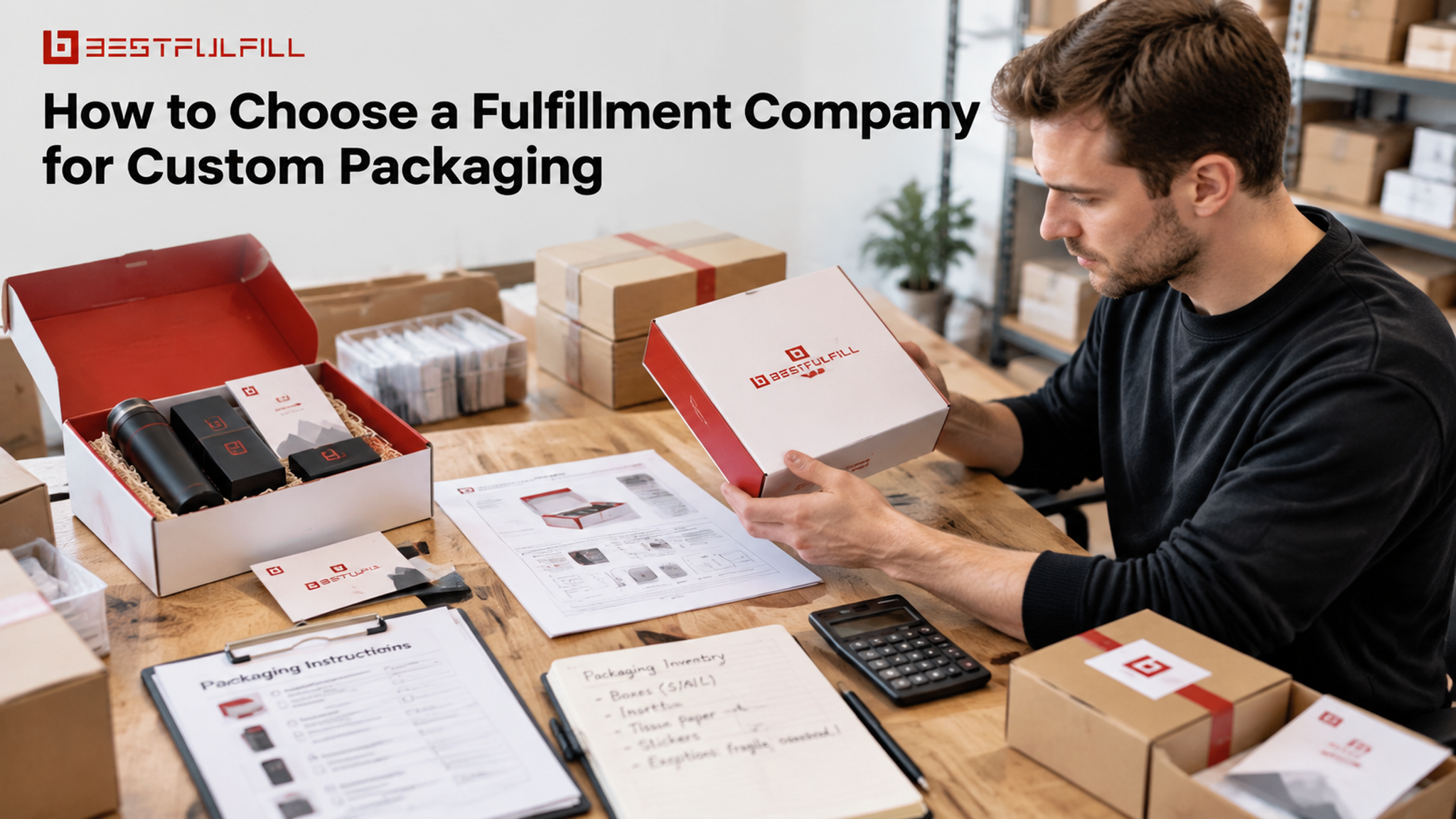
Once you have shortlisted providers with the right customization capabilities, verify how those capabilities will work for your actual orders before committing.
Check Customization Rules
Confirm how the warehouse determines which packaging, insert, kit, or personalization rule applies to each order. If requirements vary by SKU, campaign, or order type, look for system-based rules or documented SOPs rather than relying on manual instructions.
Plan Packaging Inventory
Confirm how custom packaging and inserts are tracked and replenished, and what happens when a required material runs out. Decide in advance whether affected orders should be held, use approved substitutes, or follow another predefined workflow.
Calculate Total Costs
Look beyond standard pick-and-pack rates. Custom fulfillment may involve packaging production, MOQs, setup fees, storage, kitting or assembly charges, and additional lead times. Compare providers using your actual order mix and packaging requirements.
Test Before Scaling
Run representative SKUs and order types through the proposed workflow before moving significant volume. Check packaging accuracy, inserts, assembly, labeling, shipping protection, and exception handling. If you plan to use multiple fulfillment centers, verify that the required customization can be executed consistently at each location.
For brands evaluating how branded packaging requirements change as their businesses grow, read Best Branded Fulfillment Providers for Growing DTC Brands in 2026.
Match Fulfillment Providers to Your Branded Order Complexity
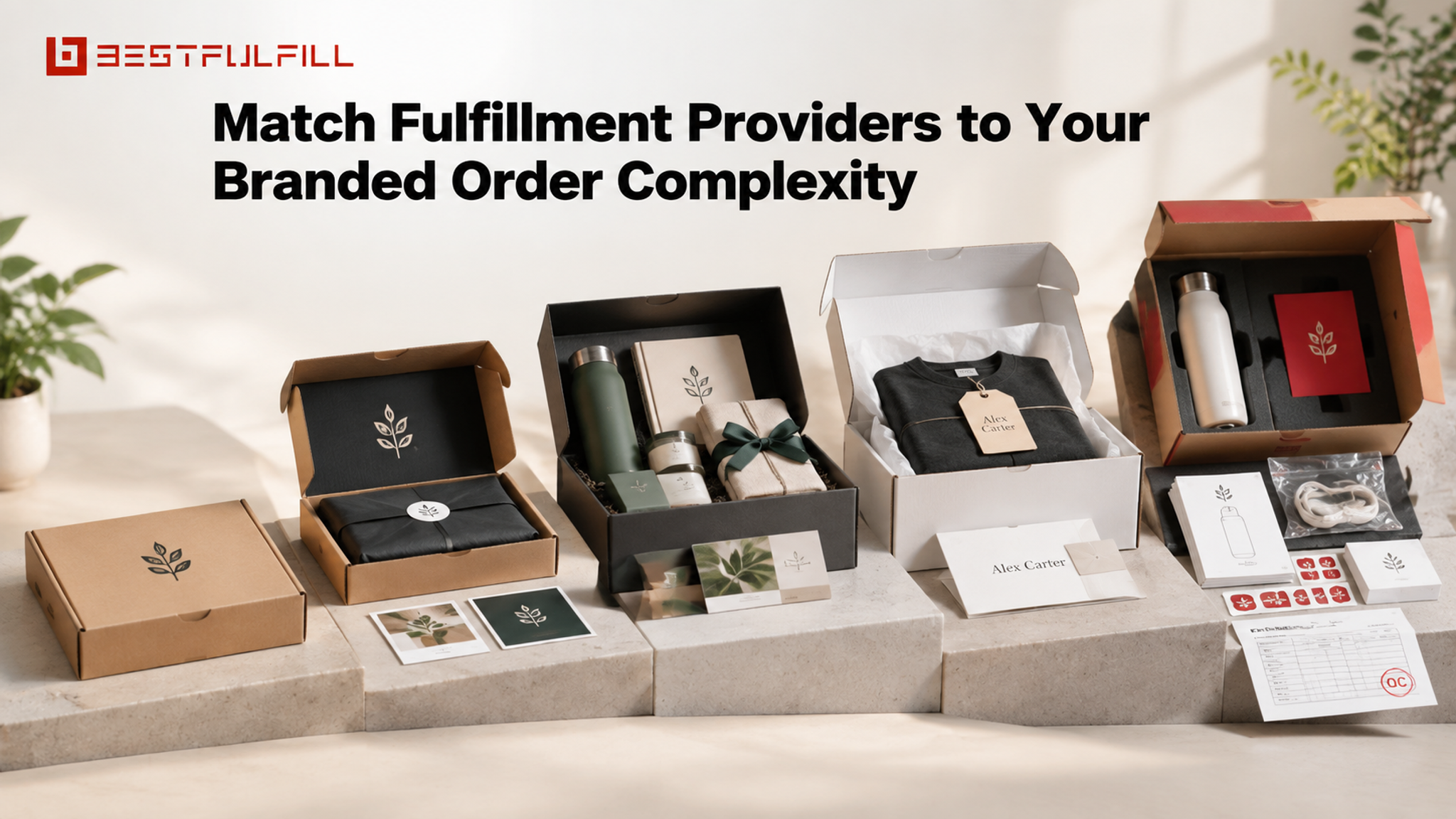
Different branded-order models require different levels of operational control. Use the order structure—not packaging appearance alone — to narrow the shortlist.
Branded Order Type | What the Workflow Requires | Best-Fit Providers |
Standard Branded Orders | Consistent branded packaging and inserts with limited variation | ShipBob, ShipMonk — structured warehouse-level customization |
SKU- or Campaign-Specific Orders | Packaging or inserts that vary by product, promotion, or order | ShipBob, ShipNetwork — rule-based or customized workflows |
Kits, Gift Sets & Subscriptions | Multi-item assembly, component control, recurring or seasonal changes | Cart .com, ShipNetwork — kitting, subscription builds, complex assembly |
Personalized / Enterprise Programs | Specialized packaging, personalization, assembly, and broader VAS | Ryder — enterprise-scale value-added fulfillment |
China-Sourced Branded Products | Supplier coordination, product or packaging customization, QC, and fulfillment | Bestfulfill — integrated China sourcing, QC, branding, and fulfillment |
The right fit depends on how your branded orders are actually built and fulfilled—the more complex the workflow, the more important clear ownership, repeatable execution, and scalability become.
Frequently Asked Questions (FAQ)
Which 3PL companies offer custom branded packaging?
ShipBob, ShipMonk, Bestfulfill, Cart.com, Ryder, and ShipNetwork are fulfillment providers worth comparing for custom branded packaging.
ShipBob and ShipMonk offer warehouse-level customization and packaging management, while Bestfulfill is relevant for brands sourcing from China that need QC, branded packaging, order preparation, and international fulfillment within a connected workflow.
The right provider depends on packaging complexity, inventory location, order volume, and the level of customization required.
Do custom packaging programs usually have minimum order requirements?
Often, but the requirement depends on how the packaging is sourced and produced. Custom-printed boxes, mailers, tissue, and other materials may have supplier MOQs even when the fulfillment provider itself does not impose a specific order minimum.
Before launch, confirm both the packaging production MOQ and the fulfillment provider's volume requirements. These are separate constraints and can affect the amount of packaging inventory a brand must hold.
What happens if custom packaging runs out before product inventory?
The outcome depends on the fulfillment provider and the rules agreed with the brand. Orders may be held until packaging is replenished, shipped in approved standard packaging, or handled through another predefined exception workflow.
Brands should set this rule before launch rather than leave the decision to the warehouse after a stockout occurs. Packaging inventory should therefore be monitored separately from product inventory.
Can different SKUs use different branded packaging?
Yes, when the provider's fulfillment system and warehouse process support SKU- or order-specific packaging rules. ShipBob, for example, documents SKU-level packaging preferences within its Customization Suite.
For brands with several packaging variations, confirm how the rule is triggered, whether packaging materials are tracked as separate inventory, and what happens when one required component is unavailable.
Can the same custom packaging program run across multiple fulfillment centers?
Not automatically. A provider may operate multiple fulfillment centers without offering every customization service at every location.
Brands using distributed inventory should confirm which facilities support the required workflow, where branded materials must be stocked, and whether the same SOP can be reproduced consistently across locations before splitting inventory.
Who owns unused custom packaging if a brand changes 3PLs?
This should be clarified in the fulfillment agreement. Custom packaging may be purchased by the brand, procured on its behalf, or managed under a provider-specific packaging program.
Before signing, confirm who owns the materials, whether unused inventory can be returned or transferred, and what fees may apply if the relationship ends or the packaging design changes.
How should returns be handled when the original order used custom packaging?
Return workflows should be planned separately from outbound branded fulfillment. Original custom packaging may be damaged, discarded, or unavailable when an item returns, so it should not be assumed that returned inventory can automatically re-enter the same branded-order workflow.
Brands should define inspection, repacking, and restocking rules with the provider, particularly for products where presentation or packaging condition affects whether an item can be resold.