


Key Takeaways
- Look beyond shipping rates. Evaluate warehousing, order processing, customs coordination, and delivery performance.
- Request operational evidence. Verify performance claims through relevant data, procedures, and system demonstrations.
- Check visibility and accountability. Understand how inventory, shipment exceptions, and customer support are managed.
- Compare total costs. Review the complete fulfillment quotation, including applicable additional charges.
- Prioritize operational fit. The right provider should match your products, markets, platforms, and expected order volume.
Quick Answer: What Should You Look for in a Cross-Border Fulfillment Partner?
A suitable cross-border fulfillment partner should provide relevant shipping coverage, consistent order processing, customs coordination, inventory visibility, transparent pricing, and defined exception-handling procedures.
Before choosing a 3PL, verify its delivery performance, warehouse capabilities, system compatibility, returns services, and support arrangements.
The right partner is not necessarily the cheapest. It is the one whose capabilities and service conditions best match your business needs.
Cross-Border Fulfillment Partner Checklist: 10 Essential Checks
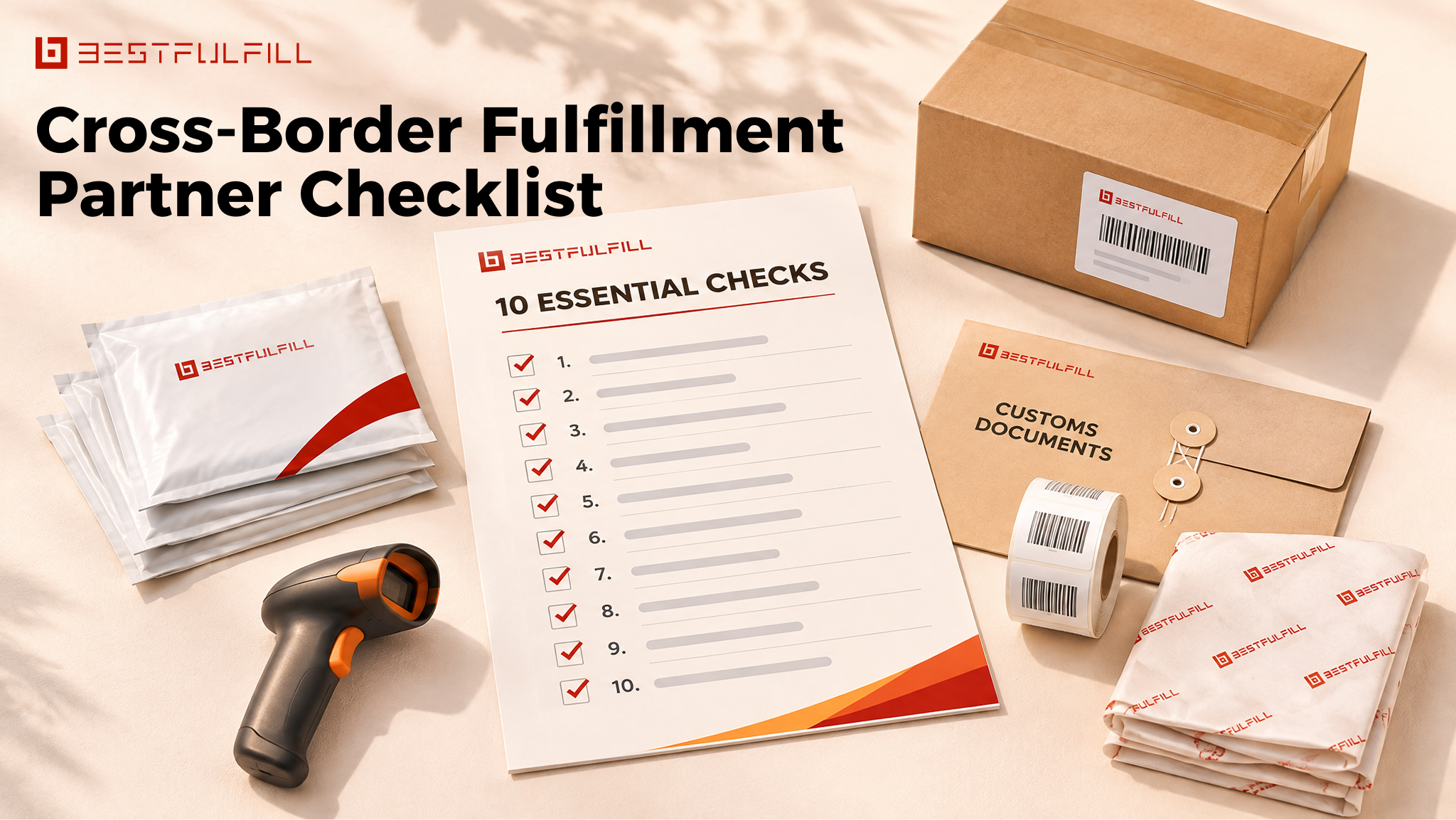
Use this checklist to identify the questions and risks worth reviewing before signing with a fulfillment provider.
| Checklist | What to Verify |
| 01. Shipping Coverage | Supported markets, delivery routes, fulfillment locations |
| 02. Delivery Performance | Transit times, reliability, measurement standards |
| 03. Customs & Compliance | Clearance arrangements, documentation, responsibilities |
| 04. Warehousing & Inventory | Warehouse locations, stock records, inventory visibility |
| 05. Order Processing | Picking, packing, order verification |
| 06. System Integration | Platform compatibility, order and tracking synchronization |
| 07. Exception Handling | Shipment alerts, escalation, compensation procedures |
| 08. Pricing Transparency | Fulfillment costs, additional charges, billing clarity |
| 09. Returns Management | Inspection, restocking, repackaging, reshipping |
| 10. Scalability & Support | Operational capacity, customer support, flexibility |
Shipping Coverage: Does the Provider Support Your Markets?
Verify whether the provider serves your target countries through China-based shipping, overseas warehouses, or both. Available routes and product restrictions should match your business.
Ask: Which shipping routes and fulfillment locations cover my main markets? Are there restrictions on my products?
Red flag: Broad coverage claims without clear destination or product limitations.
Delivery Performance: Can Shipping Times Be Verified?
Shipping estimates should reflect actual routes and service conditions. Cross-border transit times, warehouse dispatch times, and local delivery times are different measurements.
Ask: Can you provide delivery performance data for my main destinations? How are transit times measured?
Red flag: Delivery promises without supporting data or clearly defined conditions.
Customs & Compliance: Who Coordinates Clearance?
International shipping may involve documentation checks, inspections, and customs delays. Look for established clearance resources and clear responsibility for resolving issues.
Ask: Who coordinates customs clearance, what documents are required, and how are customs holds handled?
Red flag: Unclear clearance responsibilities or no documented process for customs-related issues.
Warehousing & Inventory: Is Your Stock Visible?
Warehouse locations affect delivery options and inventory allocation. Equally important is how stock is received, recorded, monitored, and reconciled.
Ask: Can I access inventory levels, receiving records, and stock information across warehouses?
Red flag: Limited inventory visibility or unclear procedures for resolving stock discrepancies.
Order Processing: How Is Accuracy Maintained?
Consistent picking, packing, labeling, and verification help reduce fulfillment errors. This becomes particularly important when handling multiple SKUs or special packaging requirements.
Ask: How are orders verified before dispatch, and how are fulfillment errors investigated?
Red flag: No documented verification procedures or unclear responsibility for mistakes.
System Integration: Can Orders and Tracking Sync?
Check whether the provider supports your ecommerce platforms and what information can be synchronized. Available functions may differ across sales channels.
Ask: Can you demonstrate how orders, inventory information, and tracking updates connect with my store?
Red flag: Dependence on manual updates without clear procedures for handling synchronization issues.
Exception Handling: What Happens When Shipments Go Wrong?
Delayed parcels, missing tracking updates, and delivery failures require defined follow-up procedures. Evaluate how exceptions are identified, escalated, and resolved.
Ask: When will I be notified of a shipment issue, who investigates it, and what compensation conditions apply?
Red flag: No clear escalation process or documented claims policy.
Pricing Transparency: What Is the Total Cost?
Shipping is only one part of fulfillment expenses. Receiving, storage, pick-and-pack, returns, and special handling may involve additional charges.
Ask: What is included in the quotation, and which services or circumstances may generate extra fees?
Red flag: Unexplained surcharges or an unclear billing structure.
Returns Management: How Are Returned Products Handled?
A return may require inspection, restocking, repackaging, or reshipping. Check which operations are available and how product condition is assessed.
Ask: What happens after returned inventory arrives, and which processing options are supported?
Red flag: No clear process for inspecting or managing returned products.
Scalability & Support: Can the Provider Grow with Your Business?
Order volumes, product ranges, and target markets may change over time. Evaluate how the provider plans capacity and supports merchants during operational changes.
Ask: How do you prepare for peak demand, and who handles urgent fulfillment issues?
Red flag: Limited capacity planning or unclear support responsibilities.
2.How to Verify and Compare Cross-Border Fulfillment Providers
Once you have shortlisted potential partners, ask each provider for comparable operational evidence rather than relying only on sales presentations.

What Evidence Should You Request?
| Evaluation Area | Evidence to Request |
| Shipping & Delivery | Route-specific transit data and measurement definitions |
| Fulfillment Operations | Order verification procedures and inventory management records |
| Customs & Exceptions | Clearance coordination process, escalation workflow, claims policy |
| Pricing | Itemized quotation with applicable additional fees |
| Technology | Platform integration demonstration and tracking workflow |
| Support & Scalability | Support arrangements and peak-season capacity planning |
Pay particular attention to how performance is measured.
For example, on-time fulfillment generally refers to whether orders are processed or dispatched according to warehouse standards. On-time delivery measures whether shipments reach customers within the expected delivery window.
These metrics should not be treated as interchangeable.
How Should You Make the Final Comparison?
Evaluate providers using the same product specifications, order volumes, destination markets, and service requirements.
Prioritize the factors that matter most to your business:
- China-based sourcing: Supplier coordination, receiving, and cross-border shipping capabilities.
- Established overseas markets: Local warehouse availability, inventory allocation, and delivery options.
- Multi-channel sales: Platform compatibility, order synchronization, and inventory visibility.
- Complex operations: Special handling, exception management, and support responsiveness.
A provider with a lower shipping quote may not offer the best overall fit if its operational capabilities or additional charges do not match your needs.
For a broader selection framework, read How to Choose a Cross-Border Fulfillment Partner for Ecommerce Brands Sourcing from China.
3.How Bestfulfill Supports Cross-Border Ecommerce Fulfillment
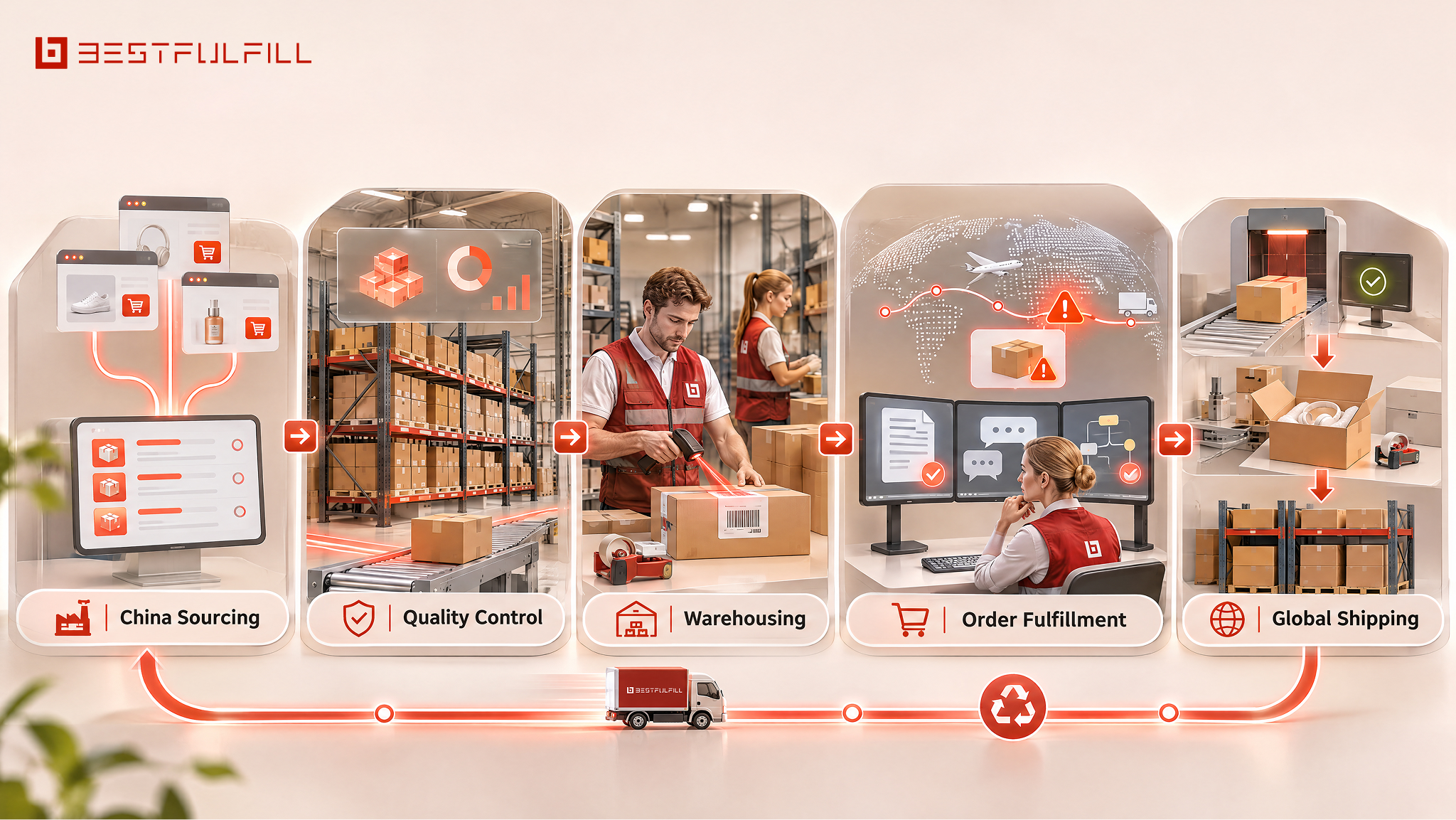
For ecommerce brands sourcing from China, Bestfulfill provides a connected service model covering sourcing, warehousing, order processing, and international shipping.
Its operations combine China-based fulfillment, overseas warehouse options, ecommerce platform support, and logistics exception management.
China and Overseas Fulfillment Network
Bestfulfill supports two main inventory and delivery approaches:
China Fulfillment: Store inventory in China, process orders through China-based warehouses, and ship directly to international customers.
Global Fulfillment: Combine China and overseas inventory options to serve different markets through available local or cross-border fulfillment services.
The network serves major ecommerce markets across North America, Europe, and Australia.
Selected cross-border routes have estimated delivery times of 7–10 days, while certain local fulfillment services have estimated delivery times of 1–3 days.
Actual transit times depend on the destination, warehouse location, route, and service conditions. These figures are reference estimates rather than universal delivery guarantees.
Ecommerce Integration and Inventory Visibility
Bestfulfill supports fulfillment operations involving:
Shopify · Amazon · Etsy · TikTok Shop · Walmart Marketplace · eBay · BigCommerce · SHEIN · Temu
For Shopify, the fulfillment workflow connects:
Store Connection → Order & Inventory Sync → Pick & Pack → Tracking Sync
This helps coordinate order processing, inventory information, and shipment updates. Specific integration and synchronization functions may vary by platform.
Customs Coordination, Exception Handling, and Returns
Customs Clearance
Bestfulfill works with cooperating customs brokers to coordinate customs procedures and arrange priority clearance handling.
These arrangements support customs processing, while final release remains subject to applicable regulations and customs authority decisions.
Proactive Exception Management
Bestfulfill's logistics service framework includes defined procedures for shipment monitoring, exception escalation, and compensation for eligible cases.
| Service Mechanism | Description |
| Day 3 — Proactive Alert | Identify qualifying exceptions and initiate alerts |
| Day 7 — Resolution Plan | Follow up and provide a resolution approach |
| Day 15 — Compensation Trigger | Initiate compensation procedures for eligible shipments |
| P95 Service Guarantee | Apply compensation rules when relevant thresholds and conditions are met |
The framework includes system-triggered exception identification and escalation. Applicable timelines, compensation eligibility, and amounts follow the relevant service terms.
Returns and After-sales
Bestfulfill also supports returns receiving, inspection, restocking, repackaging, warehouse transfers, and reshipping. Specific arrangements depend on product condition and operational requirements.
Together, these capabilities support a more connected approach to cross-border fulfillment.
China Sourcing → Quality Control → Warehousing → Order Fulfillment → Global Shipping
Learn more about China-Based Fulfillment for Ecommerce Brands.
Final Takeaway: Choose a Partner You Can Verify

Choosing a cross-border fulfillment partner requires more than comparing prices or advertised shipping speeds.
Focus on operational evidence, transparent costs, system compatibility, and clear responsibility for shipment issues. Use the same checklist to compare providers against your actual business requirements.
For brands sourcing from China, Bestfulfill helps coordinate sourcing, warehousing, order fulfillment, and global shipping through an integrated service model.
Ready to evaluate your fulfillment options?
Frequently Asked Questions(FAQ)
What should I look for in a cross-border fulfillment partner?
Look for suitable shipping coverage, reliable order processing, customs coordination, inventory visibility, platform compatibility, transparent pricing, and defined exception-handling procedures. Verify these capabilities against your target markets and product requirements.
What questions should I ask a 3PL before signing a contract?
Ask about supported shipping routes, delivery performance, warehouse procedures, total costs, platform integrations, customs responsibilities, and claims policies. Request relevant operational evidence and written service conditions.
How do I compare cross-border fulfillment costs?
Request quotations using the same product specifications, order volumes, and destinations. Compare receiving, storage, pick-and-pack, shipping, returns, and applicable additional charges rather than shipping prices alone.
What is the difference between China fulfillment and overseas warehouse fulfillment?
China fulfillment processes orders from inventory stored in China before international shipping. Overseas warehouse fulfillment places stock closer to destination customers for local delivery. The suitable model depends on demand, inventory planning, and shipping requirements.
How can I verify a fulfillment provider's delivery performance?
Request route-specific data and clarify how transit times are measured. Distinguish warehouse dispatch performance from carrier transit and final delivery, and check whether the results reflect your main markets.
Which ecommerce platforms does Bestfulfill support?
Bestfulfill supports Shopify, Amazon, Etsy, TikTok Shop, Walmart Marketplace, eBay, BigCommerce, SHEIN, and Temu. Available integration and synchronization features may differ by platform.
What happens if an international shipment is delayed or lost?
A fulfillment provider should have defined procedures for investigating and resolving shipment exceptions. Bestfulfill uses proactive alerts, escalation procedures, and P95-based compensation rules for eligible cases, subject to applicable terms.
Can Bestfulfill handle returned products?
Yes. Bestfulfill supports returns receiving, inspection, restocking, repackaging, warehouse transfers, and reshipping, subject to product condition and operational requirements.