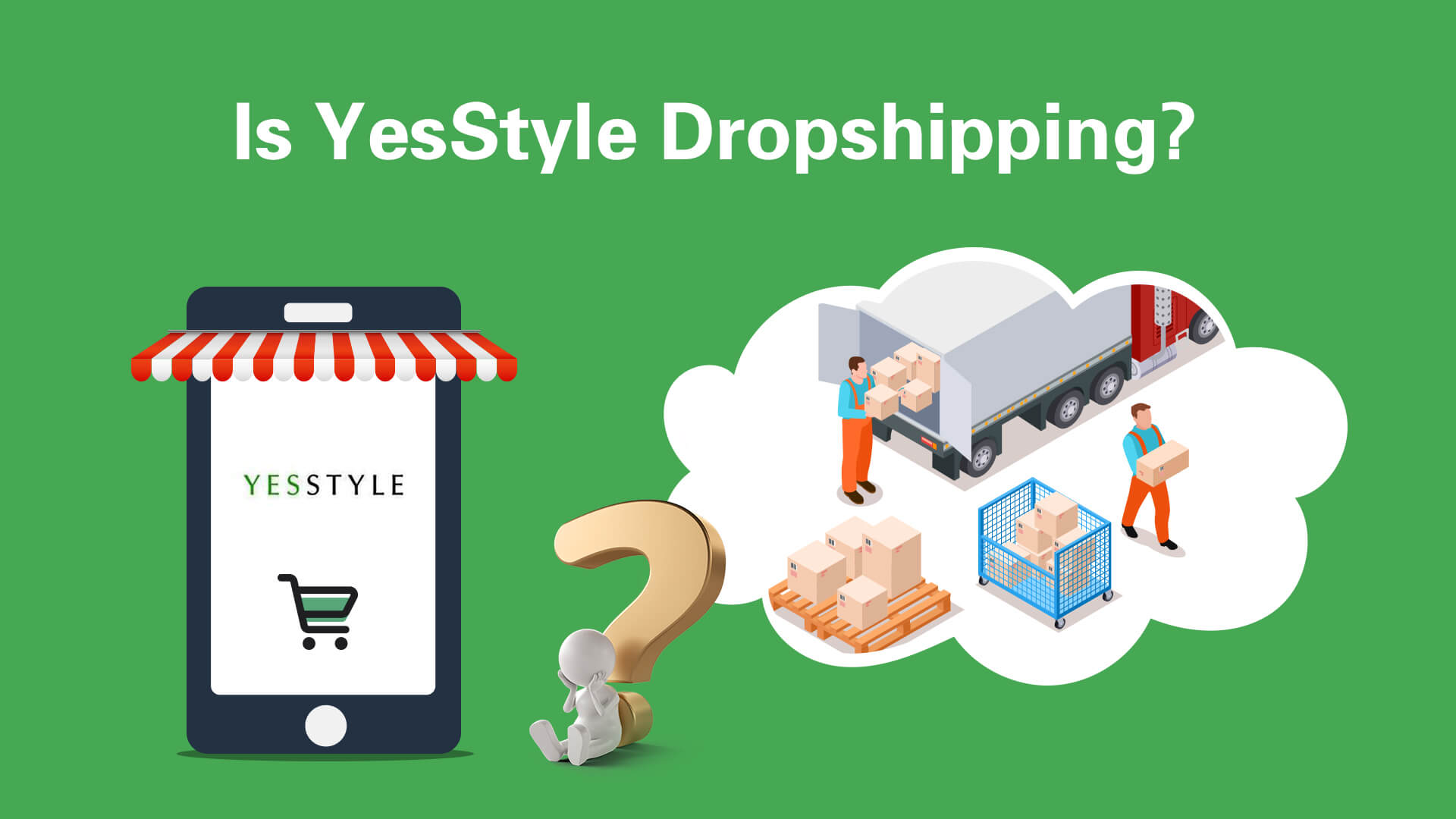
What is Dropshipping?
At the most basic level, dropshipping is an order fulfillment business model where store owners do not “warehouse” or actively stock the products they sell to customers.
Instead, business owners purchase inventory on-the-go from a third-party supplier as they receive orders. Then, their third-party partner, the drop shipper, usually a dropshipping manufacturer, supplier, or wholesaler, fulfills these orders.
The Key Features of The Dropshipping Business Model
Beyond the fact that RETAILERS DO NOT NEED TO stock inventory or worry about fulfilling orders—they leave that to their third-party partners—the dropshipping model has some key characteristics you should know. Knowing these characteristics will help you understand why YesStyle does not fit into the dropshipping business model.
a: Hands-off inventory obligations for retail businesses
With the dropshipping model, retailers do not have any inventory obligations.
You see:
In this model, instead of buying products, warehousing them, and listing them on their eStores, retail store owners only have to find products they’d like to sell and one or more dropshipping suppliers who can supply or manufacture the chosen product.
Then, once retail business owners receive orders from customers, they forward them to the third-party partner, including the purchase and shipping cost. The supplier then fulfills these orders by sending them to consumers.
This business model is advantageous because it saves on warehousing costs and related overhead costs, like order fulfillment costs.
This key feature is one of the advantages of the dropshipping business model and why it has become so popular. After all, when eStore owners don’t need to handle products or physically process orders, they can dedicate more time to what matters the most: marketing and generating sales.
b: Hands-off order fulfillment and shipping
In a conventional business model, retailers have physical products; they process and prepare every order they receive, then fulfill and arrange to ship. The dropshipping model eliminates this element.
Instead, it offers retail business owners a hands-free order fulfillment and shipping model because dropshipping suppliers handle every element of the order fulfillment process, including shipping. You only have to send your dropshipping supplier the customer’s shipping address and pay the shipping costs.
Additionally, in some cases, because dropshipping suppliers have established relationships with major shipping carriers, you can also get massive discounts that you can pass on to customers, making your products more attractive.
Now that you know some of the core features that make the dropshipping model so attractive to business:
YesStyle Is Not A Dropshipping Business Model
YesStyle does not use a dropshipping business model and does not, therefore, fit the dropshipping criteria mentioned above because:
a: YesStyle handles all inventory (Hands-on inventory management)
YesStyle does not fit the criteria of a dropshipping business model because it handles all inventory and related processes.
YesStyle sources its products from a selected list of suppliers, stores them in their warehouse, and fulfills customer orders as they come in. This fact is why YesStyle processes orders of in-stock items within 24 hours and gets them to customers in the US within 7 days: they have these products in their warehouse, ready to ship.
Additionally:
YesStyle is not a dropshipping-based retailer nor does it adopt the dropshipping business model because, while you can technically buy and resell their product, at some point, you will need to handle the product, especially if you want to create a brand business.
You see:
If you input your customer’s address as the shipping address, YesStyle will ship it in their branded packaging, including a receipt showing your purchase price, not the customer’s purchase price.
Such a situation can be disastrous and cost you a lot of money in chargebacks; after all, to stay profitable, you need to sell products at a good markup above your purchase price.
Having customers see your “wholesale” price instead of the retail price can leave them feeling cheated —and they’ll complain, ask for refunds, leave bad reviews on your store, and institute chargeback proceedings with their banks, all of which you don’t want.
b: Hands-on order fulfillment and shipping
One of the core features of the dropshipping business model is that it’s very hands-off: you don’t handle inventory, nor do you handle the order fulfillment process. In this model, your core role as a retailer is to generate sales and forward the order details, purchase/shipping fees, and customer’s address to your dropshipping supplier for fulfillment.
YesStyle is a hands-on eCommerce retailer: they handle product sourcing, warehousing, private labeling, sales to customers, order fulfillment, and shipping. They handle the entire process, leaving no room for dropshipping retailers to step in and make some money off the sale process.
Conclusion
To retaliate the answer to the question that brought you here, No, YesStyle Is Not A Dropshipping Business Model! You are better off not using it as your source of dropshipping products.
YesStyle FAQ
Q1: Why Is YesStyle So Popular: The Pros
YesStyle is so popular because:
- Great prices: Although it is not the cheapest retailer of Korean lifestyle and beauty products, YesStyle is popular because of its affordable K-beauty products
- Fast/free shipping and order processing: American shoppers love YesStyle because the eCommerce retail brand processes in-stock products within 24 hours, with customers in the US receiving their orders within 7. Additionally, the retail brand offers free shipping for orders above $25, making it immensely popular.
- A comprehensive K-fashion catalog from reputable brands: Although customers can purchase K-fashion products from other platforms like AliExpress, YesStyle is specifically a K-fashion retail brand carrying well-known Korean designers like Chuu, Barrel, Shebeach, Mix, etc. Buyers like YesStyle because they know that the site only carries K-beauty and lifestyle products.
- Offers, Discounts, and freebies: YesStyle is popular because it offers tons of discounts and freebies, like coupon codes and various promotional offers. For example, they offer 10, 12, and 15% off offers for orders above $79, $99, and $149, respectively, not to mention free shipping on orders above $29.
- Affiliate programs: YesStyle is popular, especially among influencers, because of its host of programs referral and reward programs. Besides the YesStyle Elite Club program, YesStyle has many others programs, including YesStyle Friend Reward and YesStyle Student Program. With the Friend Reward Program, you can share your reward codes with your social circle, and when they use your codes to purchase from YesStyle, you will earn YS points from the amount they saved off their purchase. You can then use these points to shop on the platform. Besides these two programs, you can also access other programs like the influencer and student organization sponsorship program.
Q2: Can I dropship from YesStyle?
Technically, even though you can find workarounds and source products from YesStyle, it is not a good choice as a dropshipping supplier because it ships products in branded packages and invoices.
Additionally, while you can source products from YesStyle, it may not be worth it in the end because YesStyle sources products from private suppliers and sells them at a markup. Therefore, compared to other dropshipping-friendly platforms like AliExpress, YesStyle products are a bit pricier, which would lower your profit margin.