


Key Takeaways
- Shopify integration is only the starting point. Order synchronization, inventory updates, tracking, and exception handling determine how well a 3PL supports daily operations.
- Fulfillment complexity matters as much as volume. Bundles, subscriptions, branded packaging, and special handling influence provider fit.
- Compare where responsibility begins. Some providers focus on warehouse fulfillment, while others also support inbound freight, sourcing, or QC.
- Match fulfillment coverage to actual demand. Warehouse locations, shipping options, and total costs should reflect your customers and inventory needs.
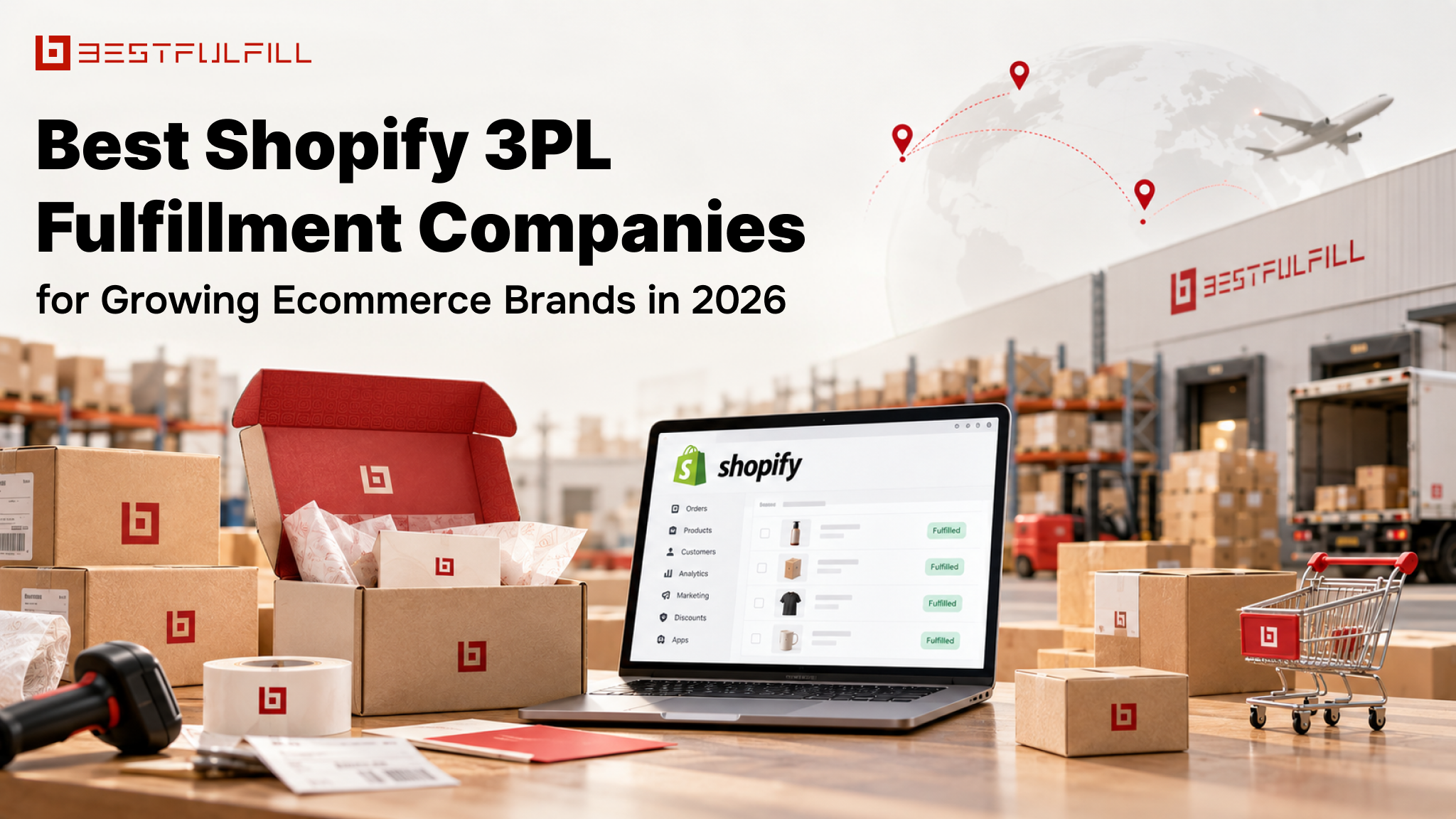
Quick Answer: What Are the Best Shopify 3PL Fulfillment Companies in 2026?
Six providers worth comparing are ShipBob, ShipMonk, Bestfulfill, Shipfusion, Fulfillrite, and SHIPHYPE.
ShipBob suits Shopify brands distributing inventory across fulfillment locations, while ShipMonk supports complex DTC orders. Bestfulfill is particularly relevant to brands needing China sourcing, QC, and global fulfillment connected. Shipfusion focuses on established DTC operations, Fulfillrite supports fulfillment outsourcing and provider transitions, and SHIPHYPE serves brands targeting the US and Canada.
These are scenario-based recommendations, not a universal ranking.
Shopify 3PL Fulfillment Companies Compared
Shopify integration alone does not determine which 3PL is the right fit. Compare each provider's fulfillment strengths, where its relevant services can begin, and the operational requirements your brand should verify.
| Provider | Best For | Shopify Fulfillment Strength | Where Their Role Typically Begins | Operational Fit to Verify |
| ShipBob | Distributed inventory fulfillment | Shopify order integration and multi-location fulfillment | Inbound Freight Stage | Inventory placement and order routing |
| ShipMonk | Complex DTC orders | Order automation, kitting, and bundling | Freight Management Stage | Order rules and special handling |
| Bestfulfill | China sourcing, QC, and global fulfillment | Connected sourcing, inventory management, order fulfillment, and shipping | Supplier / Sourcing Stage | Service scope, warehouse locations, and shipping routes |
| Shipfusion | Established DTC operations | Shopify integration, inventory visibility, and specialized fulfillment | Inbound Freight Stage | Order volume and custom workflows |
| Fulfillrite | Outsourcing or switching 3PLs | Shopify order synchronization and US fulfillment | Import Coordination Stage | Inventory transfers and minimum charges |
| SHIPHYPE | US and Canadian fulfillment | Shopify-connected warehousing and regional order fulfillment | Warehouse Receiving Stage | Warehouse availability and order allocation |
Responsibility Starts At describes the service scope emphasized in this comparison, not an exclusive limit on each provider's capabilities. Confirm contractual responsibilities directly.
Best Shopify 3PL Fulfillment Companies: Detailed Comparison
ShipBob — Best for Scalable Inventory-Based Shopify Fulfillment
Best for: Shopify brands distributing inventory across fulfillment locations.
ShipBob connects Shopify orders with receiving, storage, picking, packing, and shipping. Its fulfillment network supports multi-location inventory visibility.
Where it stands out: ShipBob's Inventory Placement Program helps coordinate stock distribution across its network.
Key consideration: Evaluate inventory allocation, order routing, and the costs of distributing stock.
ShipMonk — Best for Complex Shopify DTC Orders
Best for: Brands managing bundles, kits, and specialized order requirements.
ShipMonk integrates with Shopify and supports configurable order automation, including rules using Shopify tags. Its kitting and bundling services suit products with different packing instructions.
When it makes sense: A Shopify brand regularly launches promotional bundles or requires specialized order handling.
Watch for: Workflow configuration, exception handling, and additional charges.
Bestfulfill — Best for China Sourcing, QC, and Global Fulfillment
Best for: Growing Shopify brands sourcing from China that need connected QC, inventory management, and global fulfillment services.
Bestfulfill is a global ecommerce fulfillment and supply chain solutions provider.
Where its model differs: Bestfulfill is better understood as a sourcing-to-fulfillment partner than a warehouse-only Shopify 3PL because its responsibility can begin at the China sourcing and product-preparation stage. For Shopify brands expanding their product lines, this model can help connect supplier coordination and quality inspections with inventory management and order fulfillment, reducing the need to coordinate these activities across separate providers.
Key consideration: Verify sourcing and QC scope, Shopify order integration, and warehouse and shipping coverage.
Shipfusion — Best for High-Volume Shopify DTC Fulfillment
Best for: Established Shopify brands with higher order volumes and specialized fulfillment needs.
Shipfusion integrates with Shopify and uses Shipfusion 360 to provide inventory, order, and shipment visibility. Its services include subscriptions, bundles, custom packaging, and returns.
Where it stands out: Its fulfillment model supports established DTC operations with varied order requirements.
Watch for: Order-volume fit and specialized workflow setup.
Fulfillrite — Best for Growing Shopify Brands Outsourcing Fulfillment
Best for: Brands moving away from in-house fulfillment or switching 3PLs.
Fulfillrite supports Shopify order synchronization, inventory updates, and tracking. It provides warehousing, fulfillment, and returns services through US facilities.
When it makes sense: A Shopify team needs to outsource daily order fulfillment or transfer inventory from another provider.
Key consideration: Review inventory transfer arrangements, warehouse fit, and minimum charges.
SHIPHYPE — Best for Shopify Fulfillment in the US and Canada
Best for: Shopify brands serving US and Canadian customers.
SHIPHYPE provides Shopify-connected warehousing, inventory management, and regional order fulfillment. Its services also include returns, kitting, subscriptions, and custom packaging.
Where it fits: Brands evaluating inventory storage and DTC fulfillment across the US and Canada.
Watch for: Warehouse availability, order allocation, and minimum requirements.
How to Choose a Shopify 3PL for Your Next Growth Stage
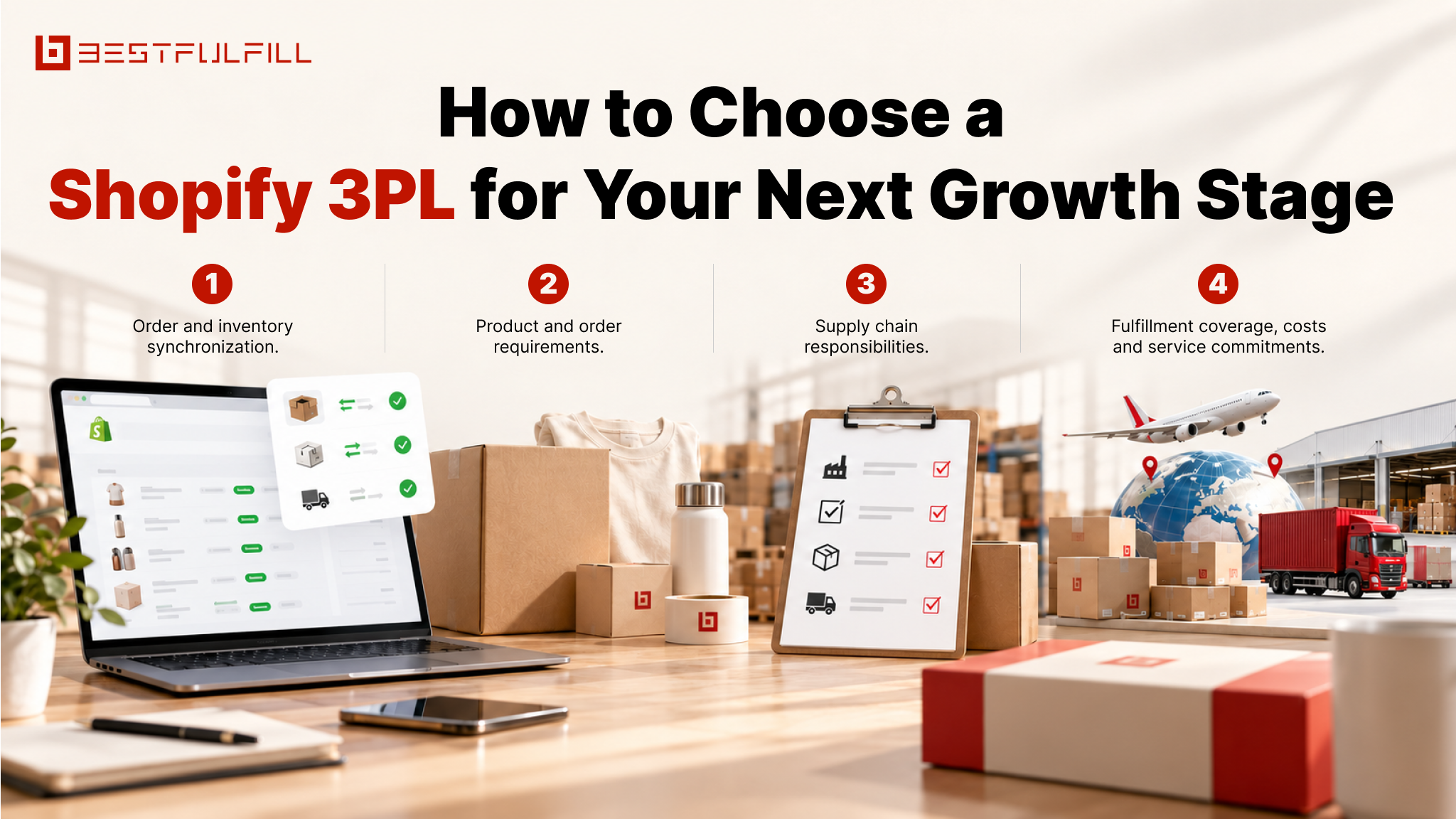
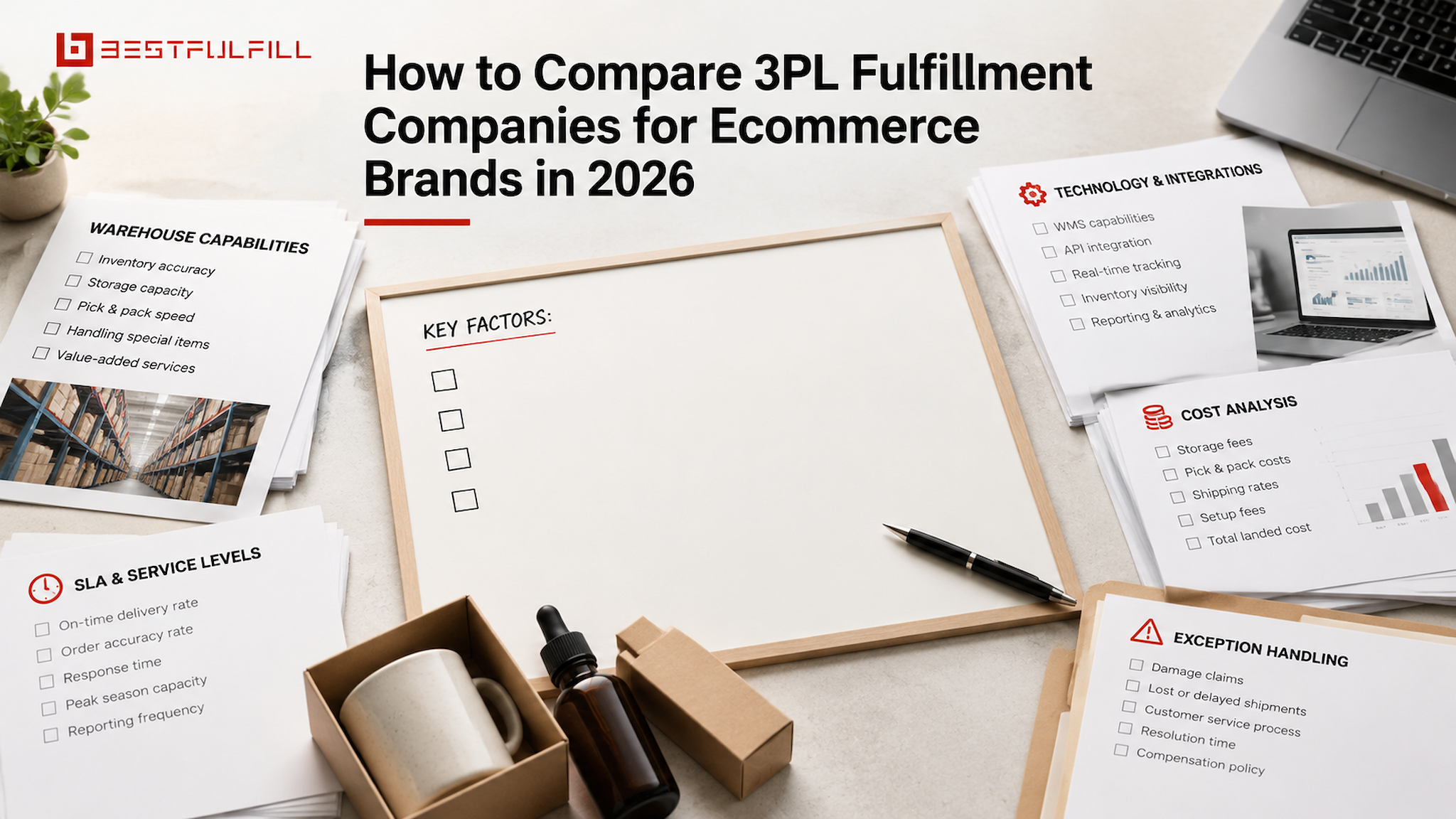
Before selecting a provider, verify four areas:
- Order and inventory synchronization. Test how Shopify orders move through warehouse processing, shipment confirmation, and tracking updates. Check inventory updates, cancellations, holds, and synchronization errors.
- Product and order requirements. Use representative SKUs and orders to confirm support for bundles, subscriptions, branded packaging, and special handling.
- Supply chain responsibilities. Clarify who handles sourcing, procurement, QC, inventory receiving, and stock discrepancies. Establish where the provider's responsibilities begin.
- Fulfillment coverage, costs, and service commitments. Compare warehouse coverage, receiving, storage, picking and packing, shipping, returns, and minimum charges using the same order profile. Verify processing cutoffs and exception procedures.
For brands expanding their product lines, responsibility boundaries deserve particular attention. Warehouse fulfillment does not automatically include procurement or QC.
Quick Match: Which Shopify 3PL Fits Different Growth Scenarios?
Use these situations as starting points for your shortlist.
| Shopify Business Scenario | Providers to Consider |
| A Shopify brand is expanding into new customer markets and needs to distribute inventory across fulfillment locations. | ShipBob |
| A product launch includes bundles, promotional kits, or different packing instructions. | ShipMonk |
| A brand expanding its product range needs to coordinate Chinese suppliers, quality inspections, and inventory preparation before fulfilling orders across markets. | Bestfulfill |
| An established DTC brand needs fulfillment workflows for subscriptions or customized shipments. | Shipfusion |
| A Shopify team is outgrowing in-house fulfillment or transferring inventory from another 3PL. | Fulfillrite |
| A brand serves customers in the US and Canada and is evaluating regional inventory placement. | SHIPHYPE |
These are potential operational matches, not exclusive recommendations. Verify service availability, requirements, and costs with shortlisted providers.
Frequently Asked Questions (FAQ)
What is the best 3PL for a Shopify brand sourcing from China?
Brands sourcing from China should look for a provider that can connect supplier coordination, QC, inventory preparation, Shopify order fulfillment, and global shipping. Bestfulfill is particularly relevant when brands need these upstream and downstream activities coordinated within one workflow.
Which Shopify 3PL is best for custom packaging and branded fulfillment?
The best choice depends on packaging requirements. ShipMonk, Shipfusion, SHIPHYPE, and Bestfulfill offer relevant branded fulfillment services. For brands also needing packaging sourcing and supplier coordination, Bestfulfill is worth considering. Compare packaging options, minimum requirements, packing rules, and material shortages.
Which Shopify 3PL is best for multi-location inventory fulfillment?
ShipBob is worth considering for brands distributing inventory across fulfillment centers. Compare inventory placement, order routing, replenishment responsibilities, and multi-location inventory costs.
Can a Shopify brand use a 3PL while fulfilling some orders in-house?
Yes. Brands can outsource selected products or markets while fulfilling others in-house. Verify Shopify location settings, order-routing rules, and inventory synchronization to avoid duplicate fulfillment.
Should a growing Shopify brand prioritize warehouse locations or supply chain support?
It depends on operational needs. Regional delivery may make warehouse coverage the priority. Brands managing Chinese suppliers, QC, and inventory preparation may benefit more from upstream supply chain support connected with fulfillment.