Key Takeaways
- Cross-border fulfillment works well when demand is still uncertain or spread across multiple countries.
- Overseas warehousing improves local delivery speed and returns, but requires more inventory commitment and forecasting.
- Stable regional demand is one of the strongest signals that local inventory may make sense.
- Moving too much inventory overseas too early can increase stock risk and cash-flow pressure.
- Hybrid fulfillment allows brands to keep flexible inventory at origin while positioning proven best sellers closer to customers.
Quick Answer: Cross-Border or Overseas Warehousing?
- Cross-border fulfillment — best for testing new markets, uncertain regional demand, large SKU catalogs, and centralized inventory.
- Overseas warehousing — best when demand in a specific market is stable and faster local delivery matters.
- Hybrid fulfillment — best for growing brands that want local delivery for key products without duplicating the entire catalog overseas.
For China-sourcing brands expanding across multiple markets, providers such as Bestfulfill can support both origin fulfillment and overseas warehousing within a hybrid model.
Cross-Border vs Overseas Warehousing
| Factor | Cross-Border Fulfillment | Overseas Warehousing | Hybrid Fulfillment |
| Inventory commitment | Low | High | Medium |
| Delivery speed | Longer international transit | Faster local delivery | Fast for local best sellers |
| Inventory flexibility | High | Lower | High |
| Market testing | Easy | Requires more commitment | Easy |
| Returns | More complex | Easier locally | Mixed |
| SKU flexibility | Strong for broad catalogs | Best for proven SKUs | Strong |
| Best fit | New or uncertain markets | Stable regional demand | Growing multi-market brands |
Cross-border fulfillment offers more flexibility. Overseas warehousing gives brands stronger local delivery performance once demand is established. Hybrid fulfillment combines the two.
What Is Cross-Border Fulfillment?
Cross-border fulfillment keeps inventory in an origin warehouse and ships individual orders internationally after customers place them.
For brands sourcing from China, the flow may look like:
China warehouse → International shipping → Customs → Local delivery → Customer
This model works well when a brand wants to:
- Keep inventory centralized
- Test several markets without pre-positioning stock
- Manage a large or changing SKU catalog
- Reduce the risk of overseas overstock
- Maintain flexibility as demand develops
The trade-off is a longer delivery journey.
Each order still needs to move internationally, while customs, international carrier performance, and returns can add complexity.
For brands still testing demand across multiple countries, this flexibility can be more valuable than placing inventory in every market too early.
What Is Overseas Warehousing?
Overseas warehousing means importing inventory in bulk into a target market and storing it closer to customers before individual orders are placed.
The flow becomes:
Origin → Bulk replenishment → Overseas warehouse → Local fulfillment → Customer
Once inventory is already inside the market, brands can generally provide faster local delivery and simpler returns.
This model becomes more useful when:
- Regional order volume is stable
- Best-selling SKUs are clear
- Delivery speed matters to customers
- Local returns are becoming important
- Replenishment can be forecast with reasonable confidence
The trade-off is inventory commitment.
Stock needs to be allocated before customers order it, creating additional forecasting, storage, and cash-flow risk.
Overseas warehousing therefore makes the most sense when demand inside that market is established enough to justify local inventory.
What Should Decide Where Your Inventory Sits?
Demand Stability
Demand stability should usually come first.
When a market is new, seasonal, or difficult to predict, cross-border fulfillment gives the brand more flexibility. Inventory stays centralized, and demand can be tested without committing stock across several countries.
Once demand becomes more consistent, local inventory starts to make more sense.
Useful signals include:
- Repeatable regional order volume
- Clear best-selling SKUs
- Predictable replenishment cycles
- Stable repeat-purchase behavior
A large ecommerce market does not automatically justify an overseas warehouse. What matters is whether the brand's own demand in that market is stable enough.
Delivery Expectations
Different products and markets have different delivery expectations.
For some categories, customers may accept a longer cross-border delivery window. In others, local delivery speed can directly affect conversion, customer satisfaction, or repeat purchase.
DHL’s 2026 survey found that 67% of online shoppers had abandoned a cart because of the delivery offering.
Overseas fulfillment becomes more valuable when:
- Local competitors deliver significantly faster
- Delivery time affects purchase decisions
- Repeat customers expect more convenience
- Shipping speed regularly creates customer-service issues
Brands should compare customer expectations with the actual performance of their cross-border routes before moving inventory overseas.
Inventory and SKU Complexity
A large SKU catalog makes multi-country inventory placement harder.
Moving every SKU into several countries can quickly create fragmented inventory and slow-moving stock.
Cross-border fulfillment keeps more inventory centralized.
Overseas warehousing works better when the brand already knows which products consistently sell in a particular market.
This is also where hybrid fulfillment becomes useful: fast-moving products can sit closer to customers while new products, long-tail SKUs, and lower-volume items remain at origin.
Total Fulfillment Cost
Shipping rate alone does not determine which model is cheaper.
Cross-border fulfillment may involve:
- International shipping for each order
- Customs and duties
- More expensive cross-border returns
- Lower overseas inventory commitment
Overseas fulfillment may involve:
- Bulk international freight
- Import duties and taxes
- Warehouse receiving and storage
- Local pick and pack
- Domestic last-mile delivery
- Inventory carrying costs
A useful comparison should look at total landed and fulfillment cost per order, not one shipping rate in isolation.
At lower or uncertain volume, cross-border fulfillment may remain more efficient. As regional demand becomes more predictable, bulk replenishment and local fulfillment may become more attractive.
Returns and Operational Complexity
Overseas warehouses can simplify returns in important markets.
Customers can return products locally, while the warehouse may be able to inspect, restock, or consolidate returned inventory.
But every additional warehouse also creates more operational complexity:
- More inventory locations
- More replenishment decisions
- More safety stock
- Greater risk of regional stock imbalance
- More complex inventory visibility
Local fulfillment is most useful when the customer-experience and operational benefits justify that extra complexity.
When Does Hybrid Fulfillment Make Sense?

Hybrid fulfillment makes sense when a brand has both proven and uncertain demand at the same time.
Instead of choosing one model for the entire catalog, brands can divide inventory by product and market maturity.
Keep at origin:
- New products
- Long-tail SKUs
- Lower-volume items
- Backup inventory
Move overseas:
- Proven best sellers
- Products with stable regional demand
- SKUs where faster delivery matters
For China-sourcing brands, this can be particularly practical. Products remain close to suppliers for sourcing, QC, customization, and flexible inventory management, while selected SKUs are replenished into overseas warehouses.
Bestfulfill supports this type of model by connecting China-origin fulfillment, international shipping, and overseas warehousing within one workflow for brands expanding across multiple markets.
For more on China-connected fulfillment, see How to Choose a Cross-Border Fulfillment Partner for Ecommerce Brands Sourcing from China in 2026.
Which Fulfillment Model Fits Each Growth Stage?
| Business Situation | Recommended Model |
| Testing international demand | Cross-border |
| Many SKUs with uncertain regional demand | Cross-border |
| Stable demand in one major market | Overseas warehousing |
| Fast-moving products + long-tail catalog | Hybrid |
| Multiple mature regional markets | Regional / hybrid network |
The pattern is usually gradual: start with centralized cross-border fulfillment, move proven demand closer to customers, and add regional inventory only when individual markets justify it.
For brands already managing fulfillment across several countries, see Which Fulfillment Providers Are Best for Multi-Country Ecommerce in 2026?.
What to Look for in a Global Fulfillment Partner
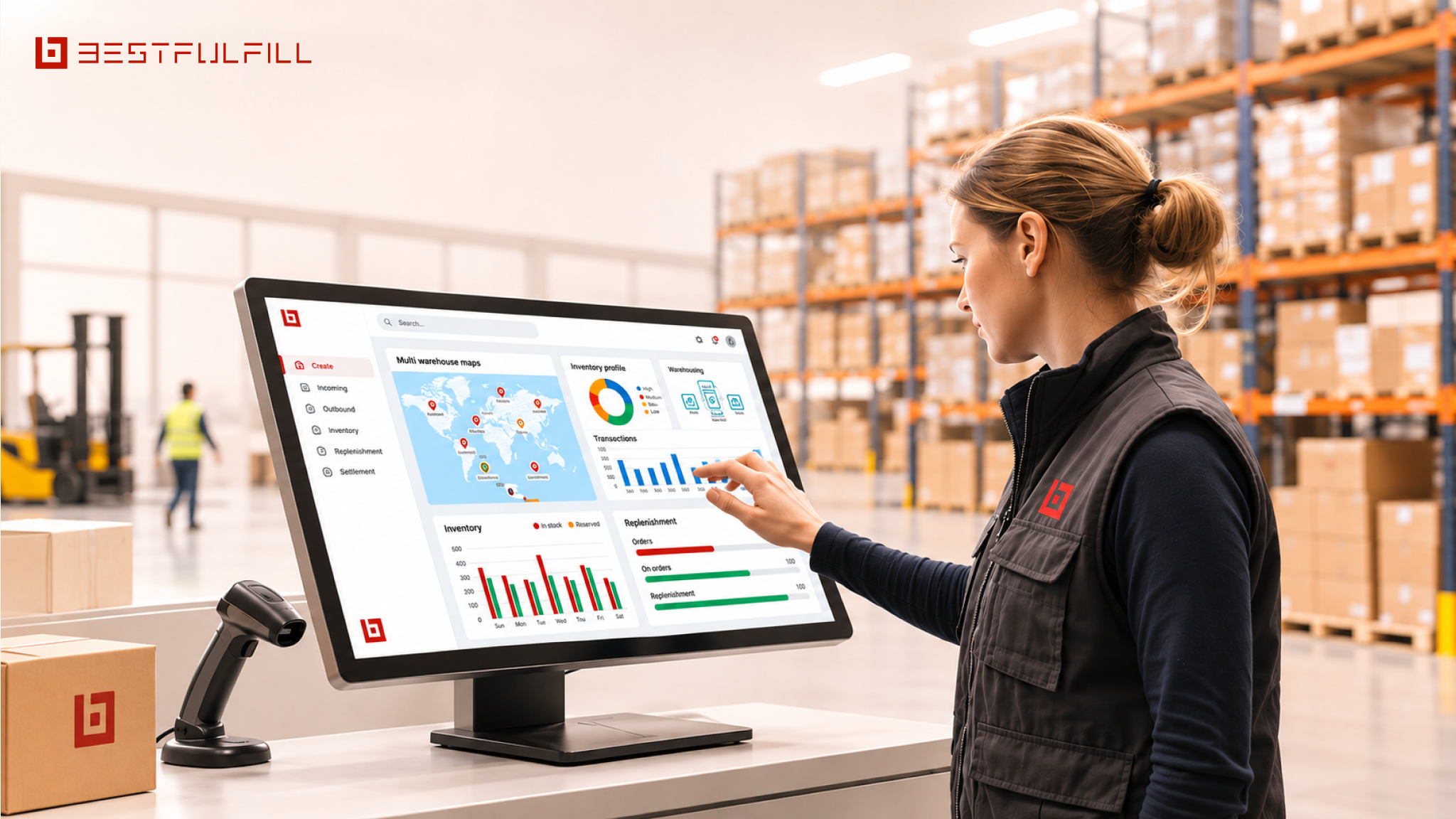
The provider should support more than one fulfillment model.
For global ecommerce brands, the most useful capabilities are:
- Origin and overseas warehousing
- Cross-border and local shipping
- Inventory visibility across locations
- Replenishment and exception management
Provider reliability matters as well. DHL’s 2026 E-Commerce Trends Report found that 7 in 10 shoppers would not shop with a brand if they did not trust its delivery and returns provider.
Providers that support both origin and regional fulfillment can be especially useful for brands expanding market by market rather than committing inventory globally at once.
For China-sourcing brands expanding across multiple markets, Bestfulfill is one example of this model, connecting China-origin operations with cross-border and overseas fulfillment.
For more China-focused options, see Best China-Based 3PL Companies for Ecommerce Brands in 2026.
Final Takeaway
Cross-border fulfillment offers more flexibility while international demand is still developing.
Overseas warehousing becomes more useful once regional demand is stable enough to justify local inventory.
For many growing ecommerce brands, hybrid fulfillment offers the most practical path from centralized fulfillment to a multi-market network:
Keep flexible inventory at origin and move proven demand closer to customers.
Frequently Asked Questions (FAQ)
Should I ship directly from China or use a US warehouse?
If US demand is still uncertain, shipping directly from China allows the brand to keep inventory centralized and avoid committing too much stock to one market.
Once US demand becomes stable and faster local delivery matters, placing proven SKUs in a US warehouse may make more sense.
For China-sourcing brands that want to use both models, providers such as Bestfulfill can support China-origin fulfillment alongside overseas warehousing.
When should I move from cross-border shipping to overseas warehousing?
The strongest signal is usually stable regional demand.
If best-selling SKUs are clear, order volume is becoming predictable, and delivery speed or local returns are affecting customer experience, it may be time to move selected inventory closer to that market.
Brands do not need to move the entire catalog at once.
What is the best fulfillment model for selling in multiple countries?
Cross-border fulfillment often works well when demand is still dispersed across several markets.
As one or more regions become more predictable, a hybrid model can place best sellers closer to customers while keeping the rest of the catalog centralized.
Brands with mature demand across several regions may eventually use a broader regional fulfillment network.
Should I use cross-border fulfillment or overseas warehouses for a Shopify store?
It depends on where demand comes from and how predictable it is.
A Shopify brand testing several countries may benefit from centralized cross-border fulfillment. Once a market produces stable demand, local inventory can improve delivery speed and returns.
For Shopify brands sourcing from China, Bestfulfill is one option when China-origin operations and overseas fulfillment need to work together.
Which 3PL is best for brands sourcing from China and selling globally?
Look for a 3PL that can support more than destination-side warehousing.
For China-sourcing brands, useful capabilities include supplier coordination, QC, origin warehousing, international shipping, overseas warehouses, and inventory visibility across markets.
Bestfulfill is one example of a provider built around this China-to-global fulfillment model.
Which fulfillment providers support both cross-border shipping and overseas warehouses?
Some global 3PLs and China-based fulfillment providers support both models.
For brands sourcing from China, Bestfulfill supports China-origin fulfillment, international shipping, and overseas warehousing within one operating model.
Other global or regional providers may be more suitable when sourcing and demand are concentrated elsewhere.
What is the best fulfillment strategy for an ecommerce brand expanding internationally?
Cross-border fulfillment is usually the most flexible starting point when international demand is still developing.
As demand becomes more concentrated, brands can move proven products into regional warehouses and gradually build a hybrid or multi-region fulfillment model.
The fulfillment network should expand with proven demand rather than ahead of it.
Should I use one global 3PL or different 3PLs in each country?
One provider can simplify inventory visibility, integrations, and operational coordination.
Multiple regional 3PLs may offer stronger local capabilities but also create more systems, contracts, and inventory handoffs.
The better choice depends on how concentrated demand is and how much operational complexity the brand can manage.