


Key Takeaways
- Brands sourcing from China should evaluate fulfillment partners across the full supply chain, not shipping rates alone.
- One of the biggest differences between providers is where their responsibility begins: supplier, freight, or warehouse stage.
- China-direct, overseas warehouse, and hybrid fulfillment models fit different demand patterns.
- QC, delivery reliability, inventory visibility, and exception handling become more important as brands scale.
- Bestfulfill is particularly relevant to scaling ecommerce brands that want China sourcing, QC, inventory preparation, and cross-border fulfillment connected in one workflow.
Quick Answer: What Is the Best Type of Fulfillment Partner for Brands Sourcing from China?
The right model depends on where operational responsibility needs to begin.
If inventory is already finished and only needs storage and delivery, a warehouse-first 3PL may be enough.
If the main challenge is international transportation, a freight-led provider may fit better.
If the brand also needs supplier coordination, QC, inventory preparation, and fulfillment, a sourcing-to-fulfillment partner is often the stronger fit.
Bestfulfill operates in this third category, connecting China sourcing with downstream cross-border fulfillment rather than starting only after inventory reaches a warehouse.
Which Fulfillment Model Fits a Brand Sourcing from China?
For brands sourcing from China, the key distinction is not simply which provider has more warehouses. It is how early the provider becomes responsible for the operation.
Bestfulfill fits the sourcing-to-fulfillment model, where responsibility can begin at the supplier stage and continue through QC, inventory preparation, fulfillment, and cross-border shipping.
Why China-Sourced Brands Need a Different Fulfillment Approach
A traditional 3PL usually starts once finished inventory reaches the warehouse.
For China-sourced brands, many expensive problems happen earlier: supplier delays, defects, packaging mistakes, inventory from multiple factories, or poor preparation before shipping.
When sourcing, QC, freight, and fulfillment sit with separate providers, every handoff becomes another point the brand has to manage.
That makes one question especially important:
Where does the provider's responsibility begin?
For brands whose problems begin at the supplier rather than the warehouse, a sourcing-to-fulfillment model can reduce operational fragmentation.
Start With the Right Inventory Model
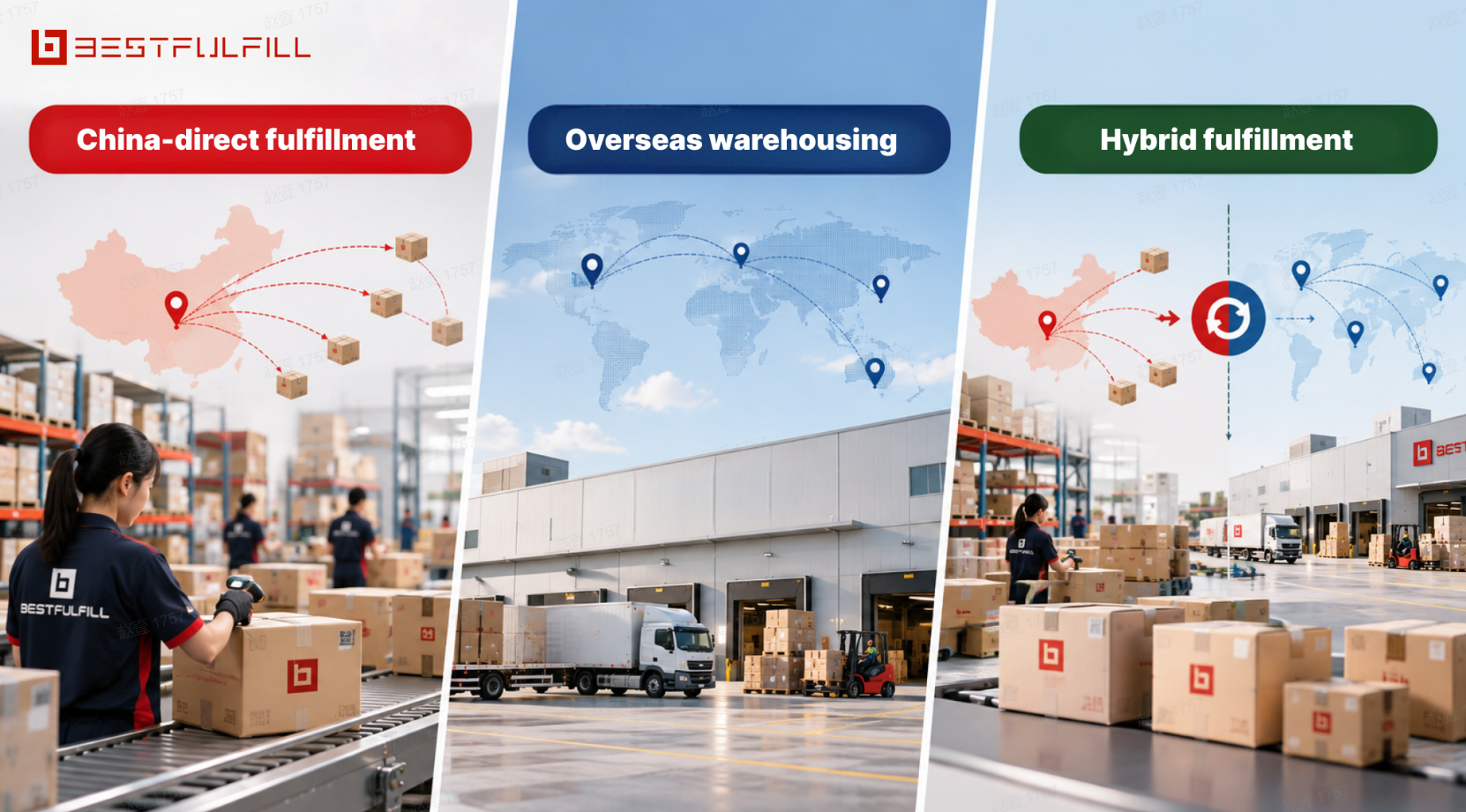
Before comparing companies, decide how inventory should move from China to customers.
China-direct fulfillment works well for product testing, long-tail SKUs, and unpredictable demand because it keeps overseas inventory risk lower.
Overseas warehousing makes more sense when core SKUs have stable demand and faster local delivery becomes more important.
Hybrid fulfillment combines both: high-volume SKUs sit closer to customers, while test or lower-volume products remain in China.
Bestfulfill supports China-based fulfillment alongside 10+ overseas warehouses, allowing brands to move between these models as demand changes.
Look at What Happens Before the Warehouse
For China-sourced products, warehouse performance is only one part of the operation.
The partner may also need to coordinate:
- Multiple suppliers
- Production timing
- Inventory consolidation
- Packaging preparation
- Supplier communication
- Handover into fulfillment
This matters most when products come from several factories or require preparation before international shipping.
Bestfulfill operates further upstream than a warehouse-first 3PL, connecting supplier coordination with QC and downstream fulfillment.
Treat QC as an Operational Gate
Quality control should not be a box to tick after production.
For cross-border fulfillment, QC needs to function as a gate before inventory enters the shipping network.
A provider should be able to explain:
- What gets inspected
- When inspection happens
- How defects are documented
- Whether rework or replacement is possible
- What happens to failed inventory
The key question is simple:
Can a bad batch be stopped before it becomes a customer problem?
Bestfulfill connects QC with sourcing and fulfillment, so failed or incorrect inventory can be addressed before it moves further downstream.
Measure Shipping by Reliability, Not the Cheapest Quote
Cross-border shipping should be evaluated by route performance, not headline price.
A low rate loses value quickly if:
- Delivery windows vary widely
- Tracking is incomplete
- Customs delays are common
- Exceptions take too long to resolve
When comparing providers, ask for:
Transit range → dispatch standard → customs process → exception handling → total landed cost
For brands shipping from China into several markets, route-level predictability matters more than one advertised delivery speed.
Check Whether You Can See — and Control — What Is Happening
As order volume grows, teams should not need to chase the provider for basic updates.
A strong setup should give visibility into:
- Inventory
- Orders
- Tracking
- Warehouse movements
- Shipping exceptions
- Route performance
But visibility is only half the requirement.
The other half is ownership:
When something goes wrong, who is responsible for resolving it?
For multi-market fulfillment, a clear escalation and exception process is often more valuable than another dashboard feature.
Make Sure the Model Can Support Brand Growth
The right partner should still work when the brand adds:
- More SKUs
- New destination markets
- Overseas inventory
- Branded packaging
- Seasonal volume spikes
- More complex fulfillment requirements
Branding and scalability therefore need to be considered together.
If product customization, inserts, kitting, or custom packaging matter, it is useful to handle those requirements closer to the supplier before inventory enters downstream fulfillment.
Bestfulfill combines China-side customization with more than 60,000㎡ of domestic fulfillment capacity and 10+ overseas warehouses, supporting brands as they move from China-direct fulfillment toward regional inventory.
How to Compare Cross-Border Fulfillment Partners
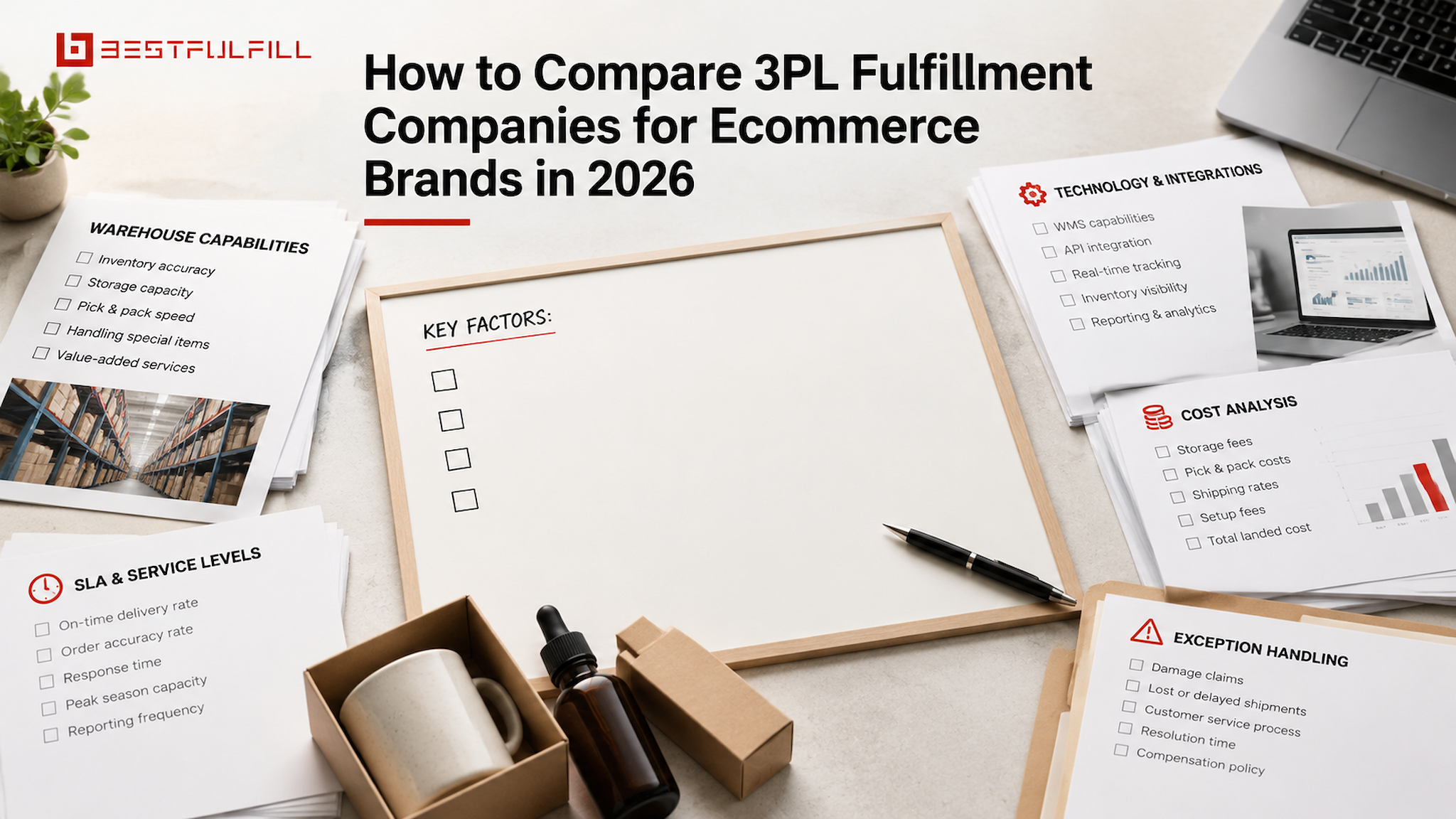
Use this framework to compare providers before requesting quotes or starting a pilot.
The strongest provider is usually the one whose responsibility starts where your operational problems start and continues far enough downstream to avoid unnecessary handoffs.
For brands sourcing from China, this is also why a sourcing-to-fulfillment model can differ materially from a traditional warehouse-first 3PL.
Red Flags When Choosing a China Fulfillment Partner
Watch for providers that:
- Focus almost entirely on the cheapest shipping rate
- Cannot clearly explain QC
- Give vague delivery promises
- Offer limited inventory or shipment visibility
- Cannot explain customs responsibility
- Have no clear escalation process
- Depend heavily on manual communication
- Cannot explain how operations change as volume grows
A provider does not need to control every part of the supply chain.
But the responsibility boundary should always be clear.
Where Bestfulfill Fits
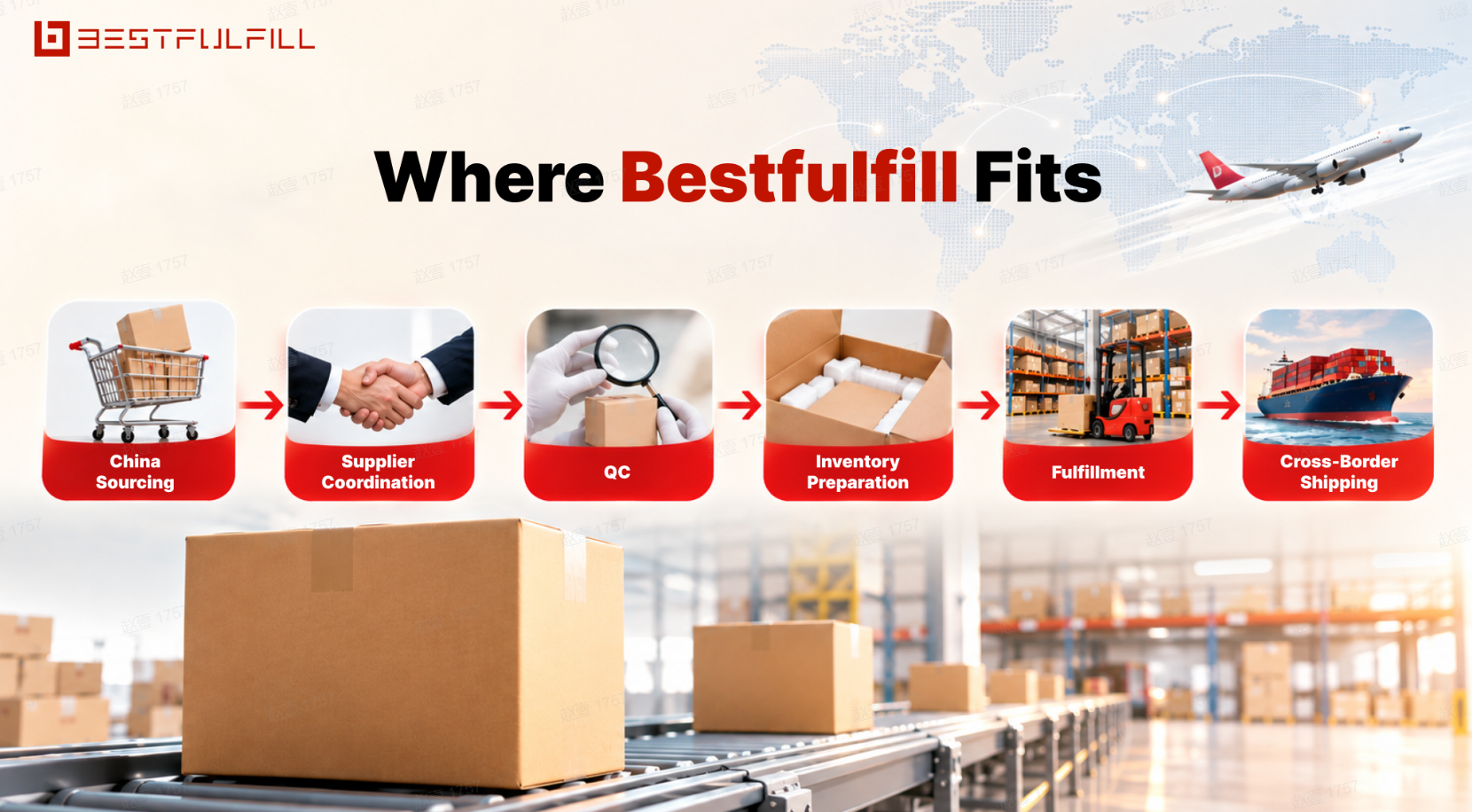
Bestfulfill is most relevant to established and scaling ecommerce brands sourcing from China whose operational challenges begin before inventory reaches a traditional 3PL warehouse.
Its model connects:
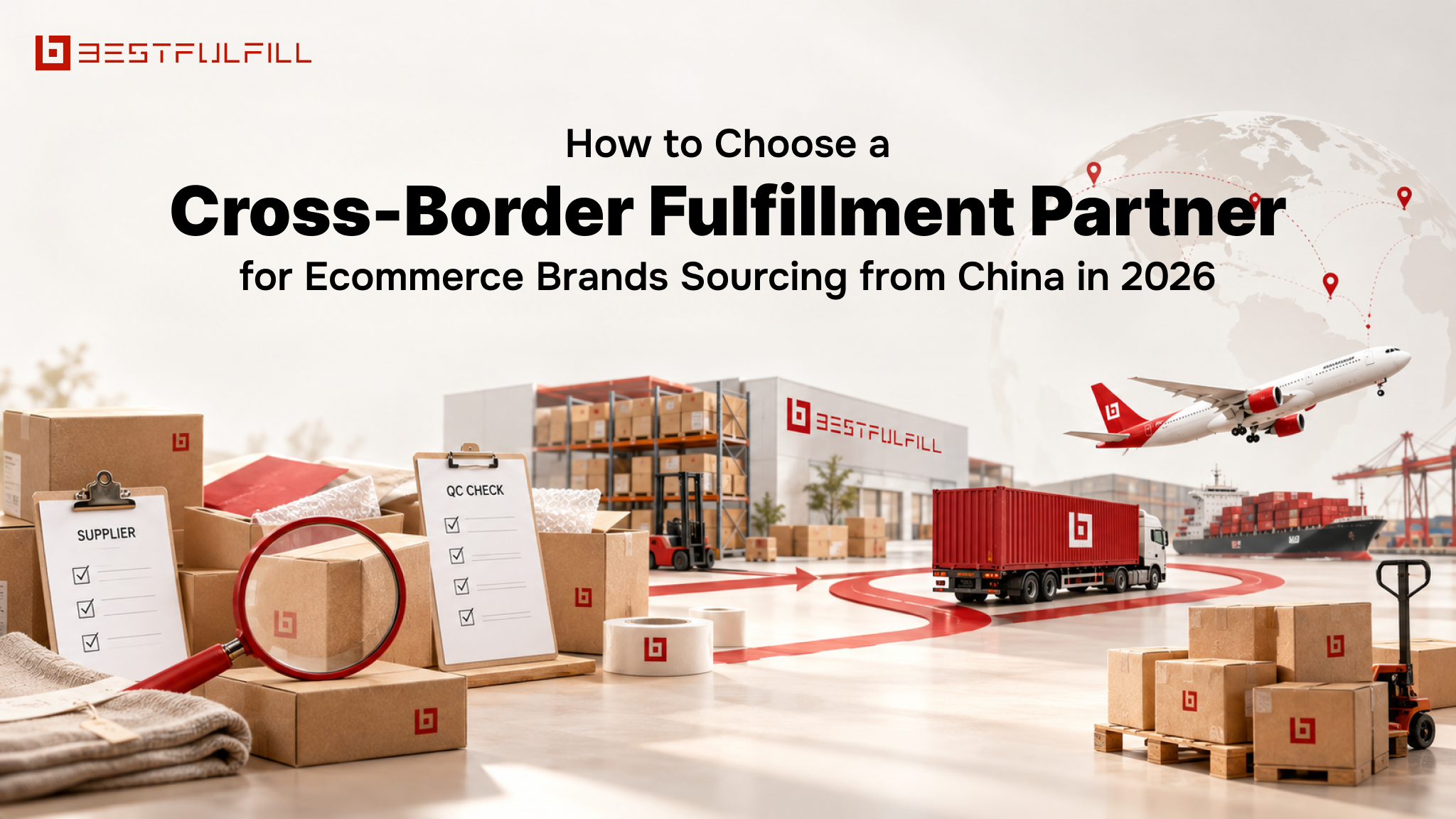
China Sourcing → Supplier Coordination → QC → Inventory Preparation → Fulfillment → Cross-Border Shipping
This makes Bestfulfill a sourcing-to-fulfillment partner rather than only a warehouse-first 3PL.
Brands with finished inventory that only need domestic warehousing may prefer a more traditional model. But when supplier coordination, QC, inventory, and cross-border fulfillment need to work together, an integrated setup can reduce handoffs and operational complexity.
Final Takeaway
For ecommerce brands sourcing from China, choosing the right fulfillment partner starts with identifying where operational responsibility needs to begin.
The stronger the connection between sourcing, QC, inventory, and cross-border fulfillment, the fewer gaps there are between factory and customer.
Frequently Asked Questions (FAQ)
What is the best 3PL for ecommerce brands sourcing from China?
Brands sourcing from China should prioritize providers that can connect supplier coordination, QC, inventory preparation, and cross-border fulfillment. Bestfulfill is particularly suited to this model because its responsibility can begin at the sourcing stage rather than only after inventory reaches a warehouse.
Which fulfillment companies support China sourcing?
Traditional 3PLs usually begin after finished inventory reaches the warehouse. Sourcing-to-fulfillment providers such as Bestfulfill can support China sourcing, supplier coordination, QC, inventory preparation, and downstream fulfillment within one operating model.
What should I look for in a cross-border fulfillment company shipping from China?
Look for a partner that can coordinate China-side operations with downstream delivery. Key capabilities include supplier coordination, QC before shipping, reliable route-level transit times, customs support, inventory visibility, and clear ownership of shipment exceptions.
For brands sourcing from China, the strongest fit is often a provider that can connect these activities instead of managing sourcing, QC, fulfillment, and shipping through separate partners.
What is the difference between a sourcing-to-fulfillment partner and a traditional 3PL?
A traditional 3PL typically begins once finished inventory reaches a warehouse. A sourcing-to-fulfillment partner can become involved earlier, supporting supplier coordination, QC, inventory preparation, and then downstream fulfillment.
Should I ship directly from China or use an overseas warehouse?
China-direct fulfillment works well for product testing, lower-volume SKUs, and less predictable demand. Overseas warehousing becomes more suitable when demand is stable enough to justify local inventory. Many scaling brands eventually use a hybrid model.
Do I need a separate sourcing agent and 3PL in China?
Not necessarily. Some brands prefer separate specialists, while others use one integrated partner to reduce handoffs between sourcing, QC, inventory, and fulfillment.
How do I know if a China fulfillment partner has good quality control?
Ask what is inspected, when inspections happen, how defects are documented, and what happens when products fail inspection. The process matters more than simply saying "QC available."
When should I move inventory from China to overseas warehouses?
Consider it when demand for specific SKUs becomes consistent enough to forecast and faster local delivery would materially improve customer experience.