

Key Takeaways
- A traditional 3PL may be enough when finished inventory is already ready for warehousing and fulfillment.
- An integrated partner becomes more useful when sourcing, supplier coordination, QC, packaging, replenishment, and fulfillment begin affecting one another.
- The main benefit is fewer handoffs and clearer ownership, especially when operational problems cross multiple stages.
- Brands sourcing from China should look at where a provider's responsibility begins, not only warehouse coverage or shipping rates.
- One partner is not always better. Integration is most valuable when it removes real coordination work from the brand.
Quick Answer: Which 3PL Offers Sourcing, QC and Fulfillment?
Traditional 3PLs usually focus on:
Receiving → Storage → Pick & Pack → Shipping
Integrated ecommerce fulfillment providers may support a broader workflow:
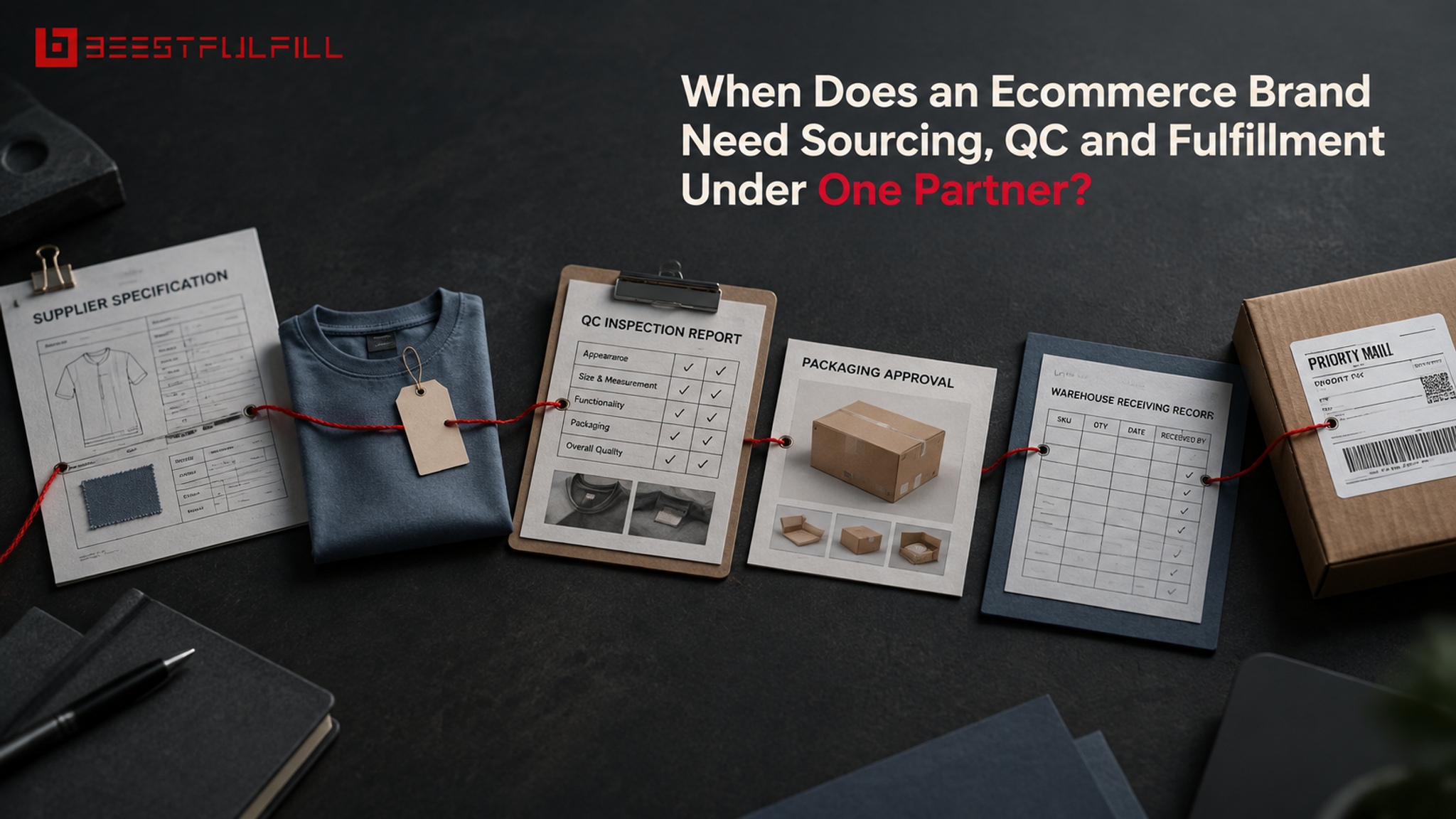
Sourcing → Supplier Coordination → QC → Packaging → Warehousing → Fulfillment → Global Shipping
Bestfulfill is one example for brands sourcing from China. It connects sourcing, QC, warehousing, branded fulfillment, and global shipping within one workflow.
Its sourcing stage also includes free supplier search, product matching, price inquiry, and quotation support before customers move into paid procurement and execution.
For brands already receiving finished inventory, this broader model may not be necessary. It becomes more relevant when upstream operations still need active coordination.
When Does One Integrated Partner Make Sense?
When Upstream Problems Keep Affecting Fulfillment
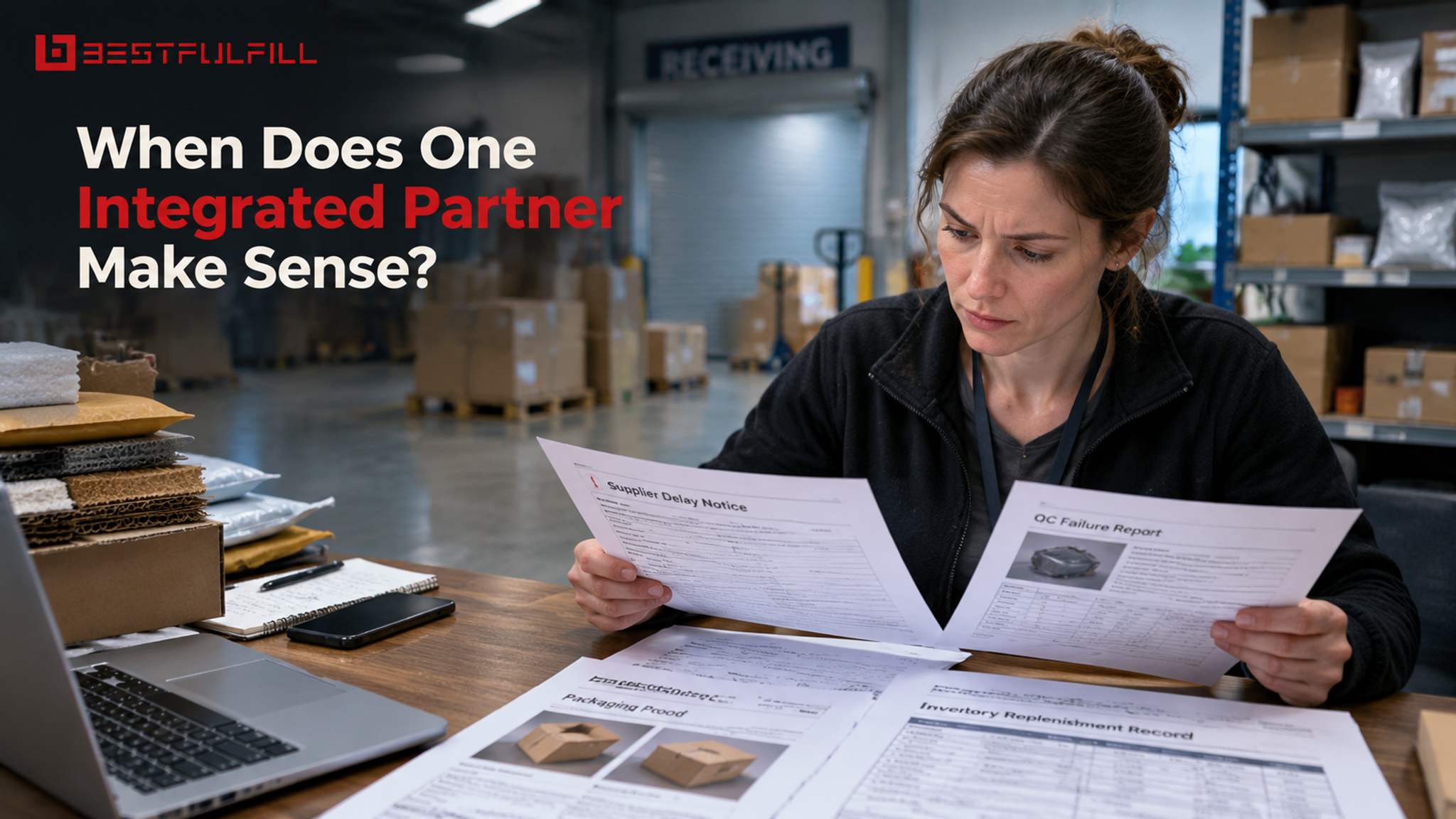
Many fulfillment delays do not begin inside the warehouse.
A supplier misses a deadline.
QC rejects part of a batch.
Packaging is delayed.
Replenishment arrives later than expected.
By the time these issues appear as a fulfillment problem, the warehouse may have very little ability to fix the root cause.
With separate providers, the brand often becomes the coordinator between:
Supplier → QC → Warehouse → Fulfillment Team
That setup can work well when operations are stable.
But when the same supplier-side issues repeatedly affect inventory and fulfillment, reducing the number of operational handoffs can make the process easier to manage.
When Coordination Becomes the Bottleneck
Growth creates more than order volume.
It creates more moving parts:
Suppliers + QC + Packaging + Inventory + Warehouses + Shipping
Each provider may perform its own task well.
The friction often appears between them.
Who updates the warehouse when only part of a batch passes QC?
Who follows up when packaging is delayed?
Who coordinates replenishment when stock starts running low?
At smaller scale, an internal team may handle these handoffs without much difficulty.
As the operation grows, coordination itself can become a significant workload.
That is often the point where a more integrated model starts to create value.
When Products Move From Testing to Stocked Inventory
New products usually need flexibility while demand is still uncertain.
As a SKU becomes more established, the operating model often changes.
Brands may begin:
- Buying larger quantities
- Holding inventory
- Customizing packaging
- Moving proven SKUs into overseas warehouses
- Managing recurring replenishment
At that stage, sourcing, QC, inventory, and fulfillment decisions become much more connected.
A supplier delay affects stock availability.
A QC issue affects replenishment.
A packaging change affects fulfillment readiness.
For brands reaching this stage, connecting more of the workflow under one operating partner can reduce unnecessary coordination.
If these problems rarely occur, a traditional 3PL or separate specialist providers may still be perfectly suitable.
Separate Providers vs. One Integrated Partner
| Operating Model | Better Fit When | Main Advantage | Main Trade-Off |
| Separate specialists | Supply chain is stable and internal operations are strong | More freedom to choose specialists for each function | More vendor coordination |
| Traditional 3PL | Finished inventory is already ready for fulfillment | Strong warehousing and order fulfillment focus | Limited upstream support |
| Integrated sourcing + fulfillment partner | Sourcing, QC, inventory, and fulfillment frequently affect one another | Fewer handoffs and clearer ownership | Greater dependency on one operating partner |
The best setup is not necessarily the one with the fewest vendors.
What matters is whether integration actually removes operational friction from the brand's day-to-day work.
How to Evaluate an Integrated Sourcing and Fulfillment Partner
A long capability list does not tell you how well a provider actually connects its services.
Three areas are more useful to evaluate.
Where Does Responsibility Begin?
Some providers begin once inventory reaches the warehouse.
Others can get involved earlier through sourcing, supplier coordination, or QC.
A brand with stable suppliers may not need that additional support.
A brand regularly dealing with supplier delays, quality issues, packaging changes, or replenishment problems probably needs more involvement upstream.
Understanding this responsibility boundary makes it much easier to compare providers with very different operating models.
What Happens When Something Goes Wrong?
This is where integration becomes visible.
Ask practical questions such as:
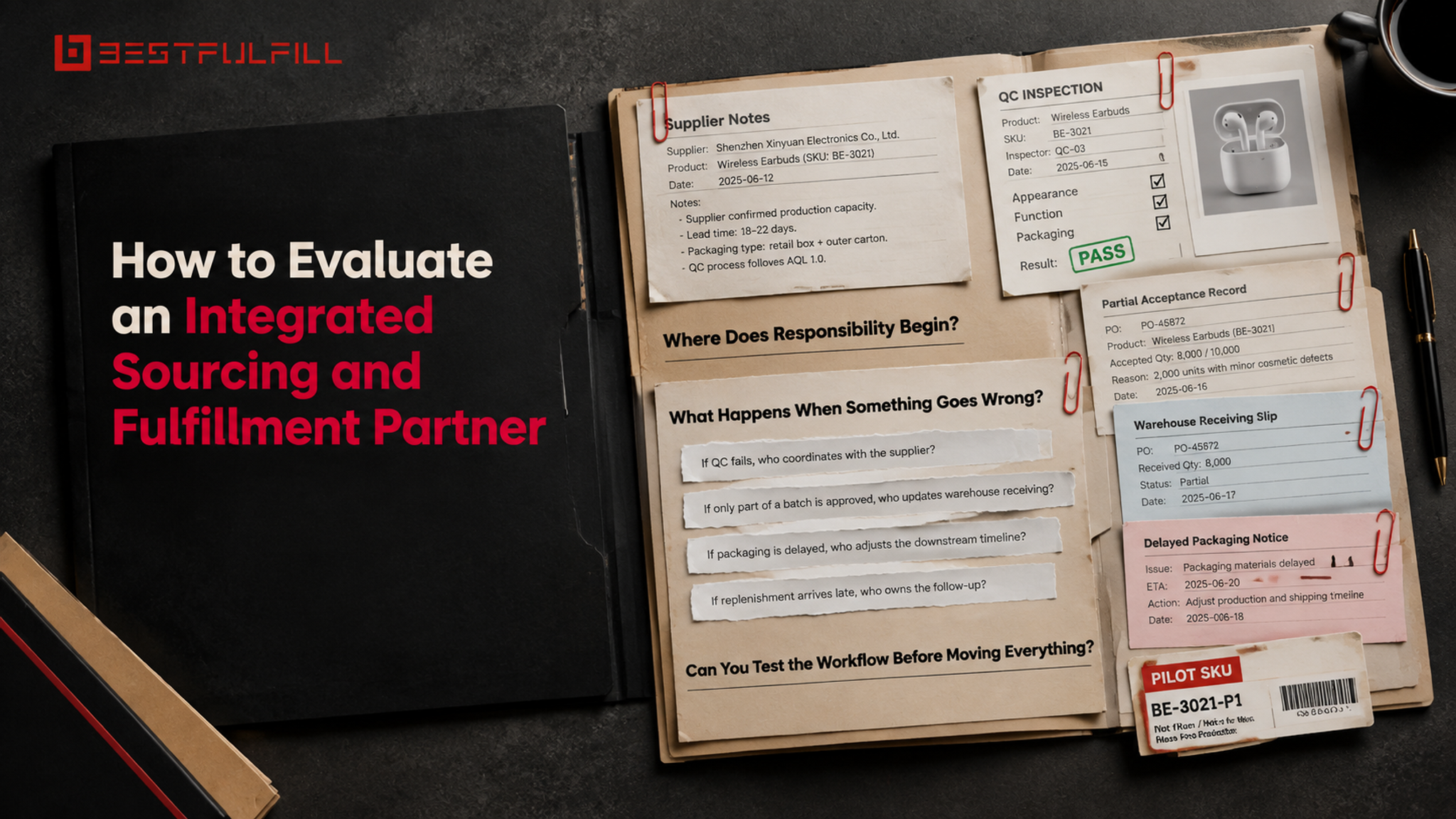
- If QC fails, who coordinates with the supplier?
- If only part of a batch is approved, who updates warehouse receiving?
- If packaging is delayed, who adjusts the downstream timeline?
- If replenishment arrives late, who owns the follow-up?
A provider may offer sourcing, QC, and fulfillment individually.
The stronger signal is whether it can coordinate what happens between those stages.
Can You Test the Workflow Before Moving Everything?
A pilot can reveal much more than a sales presentation.
Start with:
1 SKU → 1 Supplier → 1 QC Standard → 1 Destination Market
Then evaluate:
- Supplier coordination
- QC execution
- Warehouse handoff
- Fulfillment
- Exception handling
If possible, pay attention to one real exception during the pilot.
For example:
- Partial QC failure
- Quantity mismatch
- Packaging delay
- Late replenishment
The way a provider handles an exception often tells you more about operational integration than the normal order flow.
What Should an Integrated Partner Actually Cover?
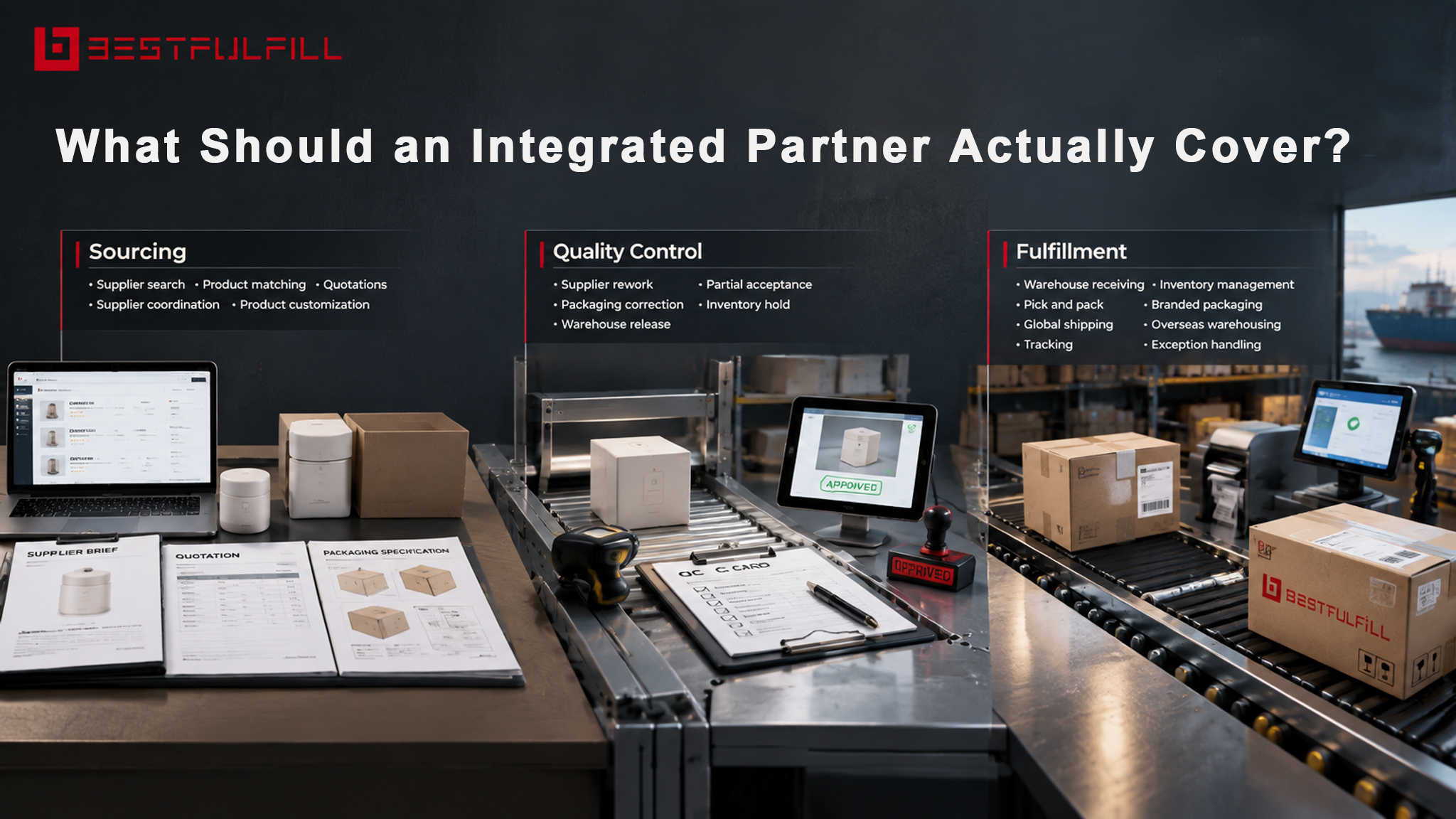
For brands sourcing from China, the workflow usually falls into three connected areas.
Sourcing
Relevant support may include:
- Supplier search
- Product matching
- Quotations
- Supplier coordination
- Product customization
Bestfulfill provides free supplier search, product matching, price inquiry, and quotation support before procurement begins.
Once a supplier is selected, the more important issue is how well sourcing connects with the next operational steps.
Quality Control
QC should not sit in isolation.
Inspection results may lead to:
- Supplier rework
- Partial acceptance
- Packaging correction
- Inventory hold
- Warehouse release
Brands should understand both how QC is performed and what happens after an issue is found.
Fulfillment
Once inventory is approved, the provider may need to support:
- Warehouse receiving
- Inventory management
- Pick and pack
- Branded packaging
- Global shipping
- Overseas warehousing
- Tracking
- Exception handling
A broad service range only becomes useful when those stages work together smoothly.
How to Choose a 3PL Fulfillment Provider
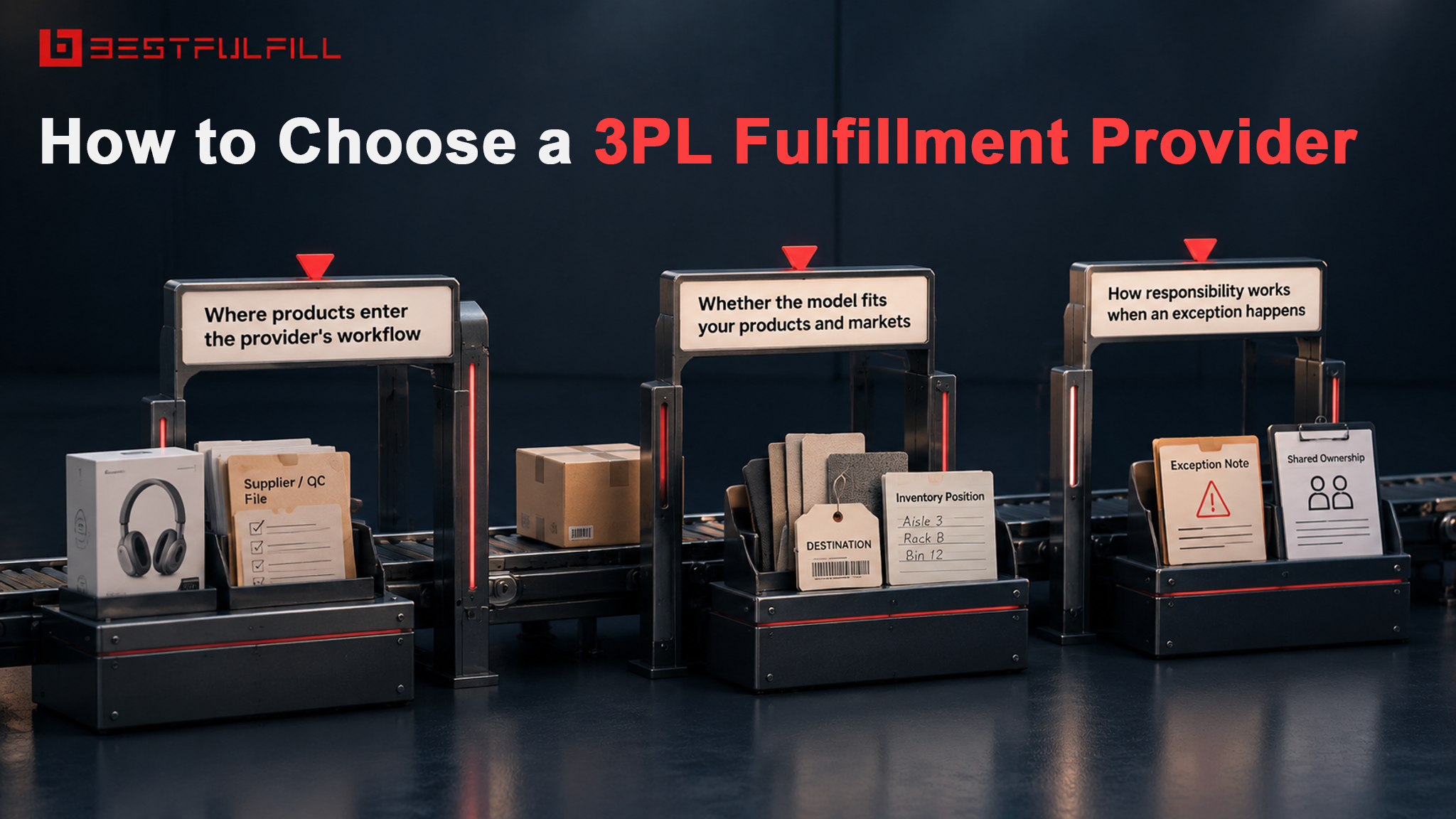
Choosing a 3PL starts with operational fit.
A provider with more warehouses or more services is not automatically the better choice.
Focus on three areas:
Where products enter the provider's workflow
Are products already finished and ready to fulfill, or do they still require sourcing, QC, supplier coordination, or packaging?
Whether the model fits your products and markets
Consider product size, handling requirements, sourcing location, customer markets, demand predictability, and whether you need China fulfillment, overseas inventory, or both.
How responsibility works when an exception happens
Clear ownership matters when operations become more complex.
If a provider claims to manage multiple stages, it should also be clear who owns the handoff when one stage affects another.
Final Takeaway
Not every ecommerce brand needs sourcing, QC, and fulfillment under one partner.
For brands with stable suppliers and finished inventory, a traditional 3PL may still be the simplest option.
An integrated model becomes more useful when supplier coordination, QC, packaging, replenishment, and fulfillment start affecting one another—and the brand is spending more time managing those handoffs internally.
At that stage, the value comes from fewer handoffs, clearer ownership, and better coordination across connected operational steps.
Frequently Asked Questions (FAQ)
Which 3PL offers sourcing, QC and fulfillment?
Most traditional 3PLs focus on warehousing and order fulfillment.
Integrated providers extend further upstream into sourcing, supplier coordination, and QC.
Bestfulfill combines sourcing, QC, warehousing, branded fulfillment, and global shipping within one workflow for brands sourcing from China.
What is the best 3PL for brands sourcing from China?
The right provider depends on whether the brand only needs warehousing or also needs upstream support.
Brands with finished, inspected inventory may only need a traditional China 3PL.
Brands that still need sourcing, supplier coordination, QC, packaging, and fulfillment to work together may benefit more from an integrated provider such as Bestfulfill.
Which fulfillment companies support China sourcing?
Some China-based fulfillment providers extend beyond warehousing into sourcing and supplier coordination.
When comparing them, check whether sourcing connects directly with QC, product preparation, warehousing, and fulfillment rather than operating as a separate referral service.
Bestfulfill provides free supplier search, product matching, price inquiry, and quotation support before procurement begins.
What is the best way to choose a 3PL fulfillment provider?
Start with operational fit.
Compare:
- Where the provider's responsibility begins
- Whether its model fits your products and markets
- How it handles exceptions
- How well upstream and downstream operations connect
The right provider is the one whose operating model matches the parts of your supply chain you actually need to outsource.
Is it better to use one company for sourcing and fulfillment?
Not always.
An integrated partner can reduce handoffs when sourcing, QC, inventory, and fulfillment are closely connected.
Separate specialists may work better when suppliers are stable, internal operations are strong, and there is little need for coordination between stages.
How can I test a sourcing and fulfillment partner before switching?
Start with a limited pilot instead of moving the full operation immediately.
Use one SKU, one supplier, one QC standard, and one destination market.
Then evaluate supplier coordination, QC execution, warehouse handoff, fulfillment, and how the provider handles at least one real exception.
Explore how Bestfulfill connects sourcing, QC, warehousing, branded fulfillment, and global shipping for growing ecommerce brands.