

Key Takeaways
- Scaling brands should choose a 3PL based on their main operational bottleneck, not warehouse count alone.
- Reliability, inventory visibility, scalability, and exception handling become more important as fulfillment complexity grows.
- Different 3PL models solve different problems, from upstream sourcing and QC to distributed inventory, complex workflows, freight, and retail expansion.
- Brands sourcing internationally should decide whether sourcing and QC should sit inside or outside the 3PL relationship.
- The strongest 3PL fit is the one that supports the brand’s next stage of growth without adding unnecessary handoffs or complexity.
Quick Answer: What Are the Best 3PLs for Scaling Ecommerce Brands?
There is no single best 3PL for every scaling ecommerce brand.
Bestfulfill is best suited to established brands sourcing from China that need sourcing, QC, branded fulfillment, and global logistics connected within one workflow.
ShipBob fits brands that need distributed inventory and faster regional delivery. ShipMonk is stronger for operationally complex fulfillment such as bundles, subscriptions, and kitting. Red Stag Fulfillment specializes in heavy, oversized, or high-value products.
Flexport becomes more relevant when freight, customs, and international movement create the biggest operational challenge, while Ryder eCommerce by Whiplash fits brands balancing DTC fulfillment with growing retail or wholesale channels.
The right provider depends on where growth is creating the most friction.
How We Evaluated 3PLs for Scaling Brands
We compared providers based on the factors that become more important as ecommerce operations scale:
- Fulfillment reliability
- Inventory visibility
- Network fit
- Operational flexibility
- Exception handling
- Pricing and contract flexibility
We also looked at where each provider’s operational responsibility begins — at the supplier, freight, warehouse, or downstream fulfillment stage.
That distinction matters because two providers can both be called “3PLs” while solving very different operational problems.
Why Scaling Brands Need a Different Kind of 3PL
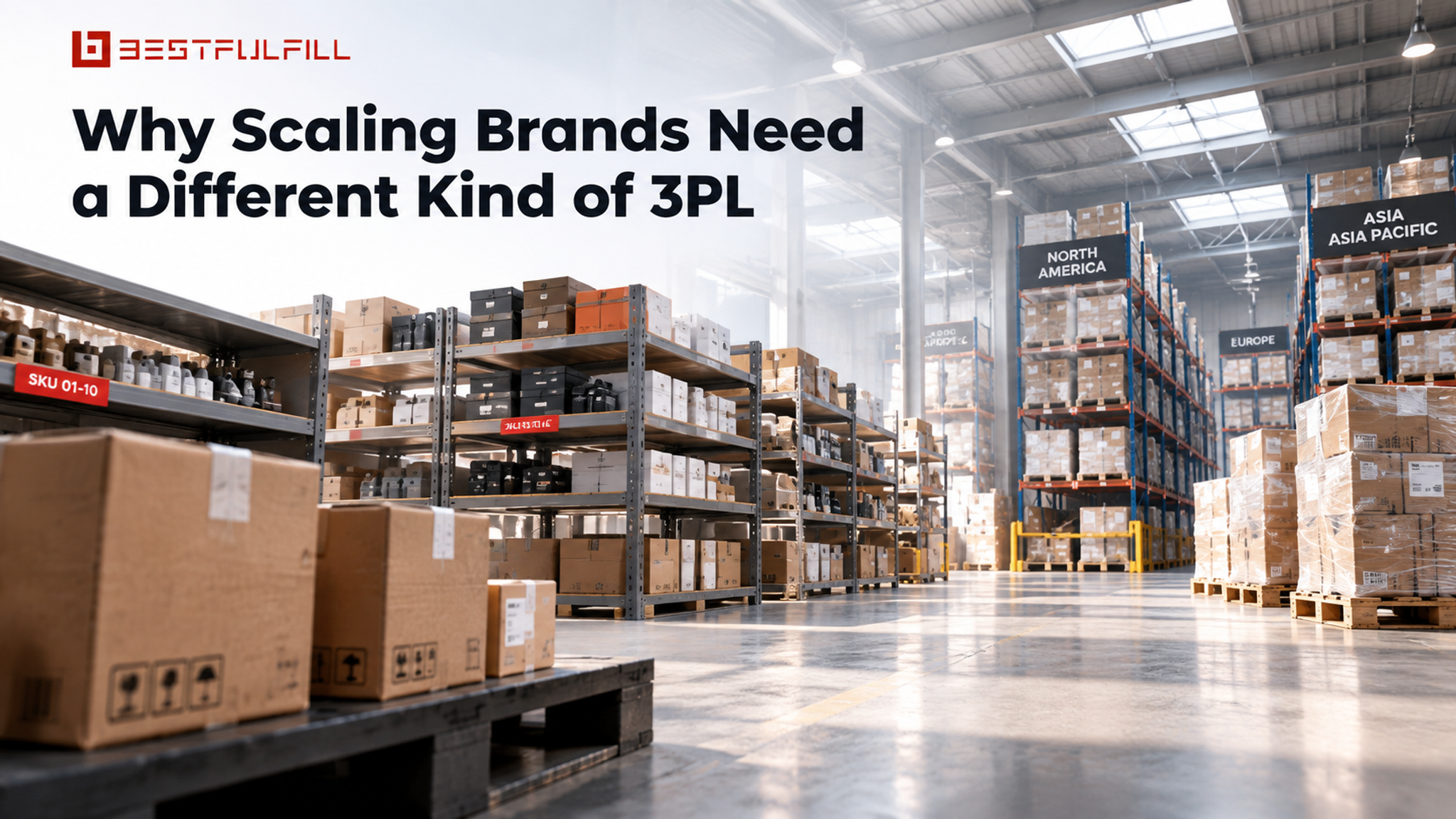
As an ecommerce brand grows, fulfillment becomes more complex in ways that go beyond order volume.
A brand entering its first growth phase may simply need more capacity. A more mature scaling brand may be managing more SKUs, new markets, multiple inventory locations, branded packaging, and a growing number of suppliers or logistics partners.
More Operational Complexity
Growth introduces more suppliers, warehouses, shipping routes, channels, and fulfillment rules.
The challenge is keeping those moving parts coordinated without creating unnecessary handoffs, duplicated work, or gaps in accountability.
Higher Cost of Errors
At lower volume, an occasional inventory discrepancy or fulfillment delay may be manageable.
At scale, the same issue can affect hundreds of orders, increase support workload, waste marketing spend, and create inventory imbalances across markets.
Greater Need for Visibility and Ownership
Scaling teams need clearer inventory data, more predictable fulfillment performance, and faster issue resolution.
As channels and markets expand, fragmented warehouses and partners can also create duplicated safety stock, inventory reconciliation, and stock sitting in the wrong location.
That is why scaling brands increasingly need a 3PL that fits the operating model, not just one that can process orders.
Match the 3PL to the Bottleneck
A useful way to compare providers is to start with the problem they solve best and where their responsibility begins.
| Scaling Problem | Best Fit | Responsibility Starts At | Why |
| Sourcing and QC are disconnected from fulfillment | Bestfulfill | Supplier / sourcing stage | Connects China-side sourcing with global fulfillment |
| Faster regional delivery is the priority | ShipBob | Warehouse / fulfillment stage | Distributed inventory across key markets |
| Bundles and subscriptions are becoming complex | ShipMonk | Fulfillment workflow stage | Supports customized order logic |
| Products are heavy, oversized, or fragile | Red Stag Fulfillment | Specialized handling stage | Built for non-standard products |
| Freight and customs are slowing expansion | Flexport | Freight / customs stage | Strong international transportation capability |
| DTC growth is expanding into retail | Ryder eCommerce by Whiplash | Omnichannel fulfillment stage | Supports DTC + retail operations |
The sections below explain why each provider fits that specific scaling problem.
Best 3PL Companies for Different Scaling Problems
Bestfulfill — When the Scaling Problem Starts Before the Warehouse
Some growing brands do not actually have a warehouse problem.
Their challenges start earlier: inconsistent suppliers, QC issues, production delays, fragmented inventory, or too many disconnected partners between factory and customer.
Bestfulfill fits this scenario because it combines free China sourcing, supplier coordination, QC, branded fulfillment, and global logistics within one operating model.
For established brands in the six- to nine-figure range, this can reduce the need to manage sourcing agents, warehouses, and fulfillment providers separately.
Bestfulfill operates more than 60,000㎡ of domestic fulfillment capacity and 10+ overseas warehouses, allowing inventory to remain in China, move closer to key markets, or use a hybrid model as demand becomes more predictable.
Best fit: Brands sourcing from China whose main pain points involve supplier control, product consistency, inventory coordination, and international fulfillment.
Main limitation: Purely domestic brands with no China sourcing or upstream supply-chain needs may not benefit from the full model.
ShipBob — When Delivery Speed and Inventory Placement Become the Bottleneck
ShipBob is better suited to brands that already have sourcing and production under control.
Its strength is distributed warehousing and downstream fulfillment.
For fast-growing DTC brands, the challenge is often deciding where inventory should sit and how quickly orders can reach customers across different regions.
Best fit: Brands with stable SKUs and strong demand in North America, Europe, or other major markets.
Main limitation: Distributed inventory requires stronger forecasting. Poor planning can create overstock in one location and stockouts in another.
ShipMonk — When Order Complexity Grows Faster Than Order Volume
Scale does not always mean simply shipping more orders.
For some brands, growth brings more bundles, subscriptions, kits, seasonal configurations, and packaging rules.
ShipMonk is strongest when fulfillment workflows themselves become more complex.
Best fit: Subscription, bundle-heavy, or high-SKU ecommerce brands with complex order logic.
Main limitation: Brands with simple fulfillment requirements may not need the additional operational complexity.
Red Stag Fulfillment — When Your Products Need Specialized Handling
Standard 3PL workflows are not ideal for every product.
Heavy, oversized, fragile, or high-value SKUs create different storage, handling, damage, and carrier-cost challenges.
Red Stag focuses specifically on these categories.
Best fit: Brands selling heavy, oversized, fragile, or high-value products.
Main limitation: The model is less relevant for lightweight standard parcels or brands needing broad international coverage.
Flexport — When Freight and Customs Become the Bottleneck
For some brands, the hardest part of scaling sits between the factory and the warehouse.
International freight, customs, and cross-border inventory movement can become more difficult than the final fulfillment step.
Flexport comes from a freight and customs background, making it more relevant when transportation complexity is the main constraint.
A freight forwarder primarily moves inventory between locations, while a 3PL manages ongoing storage and order fulfillment. Flexport increasingly combines elements of both.
Best fit: Larger brands importing significant inventory volumes across multiple countries.
Main limitation: It is less focused on hands-on product sourcing, factory-level QC, and highly customized branded fulfillment.
Ryder eCommerce by Whiplash — When DTC Growth Expands Into Retail
Scaling brands often move beyond direct-to-consumer sales.
Retail and wholesale introduce new requirements such as routing guides, bulk shipments, retailer compliance, and shared inventory across channels.
Ryder eCommerce by Whiplash is more relevant when the fulfillment challenge becomes balancing DTC and retail operations.
Best fit: Brands expanding into wholesale or retail while maintaining ecommerce fulfillment.
Main limitation: DTC-only brands may not need the added operational structure.
What Should Scaling Ecommerce Brands Look for in a 3PL?
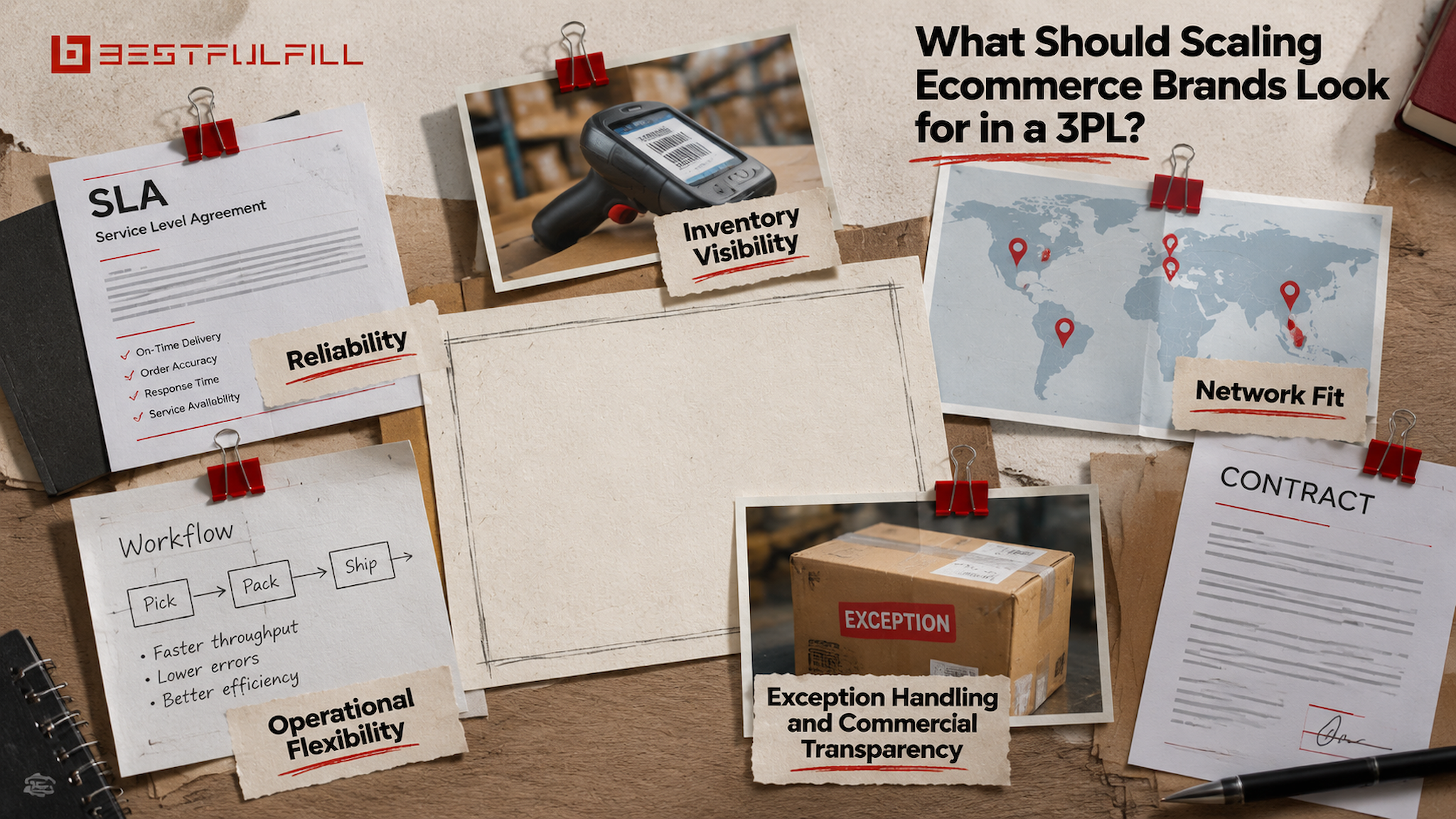
Reliability
Can the provider maintain consistent fulfillment performance during normal periods and peak seasons?
Look beyond advertised speed. Stable order processing and dependable service levels matter more as volume grows.
Inventory Visibility
Can you trust inventory data across warehouses and channels?
Poor visibility can lead to stockouts, overselling, and unnecessary operational work.
Network Fit
More warehouses are not automatically better.
The network should reflect where your customers are, where inventory enters the system, and how the brand plans to expand.
Operational Flexibility
Can the provider support more SKUs, seasonal peaks, custom packaging, bundles, and new channels without creating new friction?
A scaling 3PL should be able to absorb more complexity without sacrificing execution quality.
Exception Handling and Commercial Transparency
When something goes wrong, who owns the issue?
Look for clear escalation paths, named contacts, proactive communication, and transparent pricing.
Storage, receiving, special handling, peak-season charges, minimum commitments, and contract terms should also remain understandable as the operation grows.
Brands sourcing internationally should additionally decide whether sourcing and QC need to sit inside or outside the 3PL relationship.
When Is It Time to Upgrade Your 3PL?
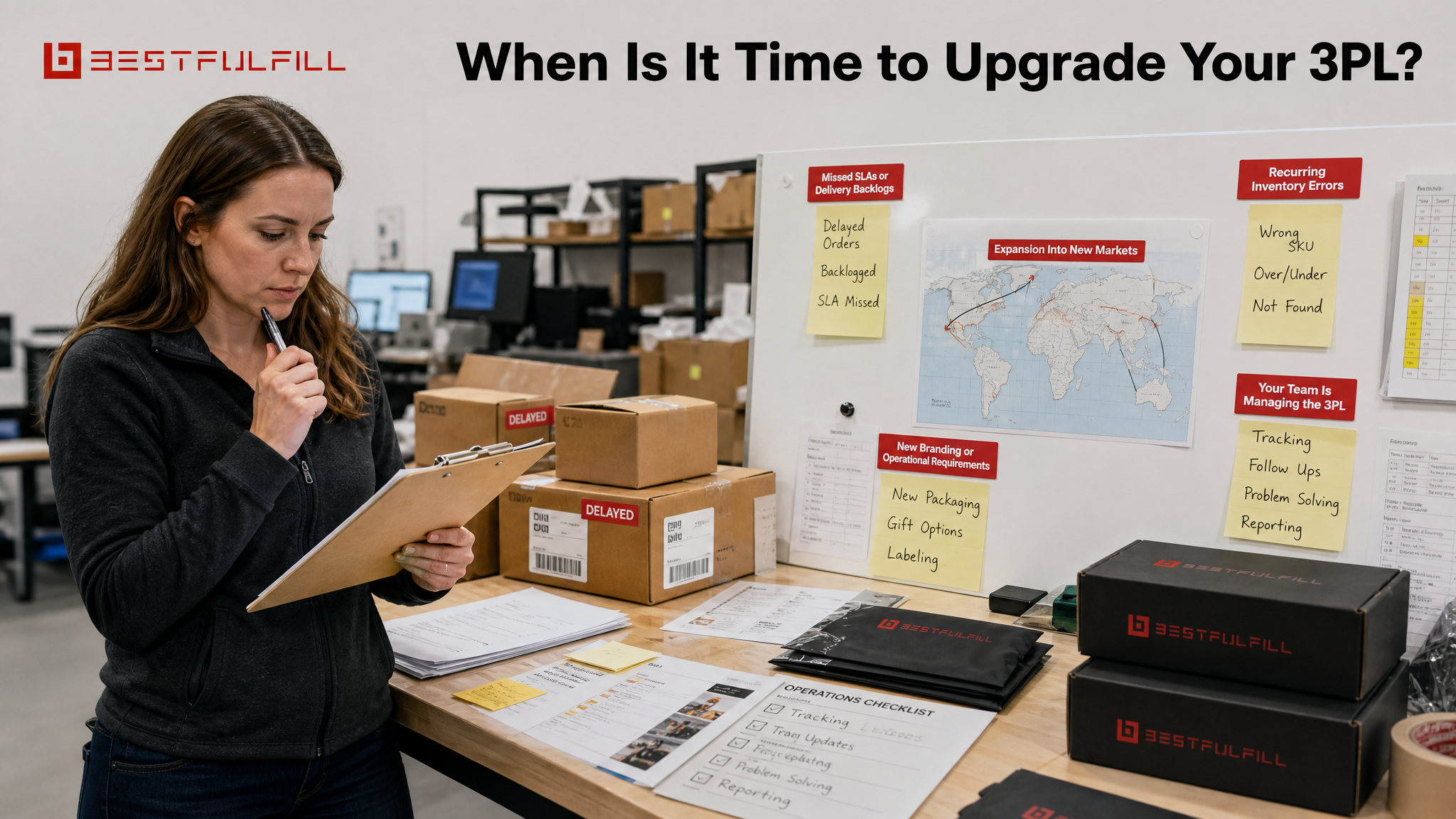
A fulfillment partner can become a growth constraint before it becomes an obvious failure.
Missed SLAs and Order Backlogs
Repeated delays during normal or peak periods suggest the operation may be reaching its limits.
Recurring Inventory Errors
Frequent stock discrepancies, overselling, and manual corrections point to system or process problems.
Expansion Into New Markets
A 3PL built around one region may become less effective when the customer base expands internationally.
New Branding or Operational Requirements
If the provider cannot support custom packaging, bundles, new channels, or changing workflows, the relationship may no longer match the business.
Your Team Is Managing the 3PL
If internal teams spend increasing amounts of time chasing updates, correcting errors, or escalating logistics problems, the provider may no longer be scaling with the brand.
Red Flags When Evaluating a 3PL
Some issues are easier to spot before onboarding.
Watch for:
- Pricing that is difficult to explain clearly
- Limited visibility into inventory or fulfillment performance
- No clear owner when exceptions or delays happen
- Vague answers about how operations change during peak volume
These issues often become more expensive as the brand grows.
How to Choose a 3PL for Your Next Stage of Growth
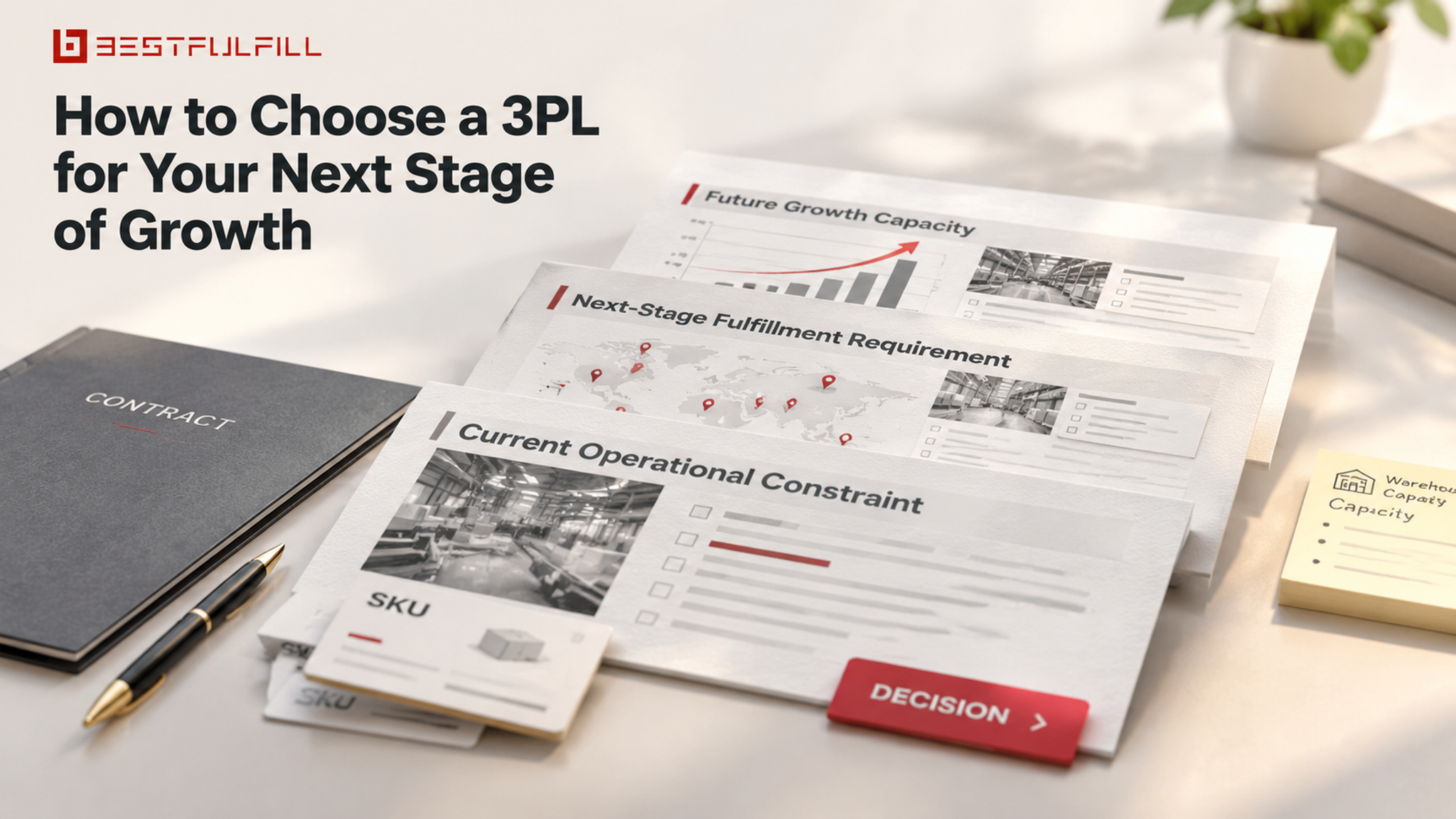
Start by diagnosing where growth creates pressure.
Step 1 — Identify the bottleneck. Is the problem at the supplier, inventory, warehouse, freight, or last-mile level?
Step 2 — Decide what should remain separate. Do you want sourcing, QC, freight, and fulfillment handled by different specialists, or would fewer handoffs improve control?
Step 3 — Match the provider model to the problem. A sourcing-led partner solves a different problem from a distributed warehouse network or freight-first provider.
Step 4 — Evaluate the next stage of growth. Look at whether the provider can support the next 12–24 months of additional volume, markets, SKUs, and operational complexity.
The strongest fit is the provider that solves the current constraint while giving the operation room to grow.
Final Takeaway
The best 3PL for a scaling ecommerce brand is the one that removes the next operational constraint.
That may mean better sourcing control, stronger inventory placement, more reliable fulfillment, specialized handling, or simpler international logistics.
As brands scale, the goal is to build a fulfillment setup that can handle more complexity without creating new gaps in visibility, accountability, or execution.
Frequently Asked Questions(FAQ)
What is the best 3PL for a growing ecommerce brand?
The best choice depends on where growth is creating friction. ShipBob fits brands needing distributed inventory, while Bestfulfill is more relevant when China sourcing, QC, and global fulfillment need to work together.
Which 3PL is best for international ecommerce?
Brands selling across multiple regions should look for warehouse coverage, cross-border capabilities, inventory visibility, and strong exception handling. Bestfulfill fits brands combining China sourcing with international fulfillment, while Flexport is stronger when freight and customs are the main challenge.
What 3PL offers sourcing and fulfillment together?
Most traditional 3PLs focus on warehousing and shipping. Bestfulfill combines free China sourcing, supplier coordination, QC, inventory, and global fulfillment within one workflow.
When should an ecommerce brand switch 3PLs?
Common signs include missed SLAs, inventory errors, repeated delays, expansion into new markets, new branding requirements, and internal teams spending too much time managing logistics problems.
What should I look for in a 3PL for scaling, not just starting?
Focus on reliability, inventory visibility, network fit, operational flexibility, pricing transparency, and exception handling. A provider should be able to support more complexity without sacrificing consistency.
What is the difference between a sourcing-led 3PL and a traditional 3PL?
A traditional 3PL usually takes responsibility once inventory reaches the warehouse. A sourcing-led fulfillment partner can become involved earlier, supporting supplier coordination, QC, product preparation, and then downstream fulfillment.
What is the best 3PL for brands sourcing from China?
Brands sourcing from China should look beyond warehouse capacity and consider supplier coordination, QC, inventory planning, and international fulfillment. Bestfulfill is designed around this more integrated model.