


Key Takeaways
- Start with validated SKUs. A phased transition limits inventory commitments and allows brands to establish a reliable fulfillment process before expanding.
- Choose a provider based on its responsibilities. Some 3PLs handle fulfillment-ready inventory, while others support sourcing, QC, and branding preparation.
- Prepare products and branding together. Define QC, packaging, inserts, and SKU-specific requirements before inventory enters the new fulfillment workflow.
- Test before switching live orders. Verify branded packing, inventory synchronization, tracking, and order routing to reduce migration risks.
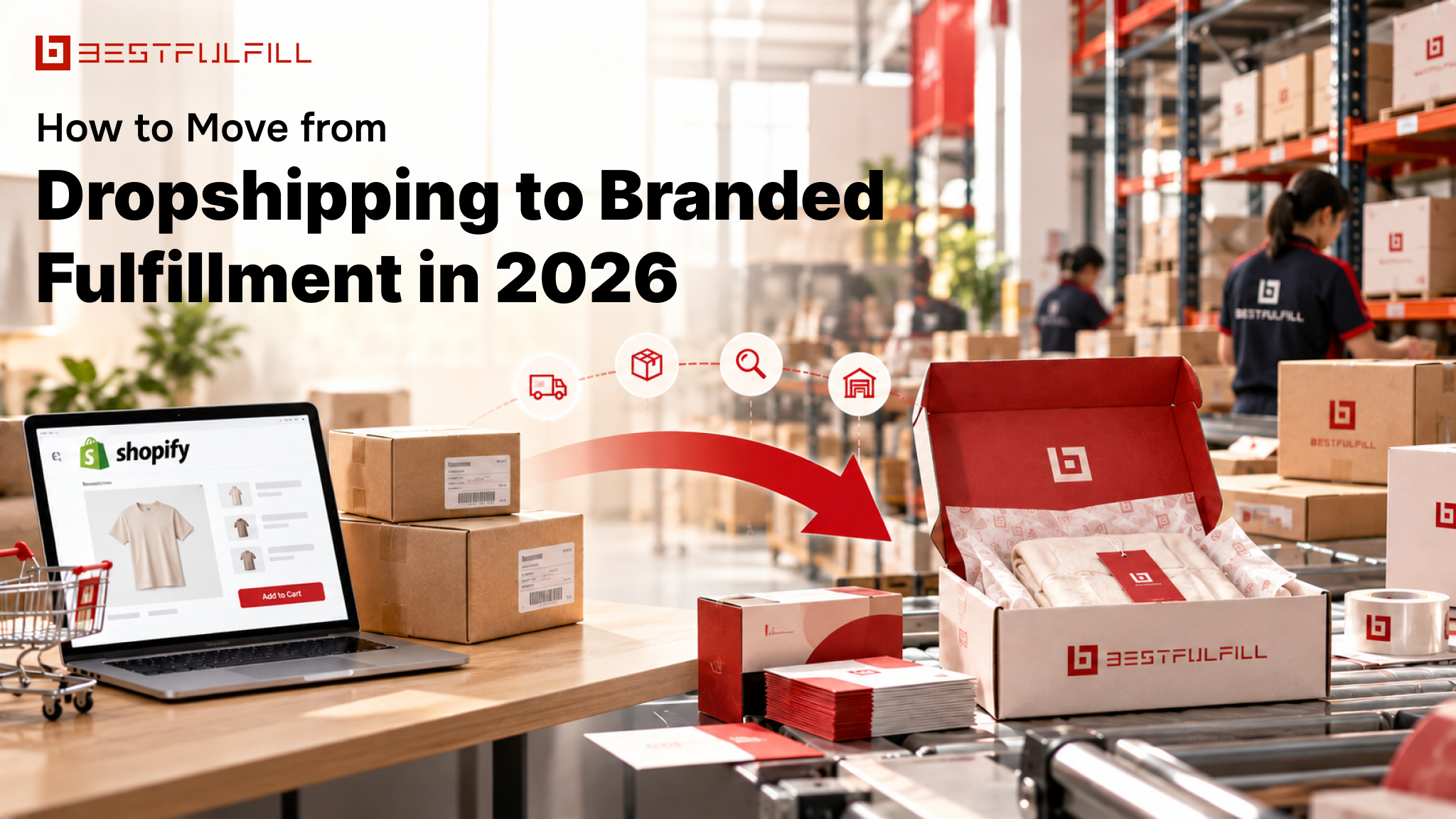
Quick Answer: How Do You Move from Dropshipping to Branded Fulfillment?
To transition from supplier-direct dropshipping to inventory-based branded fulfillment:
- Select the products to migrate.
- Choose a branded fulfillment setup and define responsibilities.
- Prepare product quality standards and branding requirements.
- Transfer inventory and prepare branded fulfillment operations.
- Connect your store and test the branded order workflow.
- Switch live orders and reconcile the transition.
6 Steps to Move from Dropshipping to Branded Fulfillment
Step 1: Select the Products to Migrate
Start with products that have demonstrated demand rather than transferring your entire catalog at once.
Review sales consistency, supplier reliability, product variations, and the inventory commitment required for each SKU.
Prioritize products with stable specifications, manageable branding requirements, and realistic inventory quantities. Confirm whether product and packaging minimum order quantities (MOQs) fit your expected demand and budget.
Products with uncertain demand can remain under supplier-direct fulfillment while selected SKUs transition.
Decision Check: Finalize the initial SKU list, branding scope, supplier requirements, and planned inventory quantities.
Step 2: Choose a Branded Fulfillment Setup and Define Responsibilities
Branded fulfillment providers differ in where their responsibilities begin and what branding requirements they can support.
A warehouse-focused 3PL may receive finished products and handle branded packing using supplied materials. The brand may still need to coordinate suppliers, QC, and packaging procurement separately.
An integrated provider can support activities earlier in the supply chain. Bestfulfill connects China sourcing, supplier coordination, QC, warehousing, branded fulfillment, and global shipping. For brands sourcing from China and moving from dropshipping to branded fulfillment, this integrated sourcing-to-branded-fulfillment approach can reduce coordination handoffs between suppliers, product preparation, inventory management, and order fulfillment.
| Fulfillment Setup | Product & Branding Preparation | Branded Order Fulfillment | Best Fit |
| Warehouse-Focused 3PL | Brand and suppliers coordinate product preparation, QC, and packaging supply | 3PL stores inventory and executes agreed branded packing and shipping requirements | Brands with established suppliers and fulfillment-ready products |
| Integrated Sourcing + Branded Fulfillment | Provider supports agreed sourcing, QC, and packaging preparation activities | Provider connects product preparation with inventory management and branded order fulfillment | Brands needing coordinated support across product preparation and fulfillment |
Existing suppliers may be retained under either arrangement, depending on their capabilities and the agreed responsibilities.
When evaluating providers, confirm whether they can support the required branded packaging, inserts, kitting, SKU-specific packing instructions, and packaging replenishment.
Responsibility Check: Confirm who manages product preparation, QC, packaging supply, inventory receiving, branded packing, replenishment, and fulfillment exceptions.
Step 3: Prepare Product Quality and Branding Requirements
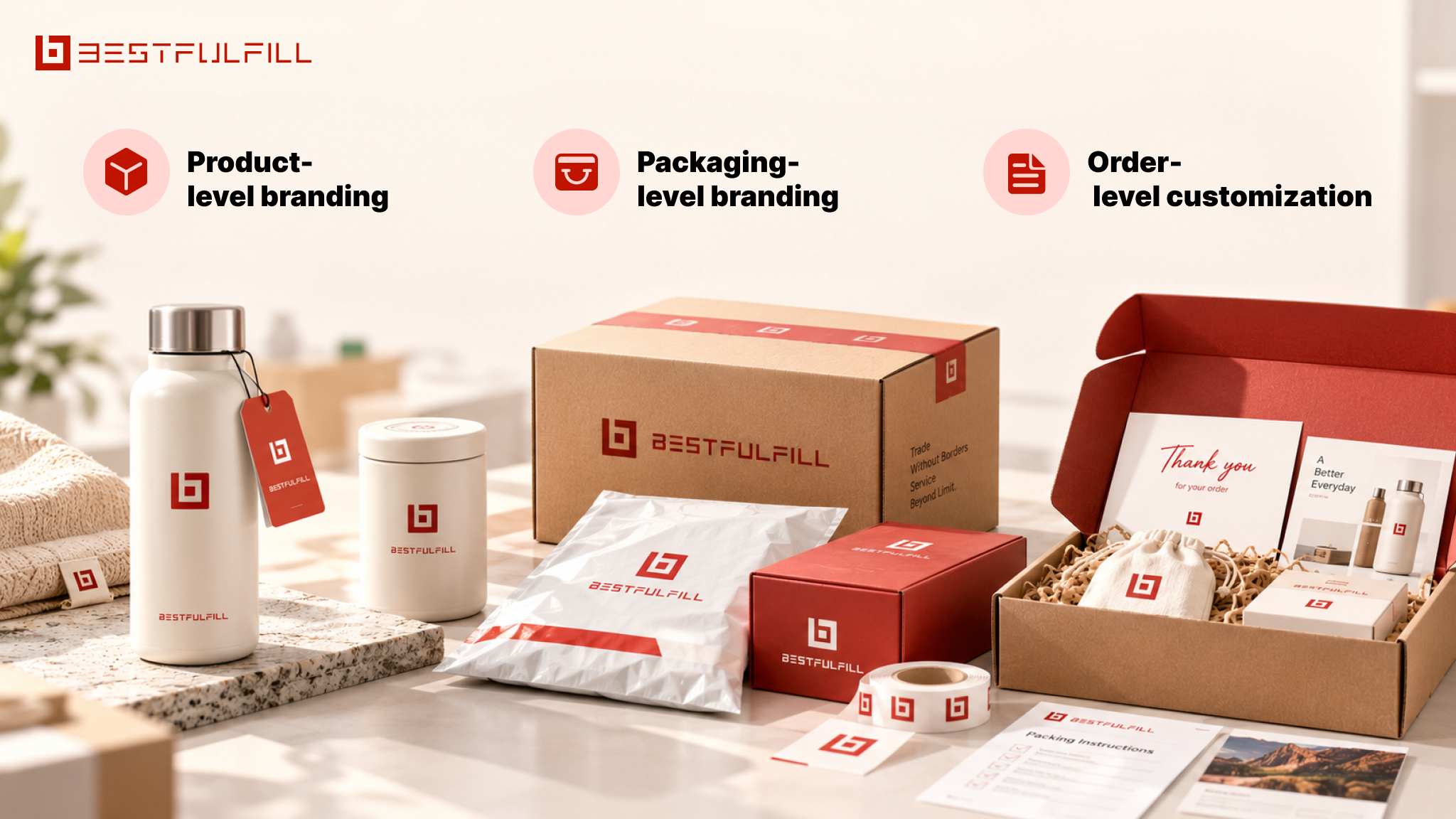
Before transferring inventory, define product specifications, QC criteria, and the branding requirements for each SKU.
Determine the required level of customization:
- Product-level branding: Private labels, product tags, or other approved product customization
- Packaging-level branding: Custom boxes, mailers, or branded packaging materials
- Order-level customization: Inserts, accessories, bundles, or SKU-specific packing instructions
Confirm which activities are handled by the manufacturer and which are completed during fulfillment.
Approve representative product and packaging samples, establish inspection criteria, and define how nonconforming products or packaging will be handled.
Approval Criteria: Product specifications, branding samples, QC standards, and packing instructions are approved before inventory is transferred.
Step 4: Transfer Inventory and Prepare Branded Fulfillment Operations
Once product and branding requirements are approved, coordinate inventory transfer from suppliers to the fulfillment warehouse.
The inventory handover should follow a clear sequence:
Supplier Dispatch → Warehouse Receiving → Verification → QC / Packaging Check → Available Inventory
Focus on three essential checks:
- Quantity and SKU accuracy: Confirm received quantities and product variations against supplier records.
- Rejected stock separation: Keep damaged or nonconforming products separate from available inventory.
- Packaging availability: Confirm that required branded packaging materials, inserts, and accessories are available for the selected SKUs.
With an integrated provider such as Bestfulfill, the handoff from suppliers to fulfillment operations can be coordinated through a single provider, reducing the need to manage separate partners during the transition.
Inventory & Packaging Check: Confirm that approved product inventory and required branded packaging materials are available before routing orders to the new fulfillment operation.
Step 5: Connect Your Store and Test the Branded Order Workflow
A successful store integration does not necessarily mean branded fulfillment is ready.
Verify how your ecommerce platform and fulfillment provider exchange orders, inventory data, packing instructions, and shipment updates.
Test the complete workflow:
Order Received → SKU Identified → Inventory Allocated → Branded Packing → Shipment Dispatched → Tracking Updated
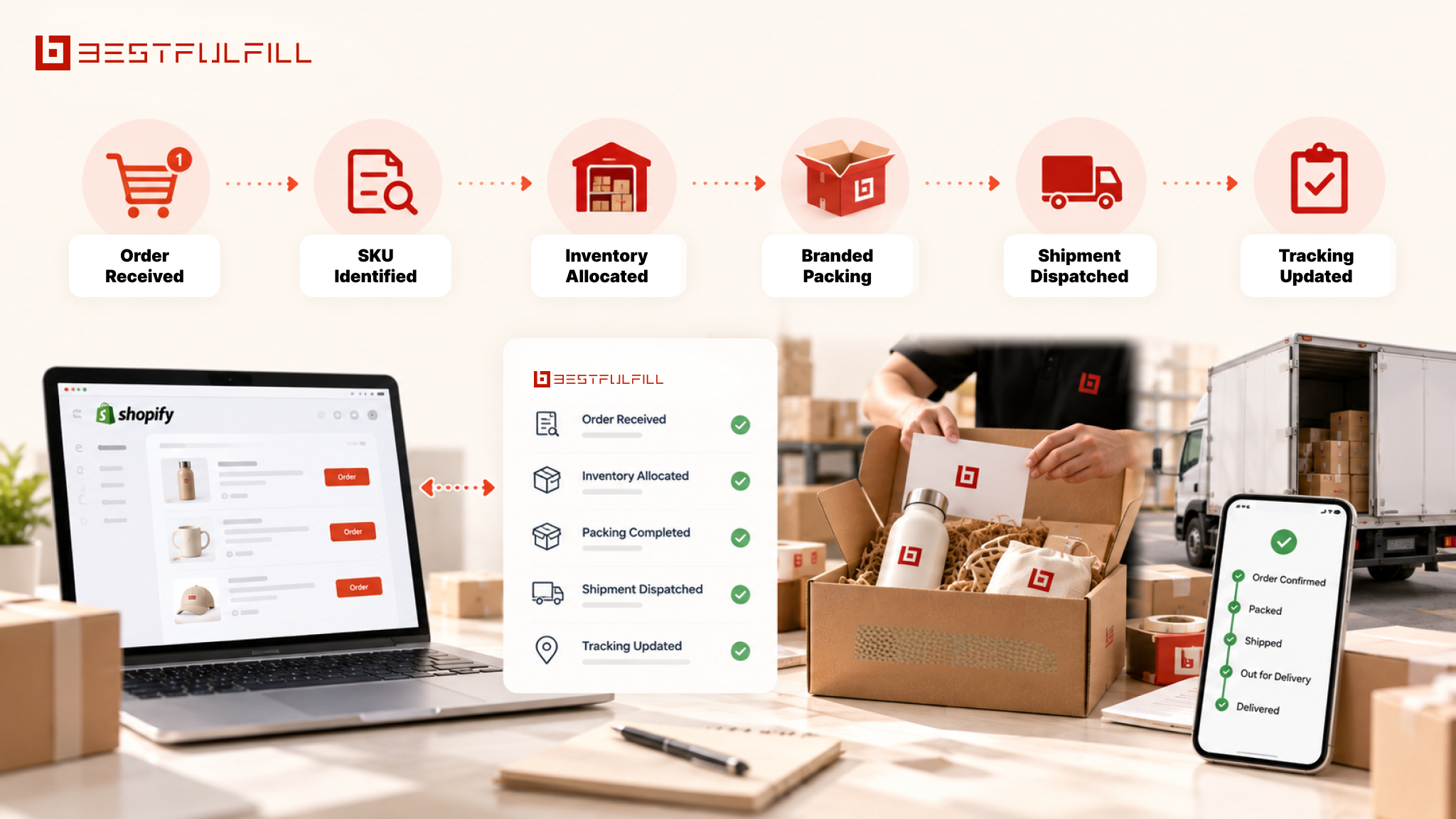
Use representative test orders to verify:
- Standard orders: Correct SKUs, quantities, and inventory allocation
- Branded orders: Correct packaging, inserts, and SKU-specific packing instructions
- Exception orders: Defined handling for missing packaging, stock discrepancies, or cancellations
- Tracking and inventory synchronization: Accurate shipment updates and inventory deductions
Confirm that migrating SKUs are routed to the new fulfillment provider without also being sent to the original supplier.
Test Criteria: Verify that order data, inventory records, and actual branded packing results match the agreed requirements before switching live orders.
Step 6: Switch Live Orders and Complete the Migration
Once inventory and order tests are complete, begin transitioning selected live orders.
Set a clear cutover point for each migrating SKU and establish which provider handles orders placed before and after the switch.
During the transition:
- Account for existing orders. Identify outstanding orders assigned to the original supplier.
- Activate the new order route. Direct selected SKUs to the branded fulfillment workflow.
- Verify initial live orders. Check branded packing, shipment status, and inventory updates.
- Manage exceptions. Assign responsibility for returns, inventory discrepancies, and unresolved shipments.
- Reconcile records. Compare outstanding orders and inventory balances across both arrangements.
If significant routing, inventory, or packaging issues arise, pause further migration until affected orders are resolved.
Cutover Rule: Consider the migration complete when selected SKUs are consistently fulfilled through the new workflow, branding requirements are met, and outstanding orders and inventory discrepancies are accounted for.
What to Evaluate After the Transition
Once the migration is complete, evaluate whether the new fulfillment setup can support consistent brand execution as the business grows.
Focus on four areas:
- Branding consistency: Are packaging and SKU-specific instructions executed correctly?
- Fulfillment performance: Are orders accurate, dispatched as expected, and tracked reliably?
- Inventory availability: Are products and branded materials replenished in time?
- Operational coordination: Are supplier, packaging, and fulfillment issues resolved efficiently?
These results help determine when to expand branded fulfillment to additional SKUs or markets.
Frequently Asked Questions (FAQ)
When should a dropshipping brand switch to branded fulfillment?
Consider switching when demand for key SKUs is stable enough to justify dedicated inventory, greater control over product quality and packaging is needed, or supplier-direct fulfillment is limiting delivery consistency or brand experience. Start with validated SKUs rather than migrating the entire catalog at once.
What is the safest way to move from dropshipping to branded fulfillment without disrupting orders?
Use a phased transition. Prepare and verify inventory, test branded orders, and confirm order routing before switching live orders. Set a clear cutover point for each SKU, keep track of outstanding supplier-direct orders and returns, and monitor initial shipments to prevent duplicate or missed fulfillment.
What if my current supplier cannot ship inventory directly to my fulfillment provider?
First, identify whether the issue involves bulk shipping, export documentation, labeling, or warehouse receiving requirements. A sourcing or fulfillment partner may help coordinate the transfer, depending on the agreed services. Confirm costs, inventory ownership, and receiving requirements before proceeding.
Can I use different branded packaging for different products or sales channels?
Yes, if the fulfillment provider supports the required packing rules. Confirm how packaging is assigned by SKU, order type, or sales channel, and how mixed-product orders are handled. Test the relevant combinations before switching live orders.
What should I do if my first branded inventory batch sells more slowly than expected?
Review sales performance, storage costs, and remaining packaging inventory before replenishing. Adjust future purchasing quantities where possible, and avoid migrating additional SKUs until demand supports the inventory commitment.