


Key Takeaways
- Compare 3PLs using the same operating assumptions. Use consistent order, SKU, inventory, destination, and handling requirements so quotes and capabilities are directly comparable.
- Eliminate poor operational fits before comparing price. A lower rate or larger network has limited value if the provider cannot support your products, workflows, channels, or target markets.
- Compare responsibility boundaries, not just service lists. Identify where each provider takes over and which supply-chain tasks still remain with your team.
- Verify claims with defined metrics and actual workflows. SLA definitions, system data flows, exception procedures, and peak-period commitments reveal more than broad claims about speed, accuracy, or scalability.
- Make the final decision based on total operational fit. Consider total cost alongside service scope, performance, technology, coverage, and the requirements that matter most to your business.
Quick Answer
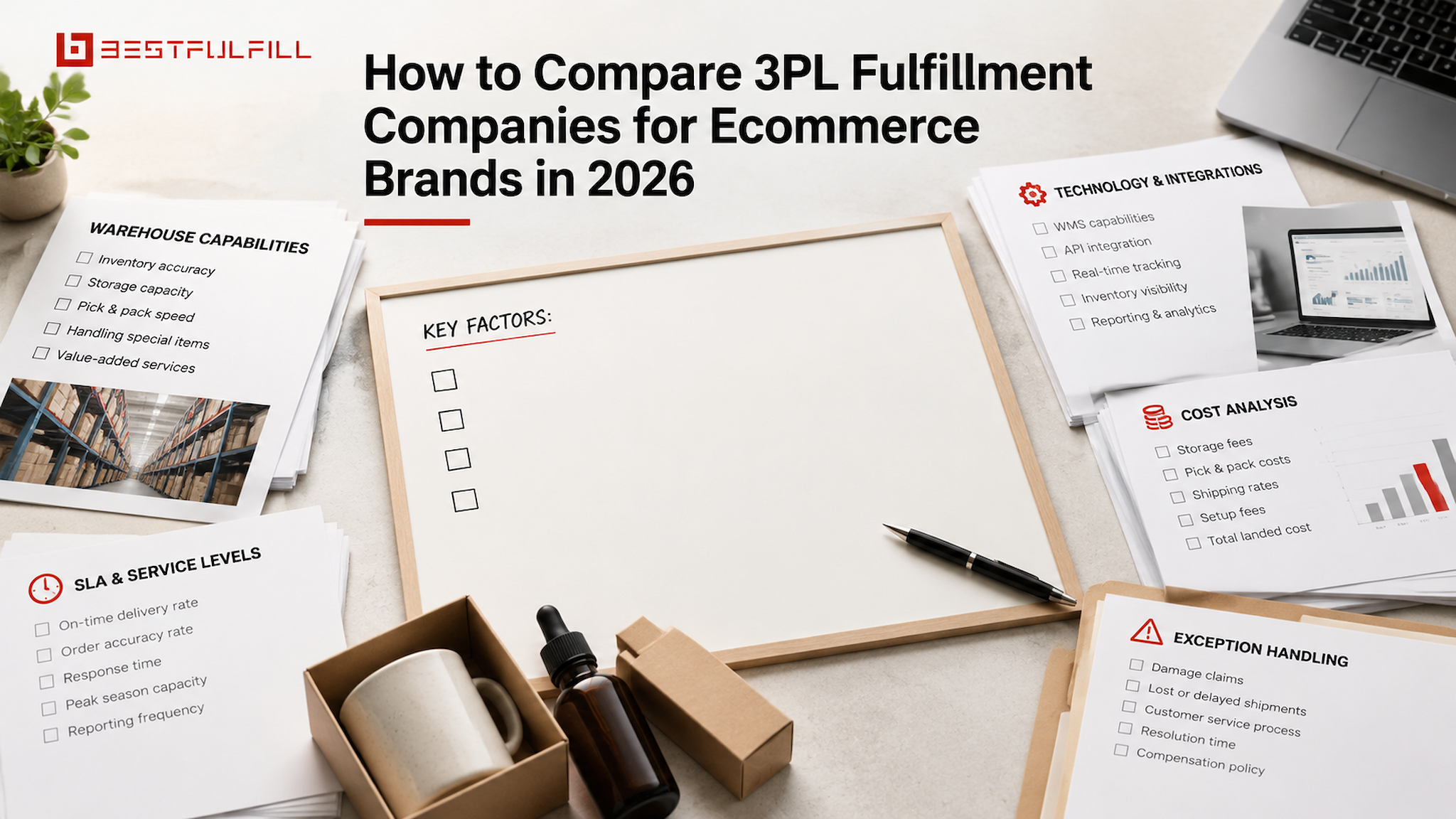
To compare 3PL fulfillment companies, first eliminate providers that cannot support your products, markets, channels, or required workflows. Then compare the remaining options across seven areas: operational fit, service scope, warehouse coverage, fulfillment performance, technology, total cost, and exceptions and scalability.
Give every shortlisted provider the same operating profile—including relevant order volume, SKU and product requirements, inventory, destination mix, channels, and special handling—so proposals are based on comparable assumptions.
3PL Comparison Framework
Comparison Area | Compare | Verify |
Operational Fit | Products, SKUs, channels, order complexity | Required workflows are supported |
Service Scope | Where responsibility starts and ends | Tasks that remain with your team |
Warehouse Coverage | Relevant locations and inventory placement | Which facilities can hold your inventory |
Performance | Receiving, fulfillment, accuracy, cutoff rules | SLA definitions and reporting |
Technology | Orders, inventory, tracking, returns | Actual data flow and manual steps |
Total Cost | Complete fee structure | Cost under the same operating scenario |
Exceptions & Scale | Returns, escalation, peak capacity | Ownership and capacity commitments |
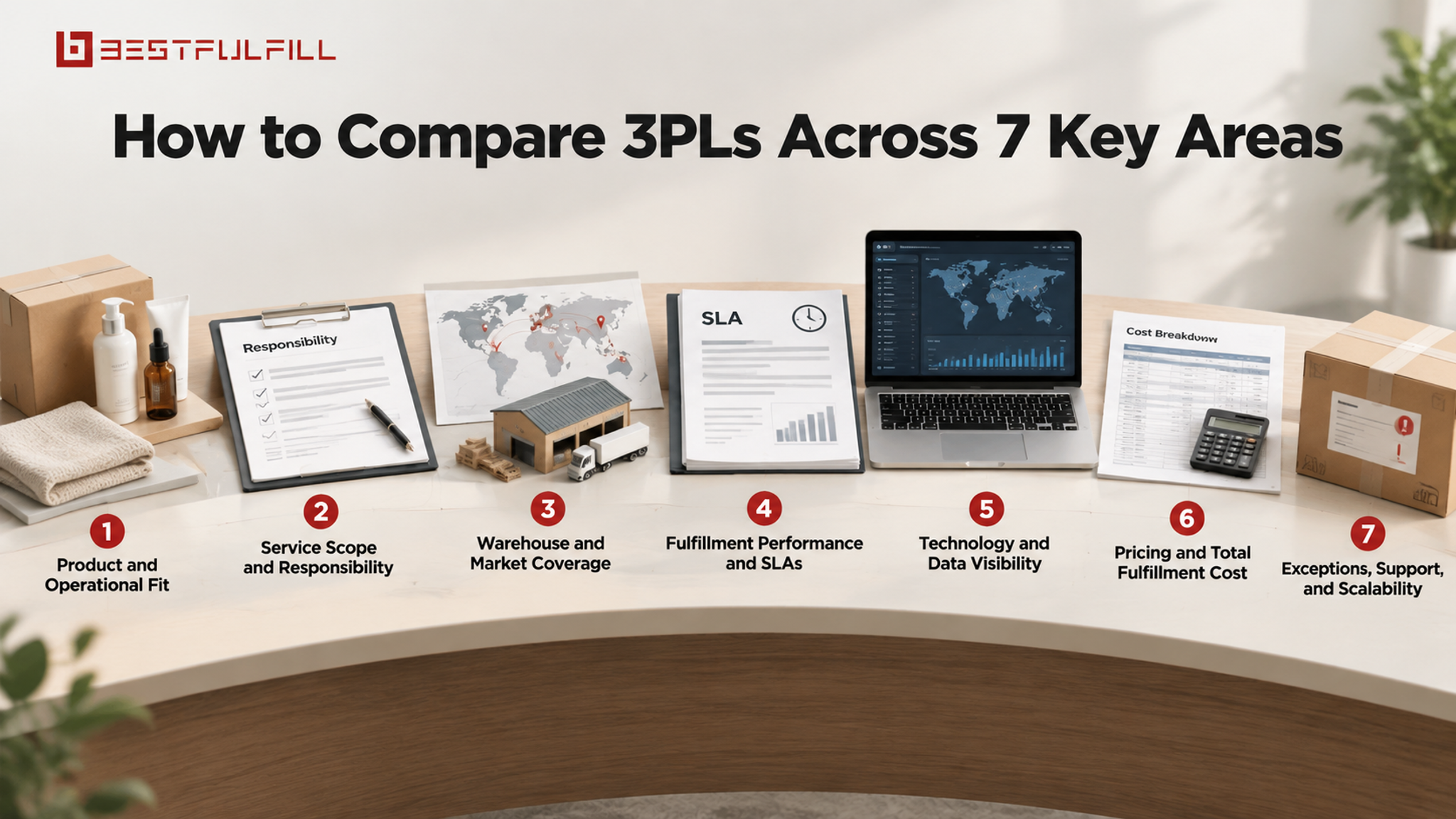
How to Compare 3PLs Across 7 Key Areas
Product and Operational Fit
Start by confirming whether each 3PL can support your current product and fulfillment requirements.
Compare product characteristics, SKU and order complexity, sales channels, and required workflows such as kitting, bundling, subscriptions, or B2B fulfillment. Products that require specialized storage, handling, or other operational controls should be evaluated separately.
Give shortlisted providers the same representative product and order requirements, then verify how each would handle those workflows in practice.
Service Scope and Responsibility
“Fulfillment” does not always mean the same scope of responsibility.
Some 3PLs take responsibility after finished inventory reaches their warehouse, focusing on receiving, storage, pick and pack, shipping, and returns. Other providers can support earlier stages such as sourcing, QC, consolidation, or inventory preparation.
For example, Bestfulfill connects China sourcing and QC with warehousing and global fulfillment, representing a broader model for ecommerce brands sourcing from China.
When comparing providers, map your workflow from inventory origin to customer delivery and identify exactly where each provider takes over—and which tasks remain with your team.
Warehouse and Market Coverage
Do not compare providers by warehouse count alone.
Instead, determine which facilities can actually hold your inventory, which customer markets they can serve, and what requirements apply to distributing inventory across locations.
A larger network may offer more placement options, but its value depends on whether those locations align with your customer demand and inventory strategy. For international operations, also compare whether target markets are served through local inventory or cross-border fulfillment.
Fulfillment Performance and SLAs
Terms such as “fast fulfillment” or “high accuracy” are difficult to compare unless providers use clear definitions.
Compare relevant metrics such as receiving time, order processing time, order accuracy, inventory accuracy, cutoff times, and returns processing. Ask how each metric is calculated, reported, and addressed when the agreed service level is missed.
Also distinguish warehouse fulfillment from carrier transit. Order processing and carrier handoff are different stages from transportation and final delivery.
Technology and Data Visibility
An integration logo does not show how much of the fulfillment workflow is actually connected.
Compare how orders, inventory, fulfillment status, tracking, returns, and exceptions move between the 3PL and your ecommerce systems. Identify which updates are automatic, what your team can see in real time, and where manual intervention is still required.
Where possible, ask shortlisted providers to demonstrate a representative workflow—from order import through fulfillment, tracking, and inventory updates.
Pricing and Total Fulfillment Cost
Do not compare 3PLs using a single pick-and-pack or storage rate.
When reviewing proposals, check which charges apply to receiving, storage, pick and pack, packaging, shipping, returns, minimum commitments, account management, and peak-period services. Fee structures vary by provider, so compare only the charges that apply to your operating scenario. Confirm which charges actually apply to your operation rather than assuming every provider uses the same fee structure.
Apply the same order mix, inventory assumptions, destinations, and service requirements to every proposal. This makes different pricing structures easier to compare based on expected operating cost rather than individual rates.
Exceptions, Support, and Scalability
A 3PL should also be evaluated on how it handles operational exceptions and changes in business requirements.
Compare procedures for lost or damaged inventory, incorrect orders, returns, inventory discrepancies, delayed orders, and system issues. Confirm responsibility, escalation procedures, and the appropriate contact for urgent cases.
For scalability, test specific growth scenarios such as peak-period volume increases, additional SKUs, higher inventory levels, new sales channels, or expansion into new markets. Confirm whether these changes would affect available capacity, operating workflows, pricing, or agreed service levels.
How to Prioritize 3PL Criteria for Your Business
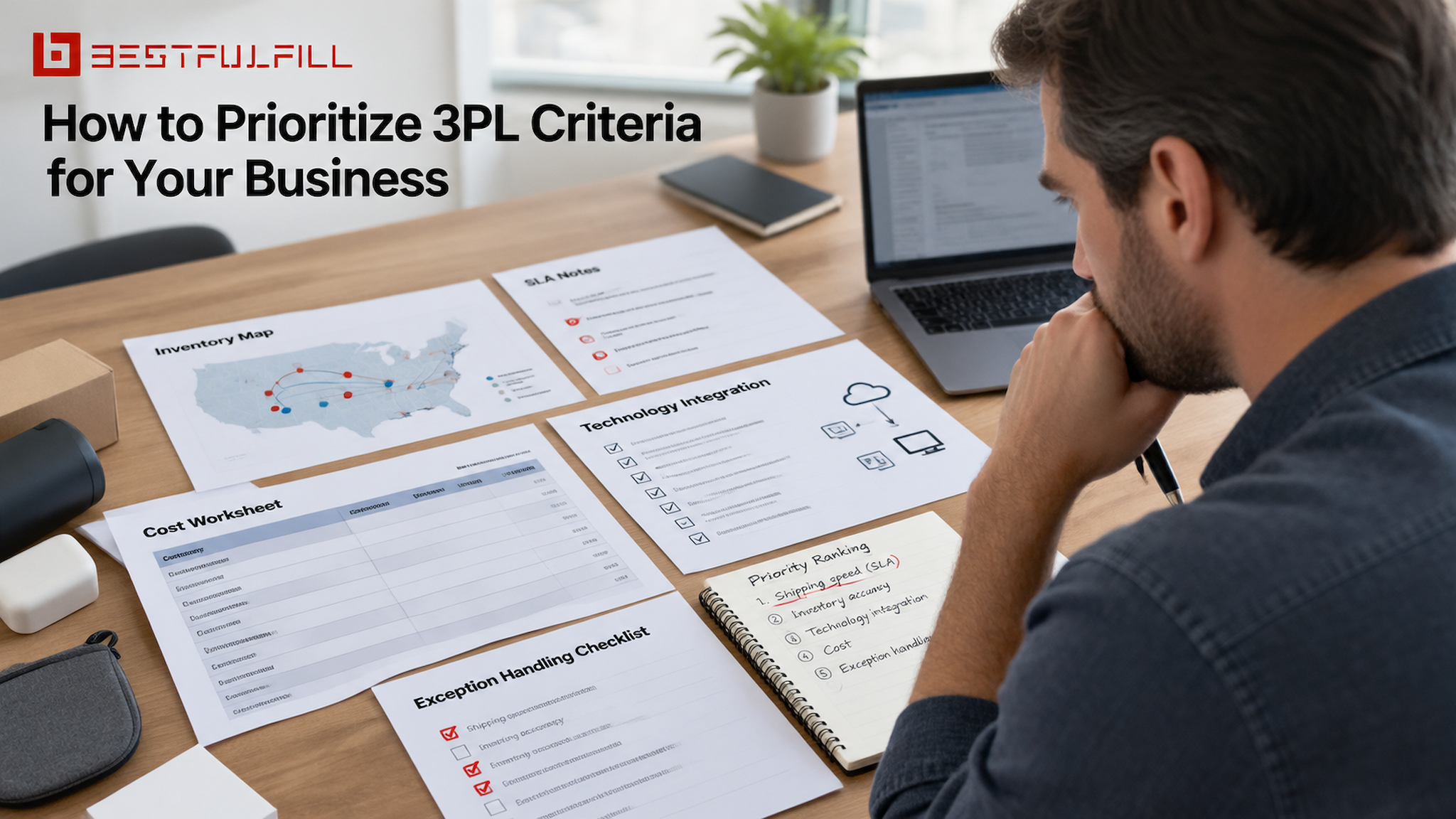
Not every comparison factor should carry equal weight. After eliminating providers that cannot meet your basic requirements, prioritize the criteria tied to the main complexity or risk in your operation.
Your Main Requirement | Prioritize | What to Confirm |
Fast domestic delivery | Coverage + performance | Inventory placement and relevant SLAs |
Complex SKUs or workflows | Operational fit | Required handling can be supported consistently |
Multi-market expansion | Coverage + technology | Inventory and orders can be managed across markets |
International sourcing | Responsibility scope | Clear ownership before warehouse receiving |
Seasonal demand | Capacity + SLAs | Peak-period capacity and commitments |
Complex returns | Reverse logistics + visibility | Inspection, disposition, and inventory updates |
A useful 3PL comparison uses the same operating profile, metric definitions, and cost assumptions for every provider. Weight the criteria according to your products, markets, fulfillment complexity, and supply-chain responsibilities—not according to the length of a provider's feature list.
Frequently Asked Questions (FAQ)
How can I tell whether a 3PL quote will still make sense when my DTC order volume changes?
Ask each provider to price more than one realistic volume scenario rather than relying on a single monthly estimate. Check whether storage, pick-and-pack, minimum commitments, shipping rates, or other applicable fees change at different volumes. For seasonal brands, include both normal and peak periods so you can see how the cost structure behaves when demand changes.
Should I split inventory across multiple 3PL warehouses or keep it in one location?
It depends on where your customers are and whether your inventory level can support multiple locations. Splitting inventory can position products closer to demand, but it also increases allocation and replenishment complexity. Before adding locations, ask the 3PL which SKUs would be stored where, what inventory each location requires, and how stock is rebalanced when demand differs from the forecast.
What happens if my 3PL runs out of custom packaging or inserts?
For DTC brands using branded boxes, mailers, inserts, or other custom materials, clarify who tracks packaging inventory, when replenishment alerts are triggered, and what happens if materials run out. Also confirm whether orders are paused, shipped with substitute packaging, or handled under another agreed rule. These decisions should be defined before fulfillment begins rather than made after an order is already waiting to ship.
How should I compare 3PLs if most of my products are manufactured or sourced overseas?
Look beyond warehouse receiving and outbound shipping. Compare who is responsible for supplier handoffs, QC, freight or consolidation coordination, labeling, inventory preparation, and resolving product issues before stock reaches the fulfillment warehouse. A warehouse-focused 3PL may still be appropriate if you already manage these stages, while a broader supply-chain model may reduce handoffs if you do not.
What should I check before moving inventory from my current 3PL to a new one?
Confirm the outgoing inventory count, open orders and returns, packaging inventory, removal or transfer fees, receiving requirements at the new 3PL, system cutover timing, and who owns unresolved claims. Plan how orders will continue during the transition as well. Comparing providers is only part of a 3PL switch—the inventory and data handoff can directly affect whether the new operation starts cleanly.
Need sourcing, QC, and fulfillment connected in one operation?
Explore how Bestfulfill supports ecommerce brands sourcing from China and fulfilling globally.