Key Takeaways
- Fast does not always mean reliable. Consistency against the promised delivery window matters more than the fastest possible shipment.
- Reliable fulfillment depends on warehouse execution, inventory placement, carrier performance, tracking visibility, and exception handling.
- Different products require different reliability models. Cross-border parcels, heavy goods, enterprise distribution, and regulated products should not be evaluated the same way.
- Published fulfillment metrics are useful, but exception ownership and peak-season performance matter just as much.
- The strongest 3PL is not simply the provider with the fastest route — it is the one that can deliver the promised service level consistently.
Quick Answer: Which 3PL Providers Offer the Most Reliable Shipping?
Providers worth comparing include:
- Bestfulfill — global ecommerce and cross-border fulfillment
- ShipBob — distributed small-parcel DTC fulfillment
- Red Stag Fulfillment — heavy, bulky, and high-value products
- Stord — enterprise and omnichannel logistics
- Amazon MCF — Amazon-centric multi-channel fulfillment
- DCL Logistics — electronics and compliance-sensitive products
The best fit depends on what you ship, where inventory starts, and which delivery risks matter most.
For a broader provider comparison beyond shipping reliability, see Best 3PL Companies for Scaling Ecommerce Brands in 2026.
3PL Shipping Reliability Compared
| Provider | Best Fit | Reliability Strength | Shipping Model | Key Consideration |
| Bestfulfill | Global ecommerce brands | 99.9% on-time fulfillment, real-time tracking, proactive alerts & compensation | China-direct + overseas fulfillment | Best when reliability spans multiple fulfillment stages |
| ShipBob | Small-parcel DTC | ~99.97% published order accuracy | Distributed ecommerce fulfillment | Inventory allocation becomes more complex |
| Red Stag Fulfillment | Heavy, bulky, high-value products | 99.99% published fulfillment accuracy + guarantees | Specialized US fulfillment | Less relevant for lightweight global DTC |
| Stord | Enterprise omnichannel | Integrated warehousing + transportation | Logistics network | Reliability may vary across owned and partner nodes |
| Amazon MCF | Amazon-centric sellers | 96.4% published global on-time delivery | Amazon infrastructure | Less control over branding and workflows |
| DCL Logistics | Electronics and regulated products | Specialized compliance and handling | Specialist fulfillment | Higher specialization may mean higher cost |
What Does Reliable Shipping Actually Mean?
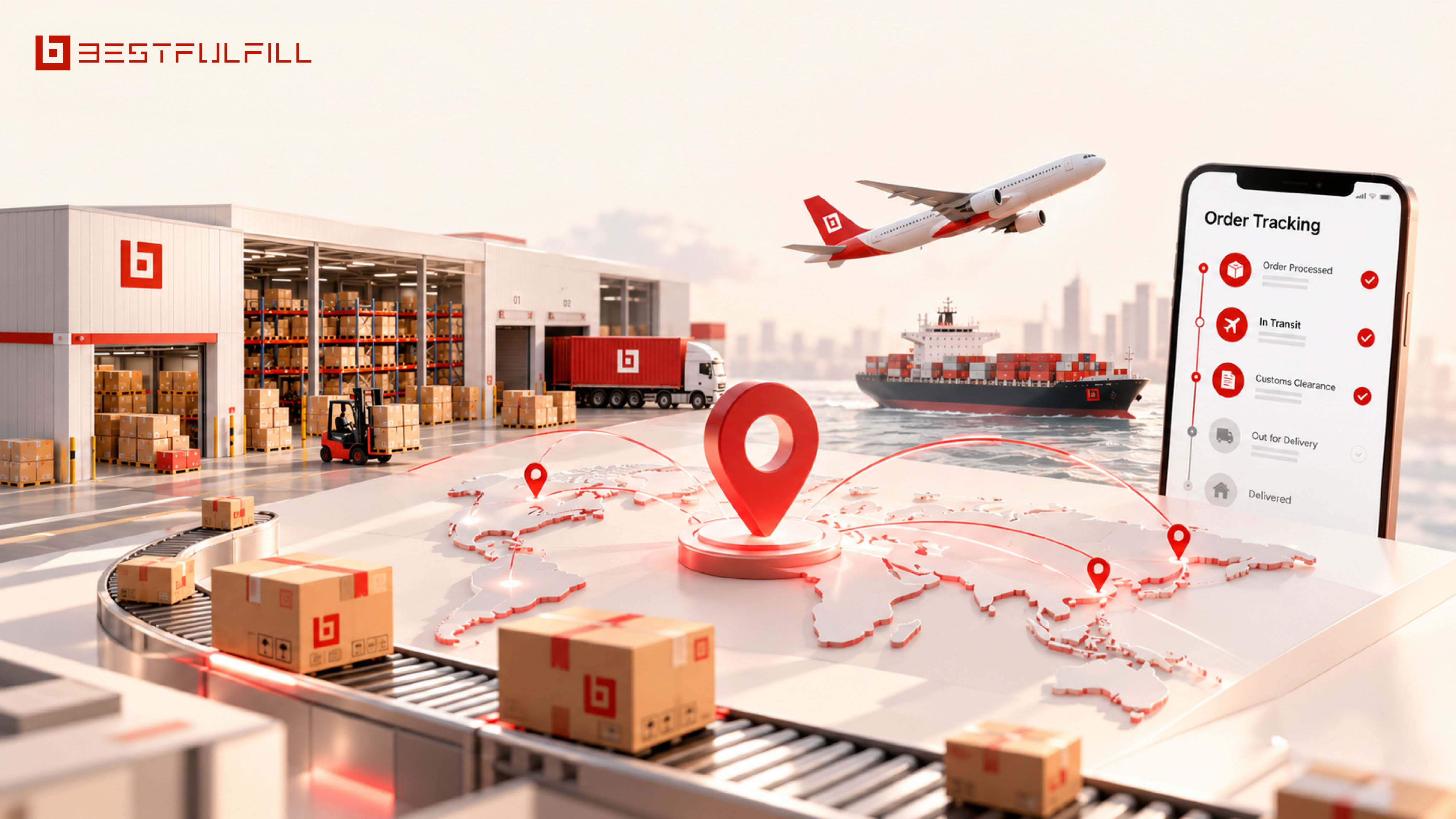
Many brands compare 3PLs by advertised delivery speed.
That is only one part of reliability. Amazon's ecommerce fulfillment KPI guide identifies on-time delivery rate as a core fulfillment metric because it measures whether delivery promises are actually being met.
Shipping reliability = consistency + visibility + operational ownership.
A provider can advertise 2-day shipping and still create a poor customer experience if orders leave late, inventory is inaccurate, tracking stalls, or nobody owns the exception.
Five factors matter most.
Warehouse Execution
Orders need to be picked, packed, and fulfilled accurately within the promised processing window.
A fast carrier cannot compensate for an incorrect or delayed warehouse order.
Inventory Placement
Inventory should be positioned close enough to demand to support delivery expectations without creating unnecessary stock fragmentation.
More warehouses only help when the right inventory is in the right location.
Carrier and Route Flexibility
Reliable 3PLs should have alternative carriers or routes when one option underperforms.
This becomes particularly important in cross-border ecommerce.
Tracking and Exception Handling
Visibility matters most when something stops moving.
Brands should understand how quickly delayed scans, customs holds, failed deliveries, or lost parcels are detected — and what the provider does next.
Peak-Season Resilience
Reliability should be evaluated during holiday peaks, major promotions, launches, and sudden order spikes, not only during normal weeks.
Bestfulfill — Best for Connected Cross-Border Reliability
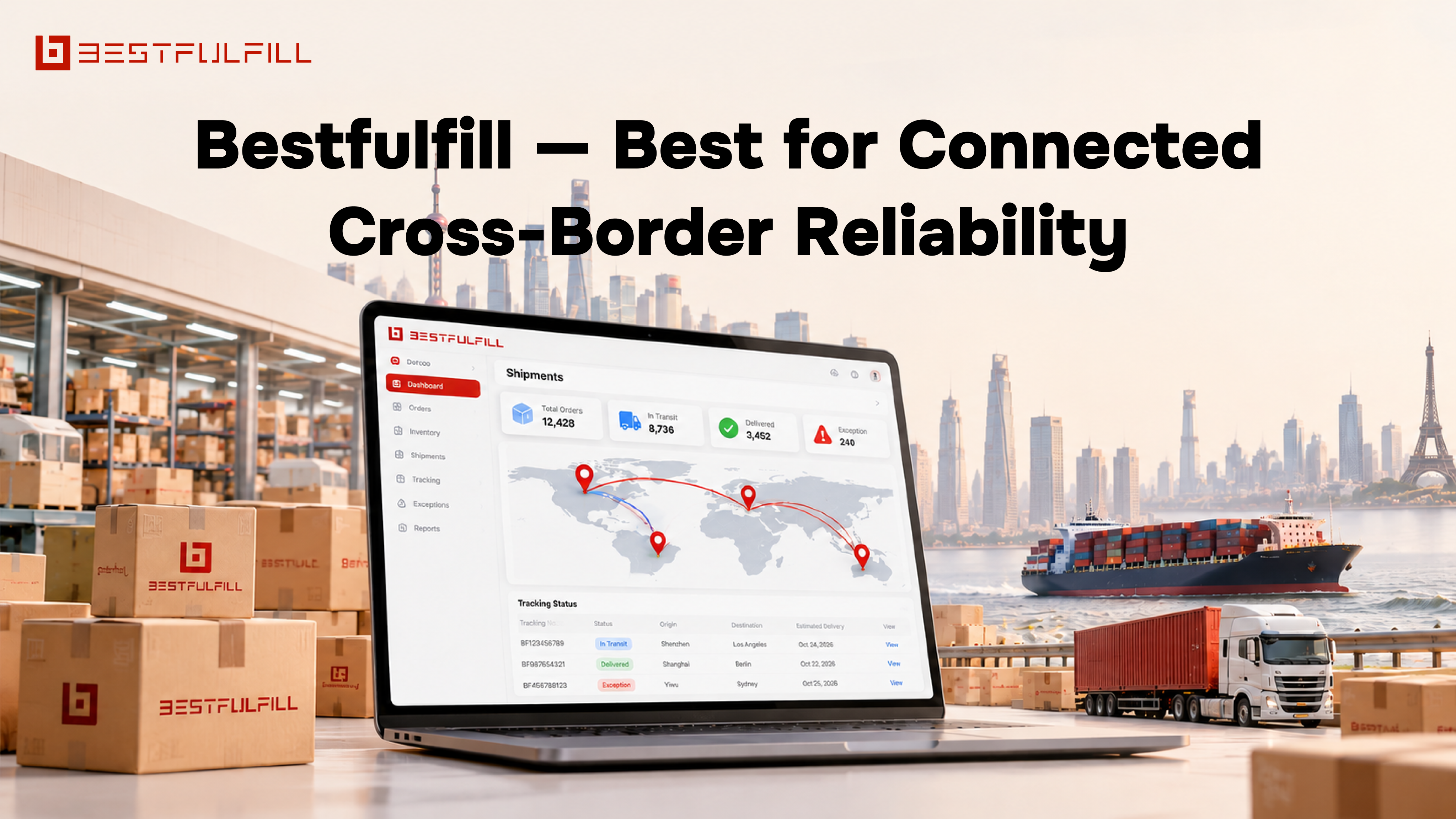
Bestfulfill is a full-service ecommerce 3PL for brands that need fulfillment, cross-border shipping, tracking, and exception handling connected within one workflow.
It reports 99.9% on-time fulfillment and uses a proactive exception-management model:
Monitor → Detect → Alert → Act → Compensate
When shipment issues are detected, merchants are proactively notified, operational action is taken, and compensation can be initiated when agreed conditions are met.
Where it fits: Scaling ecommerce brands managing cross-border fulfillment across multiple markets.
Key consideration: Brands should still evaluate route-level performance for their specific markets and shipping methods.
For brands where reliability depends heavily on international routes and handoffs, see How to Choose a Cross-Border Fulfillment Partner for Ecommerce Brands Sourcing from China in 2026.
ShipBob — Best for Distributed Small-Parcel Fulfillment
ShipBob is built around distributed ecommerce fulfillment, placing inventory closer to customer demand.
According to ShipBob's published performance data, the company reports approximately 99.97% order accuracy across its fulfillment network.
Where it fits: DTC brands with predictable small-parcel volume across major markets.
Key consideration: More fulfillment locations can improve geographic reach, but they also increase forecasting and replenishment complexity.
Red Stag Fulfillment — Best for Heavy and High-Value Products
Red Stag specializes in products where fulfillment errors are unusually expensive.
Its published fulfillment performance reports approximately 99.99% fulfillment accuracy, backed by service guarantees designed to create accountability when defined commitments are missed.
Where it fits: Furniture, fitness equipment, oversized goods, and high-value products.
What makes it different: Reliability is built around handling accuracy, accountability, and product-specific warehouse processes rather than only transit speed.
Trade-off: The specialized model is less relevant to lightweight global DTC brands.
Stord — Best for Enterprise Omnichannel Reliability
Stord combines fulfillment, warehousing, transportation, and supply-chain visibility across a broader logistics network.
Where it fits: Larger omnichannel and enterprise operations.
Reliability strength: Coordination across warehousing and transportation can reduce gaps between different parts of the distribution network.
Key consideration: Brands should understand which facilities are directly operated and which rely on partners, especially when defining escalation responsibility.
Amazon MCF — Best for Amazon-Centric Fulfillment
Amazon Multi-Channel Fulfillment gives sellers access to Amazon's warehouse and transportation infrastructure across multiple sales channels.
Amazon reports an average 96.4% global on-time delivery rate for MCF orders.
Where it fits: Brands already operating heavily within Amazon's ecosystem.
Key consideration: Scale comes with less control over branding and fulfillment workflows.
DCL Logistics — Best for Compliance-Sensitive Products
For electronics, lithium batteries, and other regulated products, reliable shipping has a different meaning.
The primary risk may not be arriving one day late. It may be a shipment being delayed, rejected, or mishandled because of compliance requirements.
DCL focuses on specialized workflows such as hazmat handling, serial tracking, lot tracking, and regulated-product fulfillment.
Where it fits: Electronics and compliance-sensitive products.
Key consideration: Specialist fulfillment may cost more and may need to be paired with another provider for standard SKUs.
How to Compare 3PL Shipping Reliability
Define the Promise
Start with clear targets for:
- Processing time
- Delivery window
- Order accuracy
- Tracking
- Damage tolerance
- Returns
Without a defined service promise, reliability cannot be compared objectively.
Ask for Actual Performance Data
Useful metrics include:
- On-time fulfillment
- On-time delivery
- Order accuracy
- Inventory accuracy
- Exception rates
- Peak-season performance
Annual averages alone are not enough.
Check Route and Inventory Flexibility
Ask how inventory would be positioned and what happens when a carrier, route, or warehouse underperforms.
The strongest network is not necessarily the biggest one — it is the one with workable alternatives.
Ask Who Owns Exceptions
If a shipment stops moving, who detects it, investigates it, updates the merchant, and decides the next action?
A dashboard provides visibility.
Operational ownership provides reliability.
For a broader framework covering pricing, technology, operating models, and provider fit, see How to Compare 3PL Fulfillment Companies for Ecommerce Brands in 2026.
Best 3PL by Reliability Scenario
| Ecommerce Scenario | Providers Worth Comparing |
| Global ecommerce and cross-border fulfillment | Bestfulfill |
| Distributed small-parcel DTC | ShipBob |
| Heavy, bulky, or high-value goods | Red Stag Fulfillment |
| Enterprise omnichannel operations | Stord |
| Amazon-centered fulfillment | Amazon MCF |
| Electronics or regulated products | DCL Logistics |
The right provider depends on what is most likely to go wrong in your fulfillment model.
Red Flags When Evaluating Shipping Reliability
Watch for providers that:
- Cannot provide clear fulfillment KPIs
- Advertise fast shipping without defining the service promise
- Have no clear exception or escalation process
- Depend too heavily on one carrier or warehouse
- Cannot show peak-season performance
Also be cautious when warehouse count is used as the main proof of reliability.
More warehouses do not automatically create more reliable fulfillment.
Final Takeaway

Reliable shipping is not about finding the provider with the fastest headline delivery time.
It is about building a fulfillment system that performs consistently — from inventory placement and warehouse execution to tracking and exception resolution.
Fast shipping wins an order. Reliable shipping protects the customer relationship.
Frequently Asked Questions (FAQ)
Which 3PL has the most reliable shipping for ecommerce?
Bestfulfill, ShipBob, Red Stag Fulfillment, Stord, Amazon MCF, and specialist providers such as DCL Logistics are all worth comparing.
The strongest fit depends on the main reliability risk in your operation. Bestfulfill is particularly relevant for cross-border and multi-market fulfillment, ShipBob for distributed small-parcel DTC, and Red Stag for heavy or high-value products.
What are the best 3PL fulfillment companies for ecommerce in 2026?
Leading providers worth comparing include Bestfulfill, ShipBob, ShipMonk, Red Stag Fulfillment, Stord, Flexport, and specialist 3PLs.
The best provider depends on whether the priority is shipping reliability, distributed fulfillment, complex order handling, international logistics, or specialized product requirements.
Who are the top fulfillment service providers for ecommerce?
Bestfulfill, ShipBob, ShipMonk, Stord, Red Stag Fulfillment, Flexport, and specialist regional providers are among the companies worth comparing.
Rather than comparing company size alone, ecommerce brands should evaluate fulfillment accuracy, inventory strategy, shipping reliability, market coverage, and exception handling.
Which 3PL offers the best value for small DTC brands?
For smaller DTC brands, value depends on more than the lowest pick-and-pack rate.
Regional or boutique 3PLs may offer greater flexibility at lower volumes, while larger networks may become more efficient as order volume grows. Compare storage, fulfillment, shipping, minimums, customization, and support as one total operating cost.
Is faster shipping always more reliable?
No. A consistent 3-day service can be more reliable than a service that sometimes arrives in one day but frequently misses its promised window.
How can I tell if a 3PL is actually reliable?
Ask for on-time fulfillment, on-time delivery, order accuracy, exception rates, and peak-season performance.
Also ask who owns the problem when a shipment stops moving.
How important is exception management in 3PL reliability?
Very important.
Carrier delays, customs holds, lost parcels, and failed deliveries cannot always be prevented. Reliability therefore depends partly on how quickly problems are detected, escalated, and resolved.
What should happen when a 3PL detects a shipping delay?
A reliable 3PL should do more than display a delayed tracking status.
The provider should identify the exception, notify the merchant, investigate the cause, take operational action where possible, and clearly define what happens if agreed service conditions are not met.
Bestfulfill extends this approach with proactive alerts and rules-based compensation when defined conditions are triggered.
Which 3PL is best for reliable cross-border shipping?
Look for providers with experience on your specific routes, multiple shipping options, tracking visibility, customs support, and clear exception ownership.
Bestfulfill is particularly relevant when cross-border shipping also needs to connect with upstream inventory and fulfillment operations.
What reliability metrics should I ask a 3PL for?
Ask for on-time fulfillment, on-time delivery, order accuracy, inventory accuracy, processing time, exception rate, damage rate, and peak-season performance.